
Nearly 90 percent of american teachers report that hands-on learning leads to deeper understanding and greater retention for students. In a world where facts are often forgotten, interactive experiences help knowledge stick. American classrooms are moving away from lectures and turning to practical activities because this approach turns abstract ideas into real-life skills. This article brings clarity to what hands-on learning really means, tackling the myths and revealing what makes it so powerful in schools today.
Key Takeaways
| Point | Details |
|---|---|
| Hands-on learning enhances engagement | This educational approach promotes active participation, making learning more memorable and meaningful. |
| Variety of hands-on strategies | Techniques such as project-based learning and simulations bridge the gap between theory and practice, enriching learning experiences. |
| Neuroscience supports experiential learning | Active engagement through hands-on activities enhances retention and cognitive function via stronger neural connections. |
| Effective implementation requires planning | Successful hands-on learning should have clear objectives and formative assessment to achieve meaningful educational outcomes. |
Defining Hands-On Learning Methods and Myths
Hands-on learning represents an educational approach where students actively engage with materials, tools, and experiences to develop deeper understanding through direct interaction. According to Wikipedia, this method emphasizes active student engagement through practical tasks, distinguishing itself from traditional passive learning techniques.
Contrary to common misconceptions, hands-on learning is not limited to early childhood education or simple play activities. GetSuperspace highlights that this approach is actually a structured, rigorous methodology supported by scientific research. The learning technique involves strategically designed experiences that challenge students to apply knowledge in real-world contexts, promoting critical thinking and skill development.
Key characteristics of hands-on learning include:
- Direct manipulation of learning materials
- Problem-solving through practical exploration
- Active student participation
- Integration of physical and cognitive processes
- Immediate feedback and experiential discovery
While traditional educational models often prioritize lecture-based instruction, hands-on learning recognizes that students learn most effectively when they can touch, experiment, and directly interact with the subject matter. This approach transforms abstract concepts into tangible experiences, making learning more engaging, memorable, and meaningful for students across various age groups and academic disciplines.
Types of Hands-On Learning in Schools
Hands-on learning encompasses several dynamic approaches that transform traditional classroom instruction into interactive, engaging experiences. Wikipedia highlights applied academics as an educational approach that integrates academic subjects with real-world applications, emphasizing contextual learning through practical methods.
Discovery learning represents another powerful hands-on strategy. According to Wikipedia, this is an inquiry-based, constructivist approach where students actively engage in problem-solving and exploration to acquire knowledge. The core types of hands-on learning include:
- Laboratory Experiments: Structured scientific investigations
- Project-Based Learning: Comprehensive, long-term interdisciplinary challenges
- Simulation Activities: Controlled environments mimicking real-world scenarios
- Field Trips: Direct observation and interaction with external learning environments
- Interactive Workshops: Skill-building sessions with immediate practical application
Modern classrooms increasingly recognize that hands-on learning isn’t just a teaching technique – it’s a fundamental approach to making education more meaningful. By understanding interactive teaching methods, educators can design experiences that not only transfer knowledge but also inspire curiosity, critical thinking, and genuine engagement with academic content. From science labs to creative arts workshops, hands-on learning bridges the gap between theoretical concepts and practical understanding, preparing students for complex real-world challenges.
How Hands-On Activities Enhance Engagement
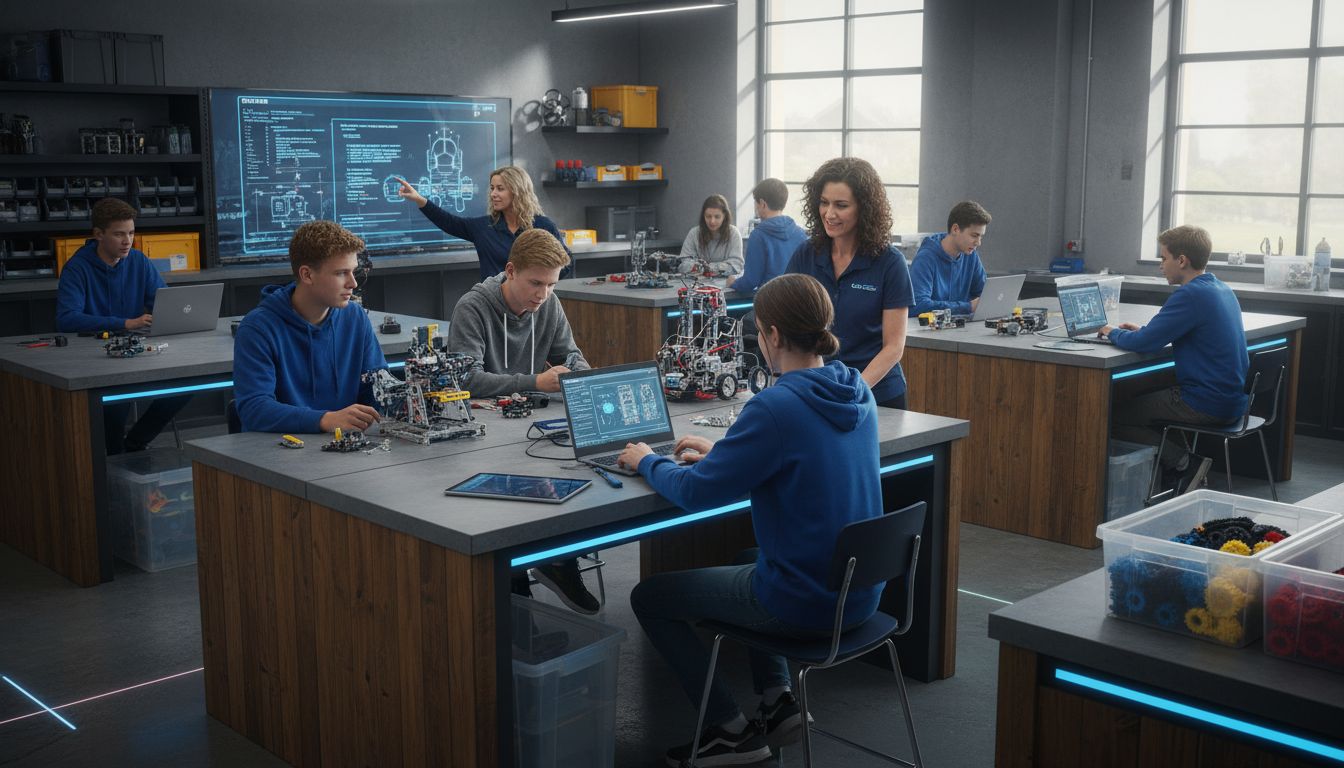
Hands-on learning transforms student engagement by creating dynamic, interactive educational experiences that capture attention and spark curiosity. Link Springer reveals that empirical studies demonstrate hands-on activities in science education significantly boost student motivation and interest by providing realistic and exciting learning experiences.
Traditional lecture-based instruction often leads to passive learning, where students struggle to maintain focus and connection with the material. According to Catholic Education Office, hands-on learning methods transform educators’ roles from lecturers to collaborative facilitators, fostering curiosity and creating more enthusiastic classroom environments.
Key ways hands-on activities enhance student engagement include:
- Increased Sensory Involvement: Activating multiple learning pathways
- Immediate Practical Application: Connecting abstract concepts to real-world scenarios
- Enhanced Problem-Solving Skills: Encouraging active critical thinking
- Personalized Learning Experiences: Allowing individual exploration and discovery
- Reduced Learning Anxiety: Making complex subjects more approachable
By understanding how to boost student engagement, educators can design learning experiences that not only transfer knowledge but also inspire genuine excitement about learning.
Hands-on activities bridge the gap between theoretical understanding and practical application, transforming education from a passive experience into an active, memorable journey of discovery.
Brain Science Behind Experiential Learning
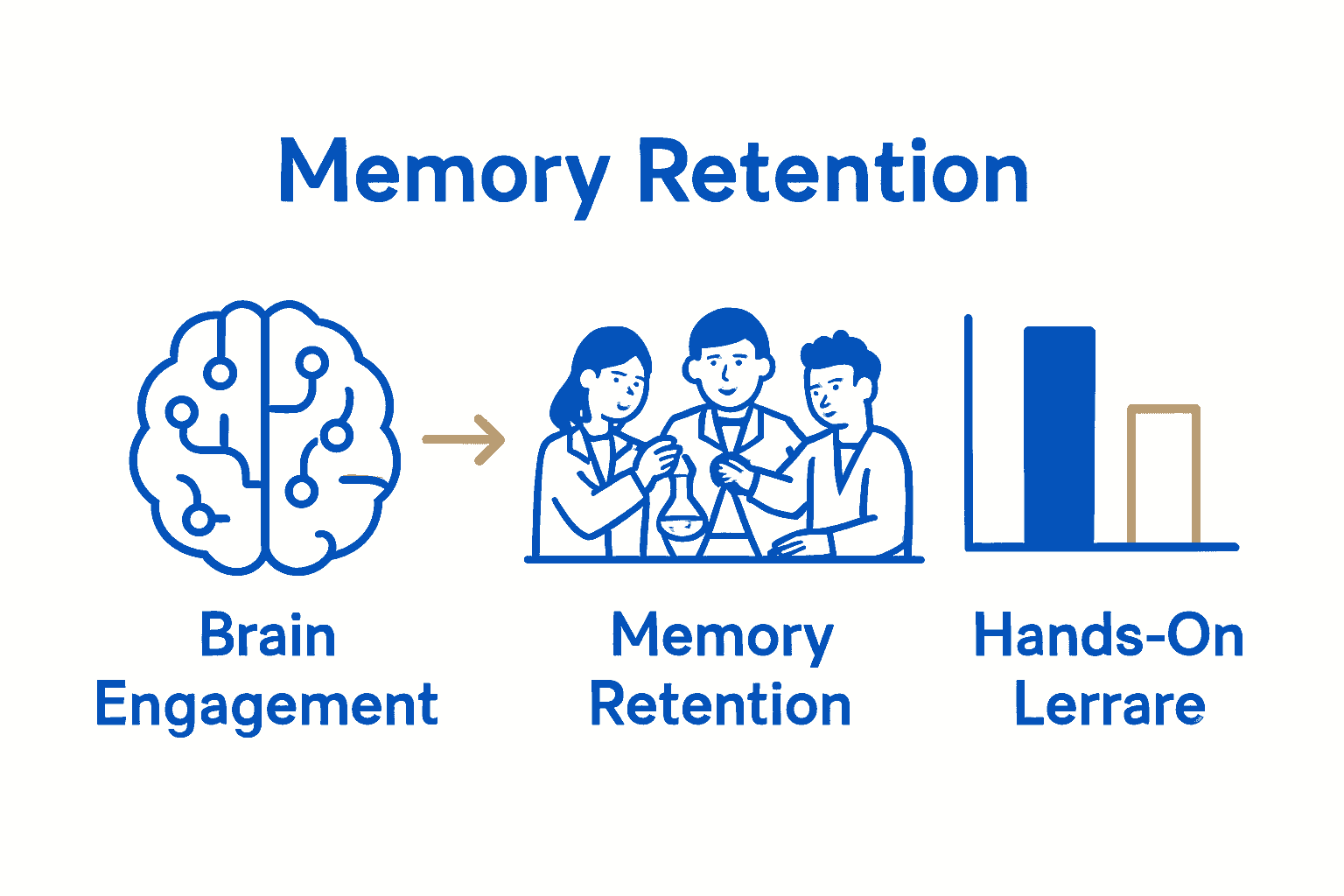
The human brain is fundamentally wired to learn through active engagement and direct experience. International Journal of Recent Technology and Engineering research suggests that students retain significantly more information through active participation, with kinesthetic instruction demonstrating superior learning outcomes compared to traditional passive learning methods.
Neuroplasticity plays a critical role in understanding how experiential learning transforms cognitive processing. GetSuperspace highlights that structured interactive learning, such as game-based approaches, can enhance cognitive function by creating stronger neural connections and more robust brain networks.
Key neurological mechanisms of experiential learning include:
- Multisensory Stimulation: Activating multiple brain regions simultaneously
- Neural Pathway Reinforcement: Creating stronger memory connections
- Dopamine Release: Generating intrinsic motivation through active discovery
- Contextual Memory Formation: Embedding learning in meaningful experiences
- Reduced Cognitive Load: Making complex information more digestible
By understanding the science of hands-on learning, educators can design experiences that not only transfer knowledge but also leverage the brain’s natural learning mechanisms. Experiential learning transforms education from a passive information transfer to an active, neurologically engaging process of discovery and understanding.
Maximizing Impact: Best Practices and Pitfalls
Successful hands-on learning requires strategic planning and thoughtful implementation. GetSuperspace emphasizes that effective hands-on learning involves structured activities with clear objectives, while avoiding common pitfalls like insufficient academic alignment and lack of focused direction.
Accelerate Learning Blog outlines critical best practices for maximizing experiential learning impact. These include using simple materials to model complex concepts, encouraging collaborative interactions, purposefully integrating technology, and consistently connecting lessons to real-world challenges.
Key strategies for successful hands-on learning implementation include:
- Clear Learning Objectives: Defining specific goals before activity design
- Scaffolded Complexity: Gradually increasing activity difficulty
- Reflective Practice: Incorporating debriefing and analysis phases
- Diverse Learning Approaches: Accommodating multiple learning styles
- Continuous Assessment: Measuring learning outcomes systematically
By understanding how to boost student engagement, educators can transform hands-on learning from a potentially chaotic experience into a structured, meaningful educational journey that genuinely advances student understanding and skill development.
Unlock the Full Potential of Hands-On Learning with Engaging Educational Assemblies
The article highlights the powerful impact of hands-on learning yet underscores common challenges educators face, such as maintaining student engagement, providing meaningful interactive experiences, and linking activities directly to curriculum goals. If you want to overcome the struggle of passive classrooms and create lasting learning through active participation and real-world connections, then AssemblyShows.com offers a proven solution.
Our dynamic programs, led by veteran performer Doug Scheer, combine curriculum-aligned content with high-energy, interactive fun that transforms assemblies into unforgettable hands-on learning experiences. Whether through live presentations or virtual events, we help boost student motivation and critical thinking in ways that mirror the effective methods described in the article, such as discovery learning and experiential activities.
Bring excitement, deeper understanding, and brain-friendly engagement to your school right now
Discover how you can enrich your students’ education with interactive assemblies that enhance problem solving and curiosity. Explore our full lineup of educational programs and take the first step toward energizing your classrooms today. Don’t let your students miss out on the benefits of true hands-on learning. Visit AssemblyShows.com and schedule your engaging assembly now.
Frequently Asked Questions
What is hands-on learning?
Hands-on learning is an educational approach where students actively engage with materials and experiences to gain a deeper understanding through direct interaction, rather than through passive learning methods like lectures.
What are the main benefits of hands-on learning?
The main benefits include increased engagement, enhanced problem-solving skills, immediate practical application of knowledge, personalized learning experiences, and reduced learning anxiety, making complex subjects more approachable.
How does hands-on learning relate to brain science?
Brain science shows that students retain more information through active participation. Engaging in hands-on activities stimulates multiple brain regions, reinforcing neural connections and enhancing cognitive functions through experiential learning.
What are the best practices for implementing hands-on learning in the classroom?
Best practices include setting clear learning objectives, providing gradually increasing complexity in activities, incorporating reflective practices, accommodating diverse learning styles, and continuously assessing learning outcomes.
Recommended
- What is Hands-On Learning? Understanding Its Impact – Scheer Genius Assembly Shows
- 7 Essential Student Learning Activities List for Schools – Scheer Genius Assembly Shows
- Boost Student Engagement Step by Step for Effective Learning – Scheer Genius Assembly Shows
- Understanding Interactive Teaching Methods in Assemblies – Scheer Genius Assembly Shows