
Schools everywhere talk about grades and test scores. Yet the biggest shifts often happen where you least expect them. Research shows that comprehensive character education programs can significantly improve both student behavior and academic performance. Forget boring assemblies or one-time kindness weeks. The real secret is how daily character lessons get built into every corner of school life, shaping future leaders in ways that go far beyond textbooks.
Table of Contents
- Understanding Character Education: Definition And Purpose
- The Importance Of Character Education In Today’s Schools
- The Benefits Of Implementing Character Education Programs
- Key Components And Theoretical Foundations Of Character Education
- Real-World Applications And Success Stories In Character Education
Quick Summary
| Takeaway | Explanation |
|---|---|
| Integrate character education into daily lessons | Infusing ethical learning throughout subjects enhances student moral development and engagement. |
| Focus on core ethical values | Teaching respect, responsibility, integrity, and empathy builds a strong moral foundation in students. |
| Address social-emotional challenges | Character education equips students with essential skills to manage emotions and resolve conflicts. |
| Design comprehensive programs | Successful character education blends theoretical knowledge with practical experiences for lasting impact. |
| Measure outcomes consistently | Regular assessments of character education initiatives ensure alignment with educational goals and student growth. |
Understanding Character Education: Definition and Purpose
Character education represents a comprehensive approach to cultivating ethical, responsible, and socially conscious students through strategic learning experiences. As defined by the U.S. Department of Education, character education is a learning process designed to help students understand, appreciate, and actively practice core ethical values.
Core Principles of Character Education
At its heart, character education focuses on developing students’ moral foundations by teaching and reinforcing universal values. These fundamental principles include:
- Respect: Teaching students to value themselves and others
- Responsibility: Encouraging accountability for personal actions
- Integrity: Promoting honesty and ethical decision making
- Empathy: Developing understanding and compassion for diverse perspectives
Holistic Learning Approach
Character education goes beyond traditional academic instruction by integrating ethical development into everyday school experiences. Unlike standalone lessons, this approach weaves moral learning throughout the educational environment. Research from the National Institutes of Health indicates that comprehensive character education programs can significantly improve student behavior, academic performance, and overall school climate.
Schools implementing robust character education programs create environments where positive character traits are not just taught but consistently modeled and reinforced. By exploring character education program ideas, educators can discover innovative strategies to integrate these critical life skills into daily learning experiences.
The Importance of Character Education in Today’s Schools
In an increasingly complex world, schools play a critical role beyond academic instruction by preparing students to become ethical, responsible, and compassionate citizens. According to Michigan State University, character education is essential for developing students who are not just academically proficient but morally grounded and socially aware.
Addressing Social and Emotional Challenges
Today’s students face unprecedented social and emotional challenges that traditional curriculum often fails to address. Character education provides a structured approach to helping young people develop critical life skills that extend far beyond traditional academic learning. These skills include:
- Emotional Intelligence: Understanding and managing personal emotions
- Social Awareness: Recognizing and respecting diverse perspectives
- Conflict Resolution: Developing peaceful problem solving strategies
- Ethical Decision Making: Learning to make choices aligned with core values
Long Term Impact on Student Success
Character education is not a peripheral activity but a fundamental component of comprehensive student development. The What Works Clearinghouse emphasizes that these programs significantly contribute to students’ personal growth, academic performance, and future professional success. By integrating character development into everyday learning, schools create environments that nurture well rounded individuals prepared to meet complex societal challenges.
Educators can further enhance these efforts by exploring innovative character shows that make character education engaging and memorable for students, transforming abstract concepts into tangible, interactive learning experiences.
The Benefits of Implementing Character Education Programs
Character education programs offer transformative advantages that extend well beyond traditional academic learning. By systematically integrating ethical skill development into school environments, these programs create comprehensive frameworks for student growth and societal preparation.
Academic and Personal Development Outcomes
Research demonstrates that well-designed character education initiatives generate significant positive outcomes for students. According to evidence from education research, these programs can potentially influence students’ academic achievement and personal development. The core benefits include:
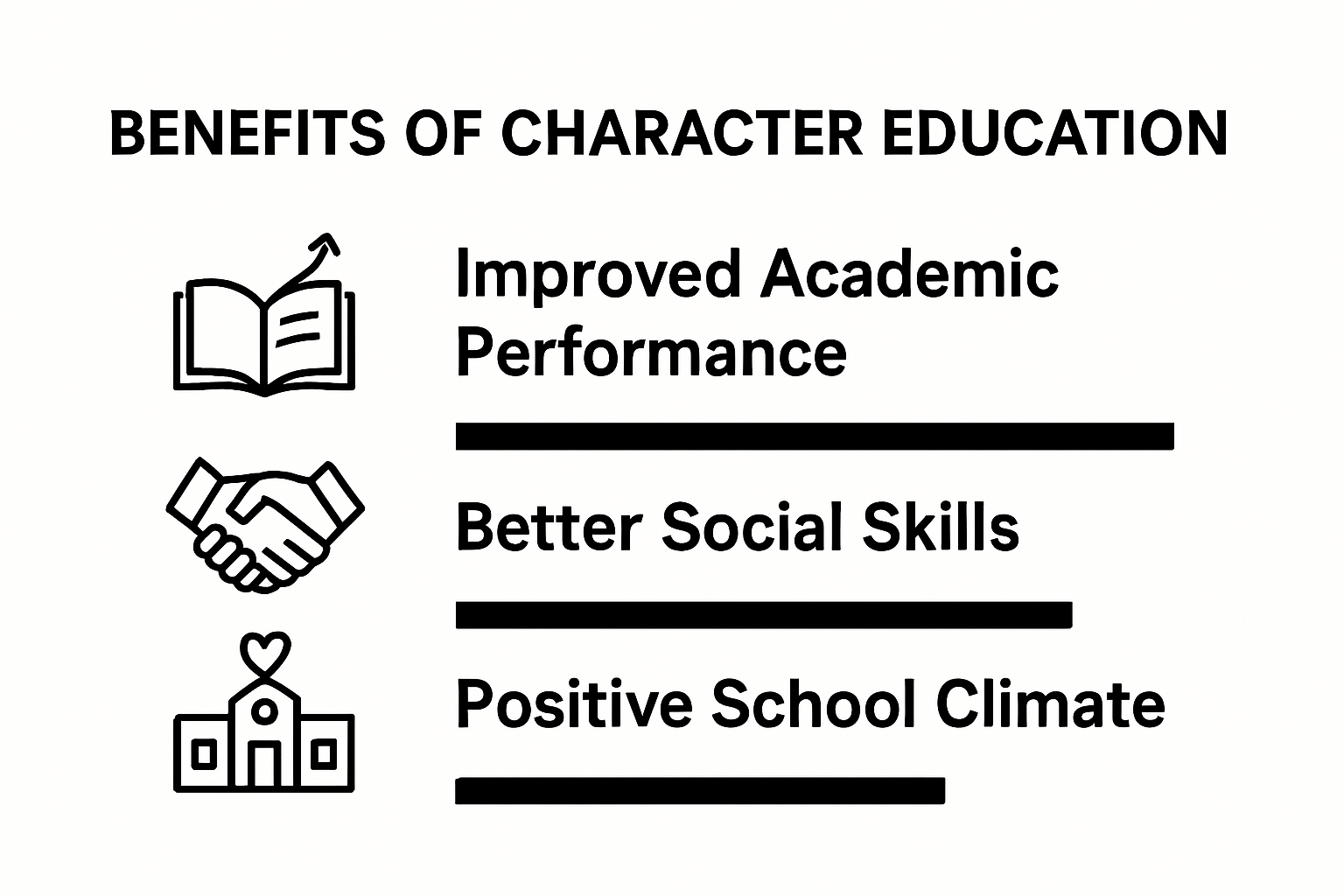
- Enhanced Learning Motivation: Students develop intrinsic drive to engage with educational content
- Improved Social Skills: Better interpersonal communication and collaboration abilities
- Emotional Regulation: Greater capacity to manage stress and complex emotional experiences
- Critical Thinking: Strengthened ability to make ethical decisions and analyze complex scenarios
School Climate and Community Impact
Character education programs do not just benefit individual students but fundamentally transform entire school ecosystems. These initiatives create positive learning environments that promote mutual respect, empathy, and collective responsibility.
By exploring strategies to create positive learning environments, schools can implement comprehensive approaches that nurture students’ moral and intellectual potential.

Moreover, schools implementing robust character education programs report reduced disciplinary incidents, increased student engagement, and a more supportive collaborative atmosphere.
This table summarizes the essential elements and benefits of character education programs, organizing their features and the positive outcomes shown in research.
| Program Element | Description | Positive Outcome |
|---|---|---|
| Daily Curriculum Integration | Character lessons embedded across subjects and activities | Consistent reinforcement of values |
| Core Ethical Values Focus | Respect, responsibility, integrity, empathy | Builds strong moral foundations |
| Social-Emotional Skill Building | Skills for emotion management and conflict resolution | Improved interpersonal relationships |
| Community & Family Involvement | Engaging families and community in program delivery | Stronger, supportive school climate |
| Regular Assessment | Ongoing measurement of program impact | Tracks growth and ensures alignment |
Key Components and Theoretical Foundations of Character Education
Character education represents a sophisticated framework for holistic student development, drawing from multiple interdisciplinary perspectives in psychology, sociology, and educational theory. According to the Markkula Center for Applied Ethics, understanding these foundational components is critical for implementing effective moral learning strategies.
Core Theoretical Frameworks
The theoretical foundations of character education are built upon understanding human development, moral reasoning, and social learning principles. These frameworks emphasize that character is not simply inherited but can be systematically cultivated through intentional educational experiences. Key theoretical perspectives include:
- Social Learning Theory: Character traits are learned through observation and modeling
- Cognitive Development Theory: Moral reasoning evolves through structured developmental stages
- Constructivist Approach: Students actively construct ethical understanding through interactive experiences
- Sociocultural Theory: Character development is deeply influenced by cultural and social contexts
Essential Developmental Elements
Character education programs integrate multiple critical elements to support comprehensive student growth. These elements focus on developing not just knowledge, but practical skills and emotional intelligence. Exploring program design strategies reveals that successful initiatives balance theoretical understanding with experiential learning.
The most effective character education approaches recognize that moral development is a complex, ongoing process requiring consistent reinforcement, meaningful reflection, and opportunities for practical application. By creating environments that systematically nurture ethical reasoning, schools can help students develop the foundational skills necessary for responsible citizenship and personal integrity.
The table below compares key theoretical frameworks that underpin character education, highlighting their main focus and relevance in school programs.
| Theoretical Framework | Main Focus | Relevance in Character Education |
|---|---|---|
| Social Learning Theory | Learning through observation and modeling | Students develop character by observing role models |
| Cognitive Development Theory | Moral reasoning progresses through developmental stages | Curriculum adapts to students’ evolving moral skills |
| Constructivist Approach | Active construction of ethical understanding | Encourages interactive, student-centered experiences |
| Sociocultural Theory | Influence of culture and social context | Tailors character education to diverse communities |
Real-World Applications and Success Stories in Character Education
Character education transforms theoretical concepts into tangible, measurable outcomes that reshape school cultures and student experiences. According to Character.org, successful programs demonstrate the profound impact of systematic character development beyond traditional academic metrics.
Institutional Implementation Strategies
Schools across the United States have developed innovative approaches to integrating character education into their core curriculum. These strategies focus on creating holistic learning environments that nurture ethical reasoning and social-emotional skills. Successful implementation typically involves:
- Comprehensive Curriculum Integration: Embedding character lessons across multiple subject areas
- Consistent Reinforcement: Creating school-wide systems that recognize and celebrate positive character traits
- Community Engagement: Involving parents, teachers, and local community members in character development
- Ongoing Assessment: Regularly measuring the impact of character education initiatives
Transformative Impact Metrics
Empirical evidence demonstrates that robust character education programs generate significant positive outcomes. Schools implementing these programs consistently report improvements in:
- Student academic performance
- Classroom behavior and discipline
- Social interaction and empathy
- Long-term personal and professional development
By exploring innovative character education approaches, educators can discover creative methods to make these critical life skills engaging and memorable. The most successful programs recognize that character development is not a one-time lesson but a continuous, collaborative journey of personal growth and social responsibility.
Experience Character Education That Makes a Lasting Difference
Are your students struggling to turn character concepts into meaningful daily habits? The article emphasizes how traditional academics alone cannot build empathy, resilience, and ethical decision making. Many schools face the challenge of connecting classroom values to real-world behaviors. You want resources that inspire and sustain personal growth, not just quick fixes.
Explore our assemblies to see how engaging, curriculum-linked programs can transform abstract lessons into memorable experiences, making character education fun and truly unforgettable.
Ready to give your school a fresh approach? Discover why Midwest educators trust AssemblyShows.com and Doug Scheer’s high-energy performances to boost both learning and character development. Check out our reviews for real success stories and schedule your next assembly today to empower your students with skills for life.
Frequently Asked Questions
What is character education?
Character education is a comprehensive approach to developing students’ ethical, responsible, and socially aware traits through structured learning experiences. It emphasizes core ethical values such as respect, responsibility, integrity, and empathy.
Why is character education important in schools?
Character education is crucial as it prepares students to become ethical citizens while facing social and emotional challenges. It enhances their personal development, academic performance, and future success by fostering essential life skills like emotional intelligence and conflict resolution.
How does character education improve school climate?
Implementing character education programs creates a positive school environment characterized by mutual respect, empathy, and collective responsibility. This leads to reduced disciplinary incidents and increased student engagement, ultimately nurturing a supportive learning atmosphere.
What are the key components of effective character education programs?
Effective character education programs integrate theoretical frameworks from psychology and sociology, focusing on experiential learning, social-emotional development, and consistent reinforcement of character traits throughout the educational experience.