
STEM education covers way more than just science and math lessons. Schools that focus on this approach give students hands-on opportunities to connect subjects and solve real problems. Here is something that might surprise you. Students in STEM programs are over twice as likely to pursue high-demand technology careers compared to their peers in traditional tracks. It turns out the real power of STEM is not just about grades. It is about building thinkers who are ready for whatever the future throws at them.
Table of Contents
- Defining Stem Education: What It Is And Its Components
- The Importance Of Stem Education In Today’s Society
- How Stem Education Fosters Critical Thinking And Innovation
- Real-World Applications Of Stem: Connecting Classroom To Career
- Overcoming Challenges In Stem Education Implementation
Quick Summary
| Takeaway | Explanation |
|---|---|
| STEM education integrates four disciplines | It combines Science, Technology, Engineering, and Mathematics for holistic learning experiences. |
| Encourages critical thinking and innovation | Students learn to view problems from multiple perspectives, fostering creativity in problem-solving. |
| Bridges classroom learning with career skills | Real-world applications prepare students for future career opportunities through project-based learning. |
| Promotes diversity in STEM fields | Inclusive practices help engage underrepresented groups, fostering a broader range of perspectives. |
| Addresses global challenges through interdisciplinary skills | STEM equips students to tackle issues like climate change and healthcare through integrated methodologies. |
Defining STEM Education: What It Is and Its Components
STEM education represents a revolutionary approach to learning that integrates four critical academic disciplines: Science, Technology, Engineering, and Mathematics. Unlike traditional educational models that teach these subjects in isolation, STEM education creates a holistic learning environment where students explore interconnected concepts through hands-on, practical experiences.
Core Components of STEM Education
STEM education is built upon four fundamental academic pillars that work together to develop comprehensive skills:
Below is a table summarizing the four core components of STEM education, organizing each discipline and its primary focus areas for easy reference.
| STEM Component | Main Focus Areas |
|---|---|
| Science | Understanding natural phenomena, scientific inquiry, observation, experimentation |
| Technology | Computational thinking, digital literacy, modern digital tools, problem-solving |
| Engineering | Designing solutions, systems thinking, creative problem-solving, prototyping |
| Mathematics | Numerical reasoning, analytical thinking, quantitative skills |
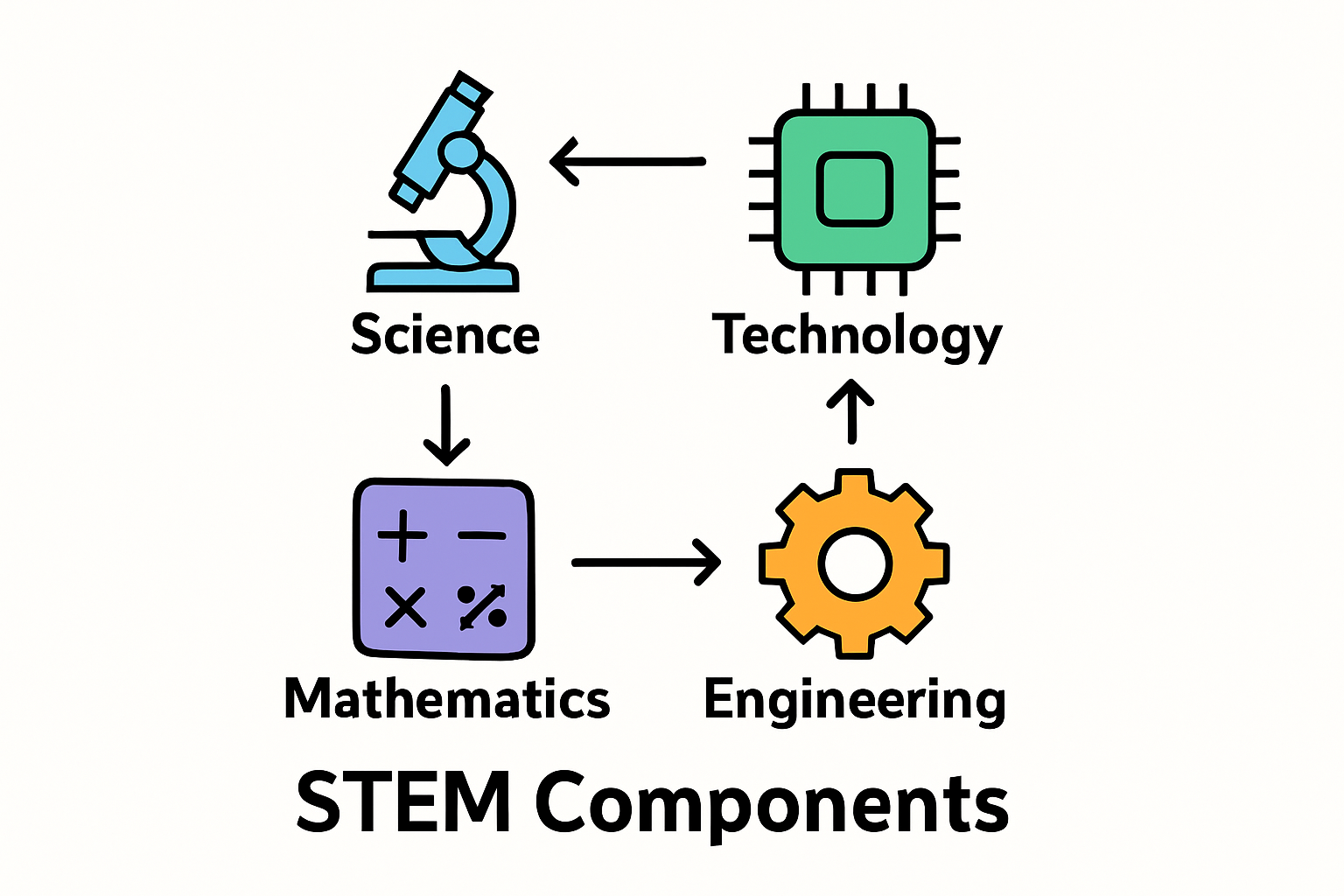
- Science: Understanding natural phenomena, developing scientific inquiry skills, and exploring how the world works through observation and experimentation
- Technology: Learning computational thinking, digital literacy, and innovative problem-solving techniques using modern digital tools
- Engineering: Designing solutions, understanding systems, practicing creative problem-solving, and developing prototype creation skills
- Mathematics: Applying numerical reasoning, analytical thinking, and quantitative skills to real-world challenges
Integrated Learning Approach
According to the Louisiana STEM Advisory Council, STEM education is more than just teaching individual subjects. It represents an integrated approach that emphasizes connections between academic disciplines, encouraging students to think critically and apply knowledge across different domains.
This interdisciplinary method prepares students to tackle complex real-world challenges by developing adaptable skills that transcend traditional academic boundaries. Students learn to view problems from multiple perspectives, use creative problem-solving techniques, and understand how different fields of knowledge interact and complement each other.
The goal of STEM education extends beyond academic achievement. It aims to cultivate a generation of innovative thinkers who can drive technological advancement, solve global challenges, and contribute meaningfully to an increasingly complex and technology-driven world. By providing students with opportunities to explore, experiment, and collaborate, STEM education nurtures curiosity, resilience, and a lifelong passion for learning and discovery.
The Importance of STEM Education in Today’s Society
STEM education has emerged as a critical framework for preparing students to navigate and succeed in a rapidly evolving global landscape. As technological advancements continue to reshape industries and create new career opportunities, the significance of STEM education extends far beyond traditional academic boundaries.
Driving Economic and Technological Innovation
According to the U.S. Department of Education, STEM education is fundamental to maintaining national competitiveness and economic prosperity. The skills developed through STEM learning directly contribute to technological innovation and economic growth by:
- Preparing students for high-demand careers in emerging technological fields
- Developing critical problem-solving and analytical thinking capabilities
- Encouraging innovative approaches to complex societal challenges
- Creating a workforce capable of driving technological advancement
Addressing Global Challenges
STEM education equips students with the intellectual tools necessary to address complex global issues. Climate change, sustainable energy development, healthcare innovations, and technological solutions all require interdisciplinary thinking and comprehensive understanding of scientific and technological principles.
Students trained in STEM disciplines learn to approach problems systematically, combining creativity with rigorous analytical skills. They develop the ability to design innovative solutions, understand intricate systems, and apply scientific methods to real-world challenges.
Moreover, STEM education promotes diversity and inclusivity by breaking down traditional barriers in scientific and technological fields. By encouraging students from all backgrounds to explore these disciplines, we create opportunities for broader representation and more comprehensive problem-solving approaches.
The transformative power of STEM education lies in its ability to not just teach subjects, but to inspire a generation of critical thinkers, innovators, and problem solvers who will shape our collective future.
How STEM Education Fosters Critical Thinking and Innovation
STEM education serves as a powerful catalyst for developing advanced cognitive skills that extend far beyond traditional academic learning. By creating an environment that challenges students to think deeply and approach problems from multiple perspectives, STEM learning transforms how individuals analyze, interpret, and solve complex challenges.
Developing Analytical Reasoning Skills
According to the U.S. Department of Education, STEM education cultivates critical thinking through structured yet creative learning approaches. Students engage in processes that require systematic investigation, empirical reasoning, and evidence-based problem solving:
- Breaking down complex problems into manageable components
- Generating hypotheses and testing potential solutions
- Analyzing data objectively and drawing logical conclusions
- Recognizing patterns and relationships across different domains
Encouraging Innovative Problem-Solving
The interdisciplinary nature of STEM education encourages students to transcend traditional subject boundaries. Instead of viewing science, technology, engineering, and mathematics as isolated disciplines, learners begin to understand how these fields interconnect and complement each other.
This approach nurtures adaptive thinking and creative solution development. Students learn to approach challenges with flexibility, understanding that complex real-world problems rarely have simple, linear solutions. They develop the ability to prototype, experiment, iterate, and refine their ideas continuously.
Moreover, STEM education emphasizes collaborative learning, where students work together to solve intricate challenges. This collaborative environment mirrors professional settings, teaching learners how to communicate effectively, respect diverse perspectives, and combine individual strengths to achieve collective goals.
By providing opportunities for hands-on experimentation, project-based learning, and open-ended exploration, STEM education transforms students from passive recipients of information into active, engaged learners who are prepared to drive innovation in an increasingly complex world.
Real-World Applications of STEM: Connecting Classroom to Career
STEM education transcends theoretical learning by creating powerful bridges between academic knowledge and professional practice. By integrating real-world scenarios and practical experiences, students develop a profound understanding of how classroom learning directly translates into meaningful career opportunities across diverse industries.
Bridging Academic Learning and Professional Skills
According to the University of Colorado Boulder, connecting students with local STEM professionals provides critical insights into potential career pathways. This approach transforms abstract concepts into tangible, exciting opportunities by:
- Exposing students to authentic workplace challenges
- Demonstrating practical applications of academic concepts
- Introducing students to cutting-edge technologies and methodologies
- Helping students understand the real-world impact of their learning
Industry-Integrated Learning Experiences
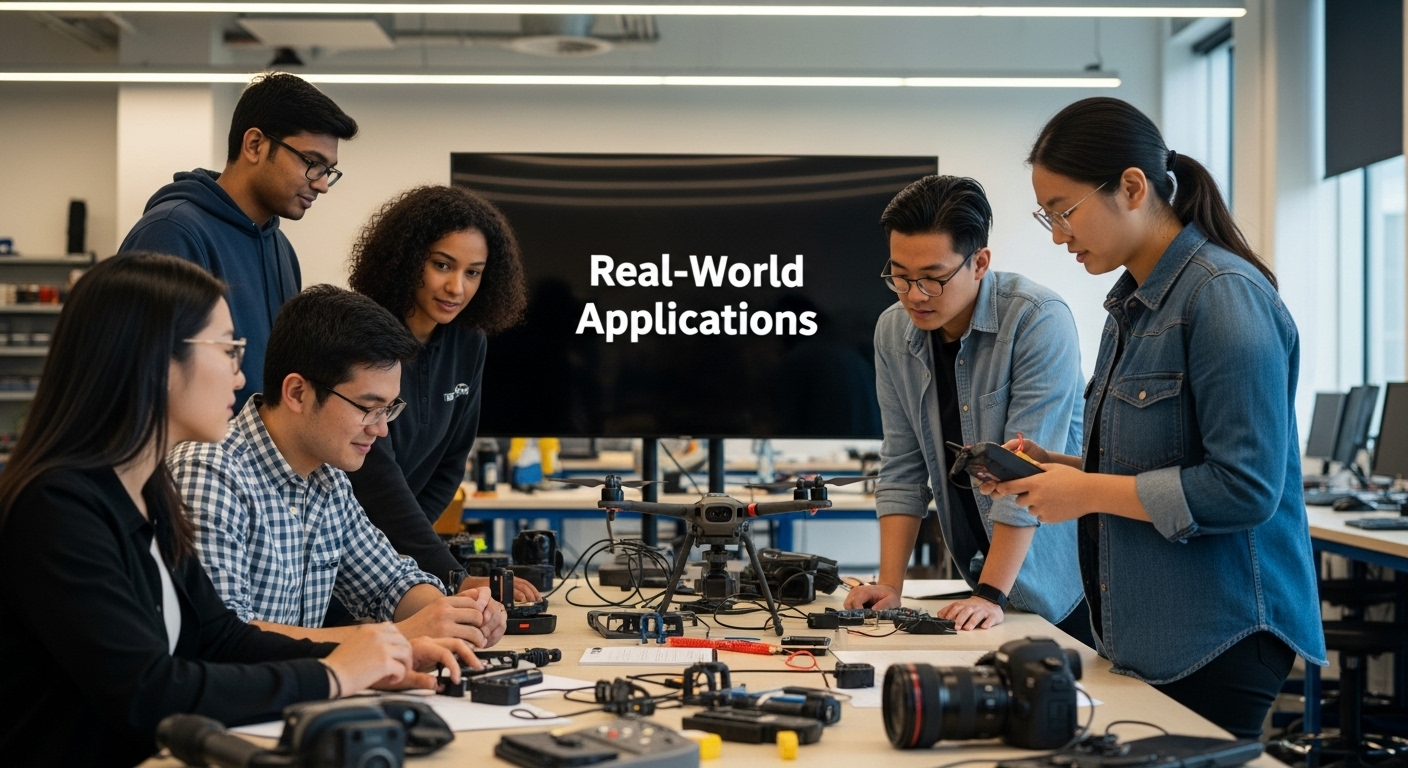
STEM education goes beyond traditional classroom instruction by offering immersive, hands-on experiences that mirror professional environments. Project-based learning allows students to engage with complex, interdisciplinary challenges that require creative problem-solving and collaborative skills.
Through carefully designed programs, students might design and build remotely operated vehicles, develop programmable sensor technologies, or create innovative solutions to community challenges. These experiences not only build technical skills but also cultivate essential professional competencies such as teamwork, communication, and adaptability.
Moreover, these integrated learning experiences help students understand the broader context of their education. They learn how scientific principles, technological innovations, engineering design, and mathematical reasoning converge to address real-world problems across various sectors like healthcare, environmental sustainability, technology, and manufacturing.
By creating these meaningful connections between academic learning and professional practice, STEM education prepares students to become innovative, adaptable professionals ready to tackle the complex challenges of an ever-evolving global landscape.
Overcoming Challenges in STEM Education Implementation
Despite the recognized importance of STEM education, significant obstacles continue to impede its comprehensive and equitable implementation across educational systems. These challenges demand strategic, multifaceted approaches that address structural, resource-based, and pedagogical barriers.
Addressing Resource and Infrastructure Limitations
According to the U.S. Department of Education, implementing effective STEM education requires addressing critical infrastructure challenges. Schools face substantial hurdles in creating robust learning environments that support comprehensive STEM learning:
- Insufficient funding for advanced technological equipment
- Limited access to updated laboratory and experimental resources
- Inadequate professional development for educators
- Uneven technological infrastructure across different school districts
Promoting Equity and Inclusive Participation
One of the most significant challenges in STEM education is ensuring equitable access and representation across diverse student populations. Many students from underrepresented backgrounds encounter systemic barriers that discourage their participation in STEM disciplines.
Addressing these challenges requires proactive strategies that create supportive, inclusive learning environments. Culturally responsive teaching methods, mentorship programs, and targeted support systems can help break down traditional barriers that have historically limited participation from minority and economically disadvantaged students.
Moreover, successful STEM education implementation demands a holistic approach that goes beyond traditional classroom instruction. This involves developing flexible curriculum designs, integrating real-world problem-solving experiences, and creating learning environments that celebrate diversity, creativity, and individual learning styles.
By recognizing and systematically addressing these multifaceted challenges, educational institutions can transform STEM education from an aspirational concept into a tangible, inclusive, and empowering learning experience for all students.
The following table highlights key challenges schools face when implementing STEM education, along with strategies mentioned in the article for overcoming these obstacles.
| Challenge | Description | Approaches to Overcome |
|---|---|---|
| Resource and Infrastructure Limitations | Lack of funding, outdated labs, minimal educator training, uneven tech | Invest in equipment, pro development |
| Equity and Inclusive Participation | Underrepresentation and systemic barriers for some student groups | Culturally responsive teaching, mentorship |
| Curriculum and Real-World Relevance | Traditional content not always preparing for real-world or diverse needs | Flexible curriculum, hands-on projects |
Make STEM Come Alive with AssemblyShows.com
Many schools struggle to turn powerful STEM concepts into real excitement and engagement. This article highlights the challenge of delivering integrated, hands-on learning that truly inspires curiosity and critical thinking. If you want to move beyond textbooks and help your students connect science, technology, engineering, and mathematics through unforgettable experiences, there is a solution.
Discover how AssemblyShows.com brings STEM education to life with interactive assemblies created just for elementary and middle schools. Veteran performer Doug Scheer and his team offer programs that foster creative problem-solving and active participation. Choose from live or virtual shows that align with your curriculum goals and give your students lasting inspiration. Ready to spark innovation and meet the goals described in “What is STEM Education? Understanding Its Importance”? Visit our program selection page and secure your date today. STEM learning is more than a classroom topic—turn it into a memorable experience now.
Frequently Asked Questions
What is STEM education?
STEM education is an integrated approach to learning that combines Science, Technology, Engineering, and Mathematics, encouraging students to explore interconnected concepts through hands-on experiences.
Why is STEM education important?
STEM education is crucial for preparing students for high-demand careers, fostering critical thinking, and equipping them with the skills needed to tackle complex global challenges and drive innovation.
How does STEM education promote critical thinking and problem-solving?
STEM education develops analytical reasoning and innovative problem-solving skills by encouraging students to break down complex problems, conduct systematic investigations, and collaborate on real-world challenges.
What are some real-world applications of STEM education?
Real-world applications of STEM education include developing solutions to issues like climate change, healthcare innovations, and technology applications across various industries, as well as hands-on projects that connect classroom learning to professional practice.