
Schools everywhere are looking for better ways to keep students interested and help them think for themselves. Most people think this just means adding a few extra activities or tougher homework. But the real secret is that curriculum enrichment can raise student engagement levels by up to 40 percent according to recent research. That means when schools give students richer experiences and real-world challenges, they are not just learning more, they are actually more excited to learn.
Table of Contents
- Defining Curriculum Enrichment: Key Concepts And Principles
- The Importance Of Curriculum Enrichment In Education
- How Curriculum Enrichment Enhances Student Engagement
- Real-World Applications Of Curriculum Enrichment
- Challenges And Considerations In Implementing Curriculum Enrichment
Quick Summary
| Takeaway | Explanation |
|---|---|
| Curriculum enrichment fosters active learning. | It transforms education from passive content delivery to engaging exploration and discovery experiences. |
| Focus on diverse learning needs. | Schools should offer varied experiences to accommodate different student strengths and learning styles effectively. |
| Integrate real-world applications. | Connect academic concepts to practical, real-world scenarios to enhance relevance and student engagement. |
| Encourage student autonomy in learning. | Providing opportunities for students to take charge of their educational journeys promotes intrinsic motivation and engagement. |
| Address institutional challenges proactively. | Educational institutions must plan for resource constraints and cultural shifts to successfully implement curriculum enrichment. |
Defining Curriculum Enrichment: Key Concepts and Principles
Curriculum enrichment represents a strategic approach to expanding and enhancing traditional educational experiences beyond standard classroom instruction. At its core, this concept focuses on providing students with learning opportunities that deepen understanding, stimulate intellectual curiosity, and develop critical thinking skills.
Understanding the Core Purpose
Curriculum enrichment goes beyond basic academic requirements by introducing additional layers of complexity and engagement to standard educational programs. Research from Educational Development Institute suggests that effective curriculum enrichment transforms learning from a passive reception of information into an active, dynamic process of exploration and discovery.
The primary objectives of curriculum enrichment include:
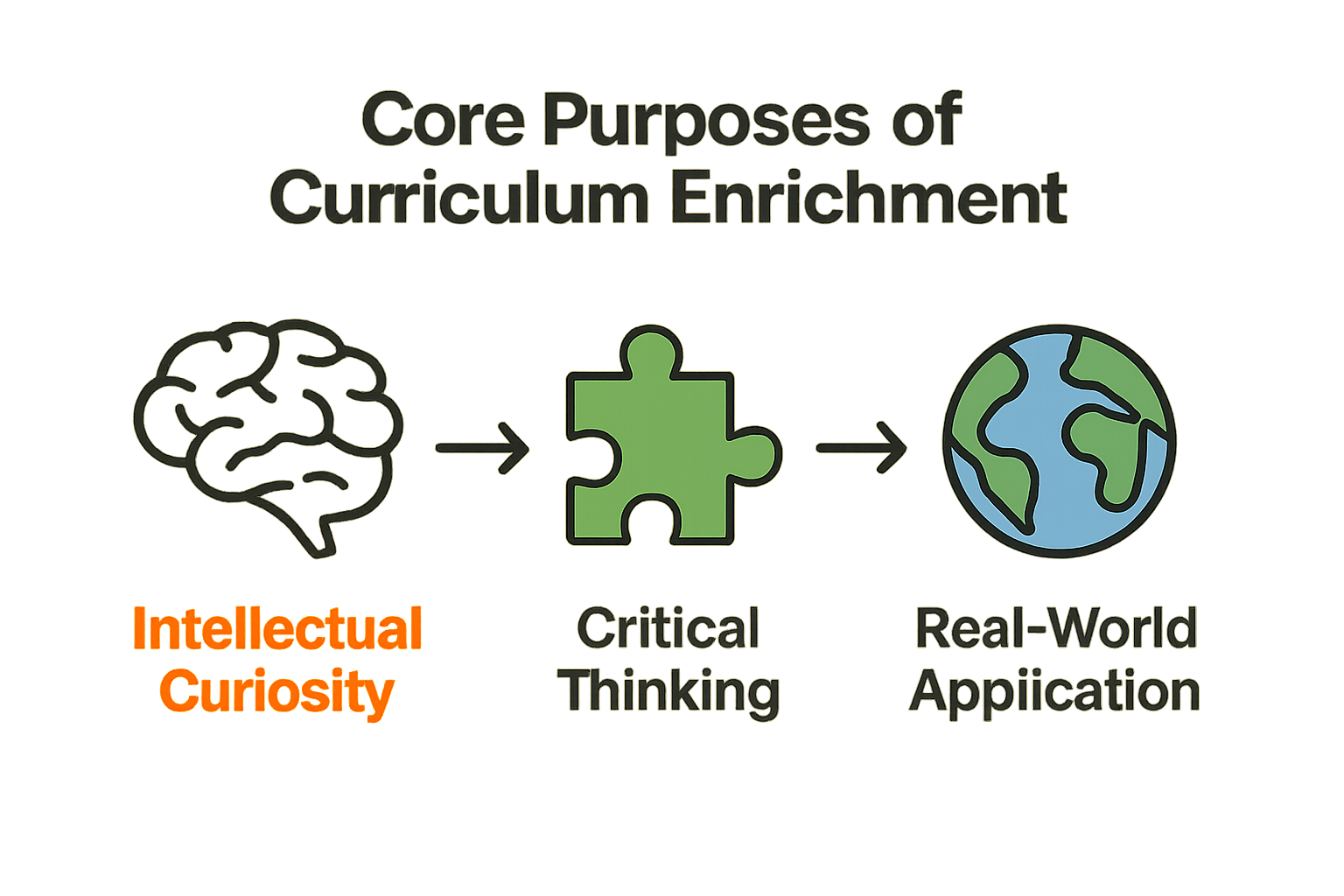
- Stimulating students’ intellectual curiosity
- Developing advanced cognitive skills
- Providing opportunities for deeper subject exploration
- Connecting academic content to real-world applications
Theoretical Foundations
Educational theorists view curriculum enrichment as a critical mechanism for addressing diverse learning needs and capabilities. By introducing varied learning experiences, schools can create more inclusive and adaptive educational environments that cater to different student strengths and interests.
Key principles underlying curriculum enrichment involve:
- Personalized learning pathways
- Interdisciplinary connections
- Experiential learning approaches
- Skill development beyond traditional academic metrics
Successful curriculum enrichment requires careful planning, thoughtful implementation, and continuous assessment to ensure that additional learning experiences genuinely contribute to students’ educational growth and development. By moving beyond standardized content, schools can create more engaging, meaningful, and transformative learning experiences that prepare students for complex, dynamic future challenges.
The Importance of Curriculum Enrichment in Education
Curriculum enrichment transcends traditional educational boundaries, serving as a critical catalyst for transforming learning environments and student outcomes. By expanding beyond standardized academic frameworks, schools can create more dynamic, engaging, and personalized educational experiences that prepare students for complex future challenges.
Enhancing Learning Potential
Research from Carnegie Mellon University indicates that enrichment programs significantly enhance students’ ability to retain and generalize information. These programs provide opportunities for students to explore subjects more deeply, develop advanced cognitive skills, and connect academic knowledge to real-world contexts.
Key benefits of curriculum enrichment include:
- Stimulating intellectual curiosity
- Developing critical thinking skills
- Promoting independent learning
- Expanding students’ intellectual horizons
Addressing Diverse Learning Needs
Curriculum enrichment recognizes that students have unique learning styles, interests, and capabilities. By offering varied learning experiences, educational institutions can create more inclusive environments that accommodate different strengths and potential. This approach helps schools move beyond one-size-fits-all educational models and embrace more personalized learning strategies.
Strategic approaches to addressing diverse learning needs involve:
- Creating flexible learning pathways
- Integrating interdisciplinary experiences
- Supporting individualized skill development
- Encouraging student-driven exploration
Ultimately, curriculum enrichment represents a forward-thinking approach to education that prepares students not just for academic success, but for lifelong learning and adaptability in an increasingly complex global landscape. By prioritizing engaging, comprehensive learning experiences, schools can nurture students’ intellectual growth and potential.
How Curriculum Enrichment Enhances Student Engagement
Student engagement represents a complex, multifaceted process that goes far beyond traditional classroom participation. Curriculum enrichment serves as a powerful mechanism for transforming passive learning experiences into dynamic, interactive educational journeys that capture students’ intrinsic motivation and intellectual curiosity.
Dimensions of Student Engagement
Research from the National Center on Safe Supportive Learning Environments reveals that student engagement encompasses three critical dimensions: behavioral, emotional, and cognitive. Curriculum enrichment strategically addresses each of these dimensions by creating learning experiences that are meaningful, challenging, and personally relevant.
Below is a table summarizing the three key dimensions of student engagement and how curriculum enrichment addresses each aspect.
| Dimension | Description | Enrichment Strategies Addressing It |
|---|---|---|
| Behavioral | Observable actions such as participation and effort | Interactive learning, autonomy, appropriate challenge |
| Emotional | Feelings of interest, enjoyment, or belonging | Personally relevant content, positive learning community |
| Cognitive | Investment in learning, willingness to exert effort | Challenging material, real-world applications |
Key strategies for enhancing engagement include:
- Creating interactive learning experiences
- Connecting academic content to real-world contexts
- Providing opportunities for student autonomy
- Designing challenges that match student capabilities
Motivational Dynamics of Enriched Learning
Curriculum enrichment transforms traditional educational models by shifting from standardized instruction to personalized learning experiences. By recognizing individual student interests and learning styles, schools can design curriculum components that intrinsically motivate learners. This approach helps students develop a sense of ownership over their educational journey, making learning more compelling and enjoyable.
Psychological factors that drive engagement through curriculum enrichment involve:
- Building student confidence
- Fostering intrinsic motivation
- Encouraging intellectual risk-taking
- Supporting individual exploration
By strategically implementing curriculum enrichment, educational institutions can create learning environments that not only transmit knowledge but also inspire students to become active, enthusiastic participants in their own educational growth. The ultimate goal is to transform education from a standardized process into a personalized, empowering experience that prepares students for lifelong learning and intellectual discovery.
Real-World Applications of Curriculum Enrichment
Curriculum enrichment bridges the critical gap between academic learning and practical, real-world experiences, transforming theoretical knowledge into tangible skills that prepare students for future challenges. By integrating authentic, contextual learning opportunities, schools can create educational experiences that extend far beyond traditional classroom boundaries.
Project-Based Learning Approaches
Research from Northern Kentucky University highlights innovative curriculum trends that emphasize practical, hands-on learning experiences. Project-based learning emerges as a powerful strategy for connecting academic concepts with real-world problem solving, enabling students to develop critical skills through direct engagement.
Key characteristics of effective real-world curriculum enrichment include:
- Integrating interdisciplinary challenges
- Encouraging collaborative problem solving
- Connecting academic content to industry needs
- Developing transferable professional skills
STEM and Professional Skills Development
Curriculum enrichment plays a crucial role in preparing students for emerging professional landscapes, particularly in science, technology, engineering, and mathematics (STEM) fields. By designing learning experiences that mirror real-world professional scenarios, schools can help students develop practical competencies and innovative thinking strategies.
Strategic approaches to professional skills development involve:
- Simulating workplace environments
- Creating industry partnership programs
- Implementing experiential learning modules
- Supporting student-led research initiatives
Through strategic curriculum enrichment, educational institutions can transform learning from a passive, theoretical process into an active, dynamic journey of discovery. By prioritizing authentic, contextually rich experiences, schools prepare students not just for academic success, but for meaningful engagement in an increasingly complex and interconnected world.
Challenges and Considerations in Implementing Curriculum Enrichment
Implementing curriculum enrichment represents a complex process that requires strategic planning, institutional commitment, and nuanced understanding of educational dynamics. While the potential benefits are significant, schools encounter multiple obstacles that can impede successful integration of enriched learning experiences.
Institutional and Resource Constraints
Research from Fitchburg State University reveals critical challenges in curriculum implementation, highlighting systemic barriers that educational institutions must navigate. Resource limitations, time constraints, and structural rigidities often create significant hurdles in developing and sustaining enrichment programs.
Key institutional challenges include:
- Limited financial resources
- Insufficient professional development opportunities
- Inflexible administrative structures
- Standardized testing pressures
Teacher Engagement and Organizational Culture
Successful curriculum enrichment depends heavily on teacher buy-in and institutional culture. Educators must be willing to adopt innovative approaches, redesign traditional instructional methods, and embrace more dynamic, student-centered learning strategies. Resistance to change and entrenched pedagogical practices can significantly undermine enrichment efforts.
This table provides an overview of common institutional and cultural challenges to curriculum enrichment and relevant considerations for addressing them.
| Challenge/Constraint | Description | Strategies/Considerations |
|---|---|---|
| Limited Financial Resources | Inadequate funding for enrichment activities | Seek grants, prioritize low-cost enrichment options |
| Insufficient Professional Development | Lack of teacher training for innovative methods | Provide ongoing training, collaborative communities |
| Inflexible Administrative Structures | Rigid policies or schedules limit flexibility | Advocate for policy adjustments, pilot programs |
| Standardized Testing Pressures | Focus on test outcomes overshadows enrichment | Balance test prep with engaging experiences |
| Resistance to Change | Staff hesitant to adopt new approaches | Foster innovation culture, recognize best practices |
Critical considerations for fostering teacher engagement involve:
- Creating collaborative professional learning communities
- Providing continuous training and support
- Recognizing and rewarding innovative teaching practices
- Developing clear communication channels
By anticipating potential challenges and developing comprehensive strategies to address them, educational institutions can create more adaptive, responsive learning environments. The key lies in maintaining flexibility, supporting educators, and remaining committed to student-centered approaches that prioritize meaningful, engaging educational experiences.

Transform Curriculum Enrichment Into Unforgettable Experiences
Are you looking for ways to move beyond traditional classroom learning and truly engage your students? The article above highlighted how real curriculum enrichment means deeper understanding and lasting excitement, but finding resources that spark curiosity and support your goals is not easy. Many schools struggle to make learning interactive and meaningful, especially when facing limited time and resources. Standard lessons often do not reach every student’s unique learning style or keep them motivated.

Make curriculum enrichment come alive with Assembly Shows. Our educational assemblies, designed and performed by nationally recognized expert Doug Scheer, bring core concepts from your curriculum out of the textbook and into an energetic, interactive setting. With programs that align with STEM, character education, and more, we help turn passive learning into active engagement for every child. Do not let another year go by with uninspiring enrichment—visit our homepage now to explore our live and virtual options and book an experience that your students will remember. Start creating deeper connections and foster a true love of learning in your school today.
Frequently Asked Questions
What is curriculum enrichment?
Curriculum enrichment is a strategic approach that enhances traditional educational experiences by providing additional learning opportunities that deepen understanding, stimulate curiosity, and develop critical thinking skills.
Why is curriculum enrichment important in education?
Curriculum enrichment is crucial as it transforms the learning experience, promoting intellectual curiosity, developing critical thinking, and preparing students for future challenges beyond standardized education.
How does curriculum enrichment enhance student engagement?
Curriculum enrichment enhances student engagement by transforming passive learning into dynamic, interactive experiences that are personally relevant, meaningful, and encourage student autonomy.
What challenges do schools face in implementing curriculum enrichment?
Schools face challenges like institutional constraints, limited resources, and the need for teacher engagement, which can impede the successful integration of enriched learning experiences.