
Student engagement is often seen as the heartbeat of any effective classroom. Yet almost half of students in the US report feeling only partially engaged during lessons, according to recent education surveys. Most people think a flashy new tool or trend will fix this overnight, but the real key lies in a series of smart, research-backed steps that may surprise you.
Table of Contents
- Step 1: Assess Your Current Engagement Strategies
- Step 2: Define Clear Learning Objectives
- Step 3: Integrate Interactive Learning Techniques
- Step 4: Foster a Supportive Classroom Environment
- Step 5: Utilize Technology to Enhance Participation
- Step 6: Evaluate and Adjust Engagement Practices
Quick Summary
| Key Point | Explanation |
|---|---|
| 1. Assess current engagement strategies | Analyze existing strategies using comprehensive data to identify strengths and weaknesses. |
| 2. Define clear and measurable learning objectives | Craft specific objectives that dictate expected student performance and enhance engagement. |
| 3. Integrate interactive learning techniques | Use collaborative activities and technology to foster active participation among students. |
| 4. Foster a supportive classroom environment | Create a safe space that emphasizes trust and values student input for better engagement. |
| 5. Continuously evaluate and adjust practices | Regularly assess engagement strategies to adapt and improve based on student feedback and data. |
Step 1: Assess Your Current Engagement Strategies
Transforming student engagement begins with a critical and honest assessment of your current strategies. Before implementing new approaches, you need to understand exactly where your existing methods succeed or fall short. This foundational step provides the roadmap for meaningful improvement.
Understanding Your Current Landscape
Start by gathering comprehensive data about your current student engagement levels. This means looking beyond simple attendance records and diving deeper into qualitative and quantitative metrics. According to research from Colorado State University, successful engagement assessment requires multiple measurement tools.
Conduct a systematic review by collecting feedback through student surveys, classroom observation notes, performance analytics, and direct conversations with students. Pay special attention to indicators like classroom participation rates, assignment completion percentages, and student motivation levels.
The table below summarizes common student engagement metrics and briefly describes their significance for classroom assessment.
| Engagement Metric | Description |
|---|---|
| Classroom participation rate | Tracks how often students contribute during lessons, helping identify active or passive involvement. |
| Assignment completion | Measures the percentage of finished assignments, indicating student follow-through and commitment. |
| Student motivation | Assesses enthusiasm and willingness to engage, offering insight into students’ intrinsic interest. |
| Social interaction | Observes how students collaborate and communicate with peers, revealing social dynamics and comfort levels. |
| Technology responsiveness | Monitors how students engage with digital tools and platforms, showing adaptability and digital engagement. |
Key Assessment Strategies
Effective assessment involves creating a holistic view of student engagement. Develop a structured evaluation framework that captures multiple dimensions of student interaction. This might include:
- Academic participation metrics
- Emotional connection to learning materials
- Social interaction within classroom environments
- Individual student motivation levels
- Technology and digital learning responsiveness
Remember that engagement is not a one-size-fits-all concept. Each classroom and student group will have unique dynamics that require nuanced understanding. Your goal is to create a detailed snapshot of current engagement that serves as a baseline for future improvements.
Once you have compiled your assessment data, synthesize the findings into clear insights. Identify specific areas where student engagement needs the most attention and begin formulating targeted strategies to address these gaps. This methodical approach ensures that your subsequent engagement enhancement efforts are data driven and precisely tailored to your students’ actual needs.
Step 2: Define Clear Learning Objectives
Crafting precise learning objectives transforms classroom engagement from passive absorption to active participation. This crucial step bridges the gap between teaching and genuine student understanding, providing a roadmap that motivates and directs learning efforts.
Constructing Meaningful Objectives
Learning objectives are more than simple statements about what students will do. According to Cornell University’s teaching guidelines, they should articulate specific, measurable outcomes that clearly communicate expected student performance. Think of these objectives as a contract between educators and learners that outlines exactly what knowledge or skills will be acquired.
Begin by identifying the core competencies students should develop. These objectives must be concrete and observable, using action verbs that describe precisely what students will demonstrate. Instead of vague statements like “understand mathematics,” craft objectives such as “students will solve quadratic equations using multiple algebraic methods” or “learners will analyze historical documents and extract primary argument structures.”
Designing Student-Centered Objectives
Effective learning objectives require careful alignment with student capabilities and course content. Consider the cognitive complexity appropriate for your student group. Start by asking fundamental questions: What specific skills do students need? What real-world applications will these skills have? How can objectives spark curiosity and intrinsic motivation?
Structure your objectives using a consistent framework that includes three key components:
- Specific performance expectations
- Conditions under which performance will be demonstrated
- Criteria for measuring successful achievement
For instance, an objective might read: “Given a set of primary source documents, students will write a 500-word analytical essay identifying three distinct perspectives on the American Revolution, using evidence from the provided materials.”
Remember that well-designed objectives do more than guide instruction. They provide students with clear expectations, helping them understand the purpose and relevance of their learning journey. By making objectives transparent and meaningful, you create a collaborative learning environment where students feel empowered and motivated to engage deeply with course material.
Step 3: Integrate Interactive Learning Techniques
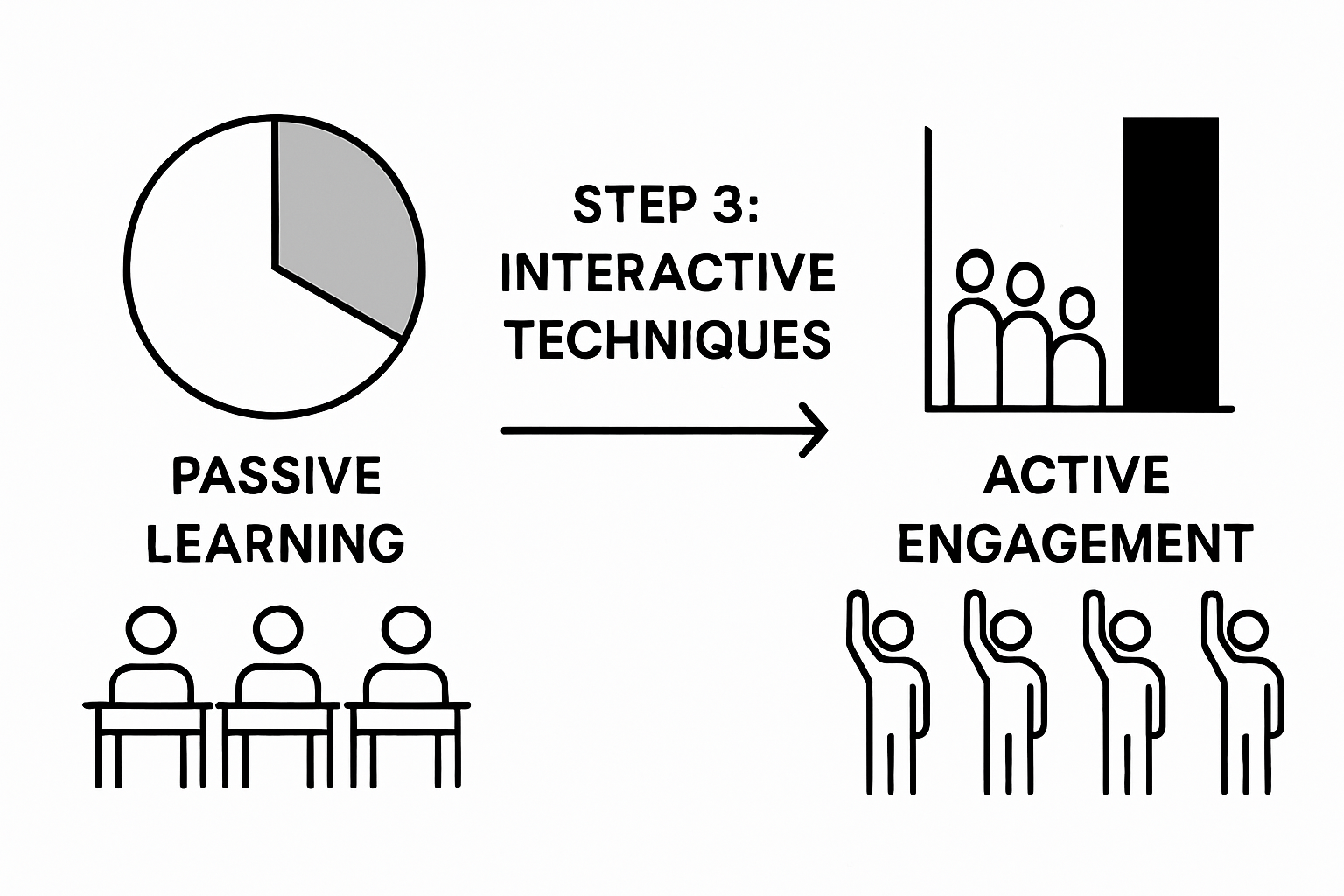
Transforming passive learning into an engaging, dynamic experience requires strategic implementation of interactive techniques that captivate student attention and stimulate active participation. This step moves beyond traditional lecture methods to create a vibrant classroom environment where students become co-creators of their learning journey.
Designing Collaborative Learning Experiences
Interactive learning is about breaking down the barriers between teacher and student, transforming education into a collaborative exploration. According to Northern Illinois University’s Center for Innovative Teaching, successful interactive techniques leverage students’ natural curiosity and social learning tendencies. This means designing activities that encourage dialogue, problem solving, and peer interaction.
Consider implementing techniques like think-pair-share, where students first reflect individually on a question, then discuss their thoughts with a partner, and finally share insights with the larger group. Such methods transform classroom dynamics, moving away from one-way information transmission to a multi-directional learning experience.
Incorporate digital tools, group discussions, hands-on projects, and real-world problem solving to keep students actively engaged.
Creating Purposeful Interaction
Effective interactive learning goes beyond simply adding group activities. Each interaction must have a clear purpose and align with your learning objectives. Meaningful engagement happens when students see direct connections between classroom activities and real-world applications. If you’re teaching science, for example, replace traditional lectures with laboratory experiments, collaborative research projects, or simulation-based learning that allows students to explore concepts through direct experience.
Consider incorporating interactive techniques that match different learning styles:
- Physical movement based activities for kinesthetic learners
- Visual problem solving for graphic learners
- Collaborative discussions for social learners
- Reflective individual work for introspective students
For schools looking to enhance their approach to inclusive learning environments, our guide on diversity and inclusion assemblies offers additional insights into creating engaging educational experiences.
Remember that interactive learning is an ongoing process of experimentation and refinement. Continuously gather student feedback, observe engagement levels, and be willing to adapt your techniques. The goal is not just participation, but meaningful, transformative learning that ignites students’ intrinsic motivation and curiosity.
Step 4: Foster a Supportive Classroom Environment
Creating a classroom environment where students feel safe, valued, and motivated is fundamental to driving genuine engagement. This step transcends physical space design and delves into building psychological safety that empowers students to take intellectual risks and participate actively in their learning journey.
Building Relational Trust
A supportive classroom environment begins with establishing genuine connections between teachers and students. According to research from Illinois Wesleyan University, positive student-teacher relationships are the cornerstone of academic success. This means moving beyond traditional hierarchical interactions and creating spaces where students feel heard, respected, and understood.
Start by developing consistent communication protocols that invite student input. Implement regular check-ins that allow students to share their thoughts, challenges, and aspirations. These conversations should be structured yet flexible, demonstrating that you value their perspectives. Use active listening techniques, validate their experiences, and show genuine interest in their personal and academic growth.
Designing Inclusive Learning Spaces
Physical and emotional classroom environments must work in tandem to support student engagement. Arrange your classroom to encourage collaboration, with flexible seating arrangements that allow students to work individually and in groups. Create visual representations of classroom agreements that outline mutual respect, active participation, and supportive behavior.
Consider implementing strategies that celebrate diversity and individual strengths:
- Rotating group leadership roles
- Peer mentorship programs
- Personalized learning pathways
- Inclusive discussion formats
For educators seeking innovative ways to create engaging learning experiences, explore our collection of fun elementary school assembly ideas that can inspire classroom interaction and community building.
Verify your supportive environment’s effectiveness by observing increased student participation, reduced anxiety around academic challenges, and a noticeable shift towards collaborative learning. Remember that creating a supportive classroom is an ongoing process of listening, adapting, and demonstrating genuine care for each student’s unique learning journey.
Step 5: Utilize Technology to Enhance Participation
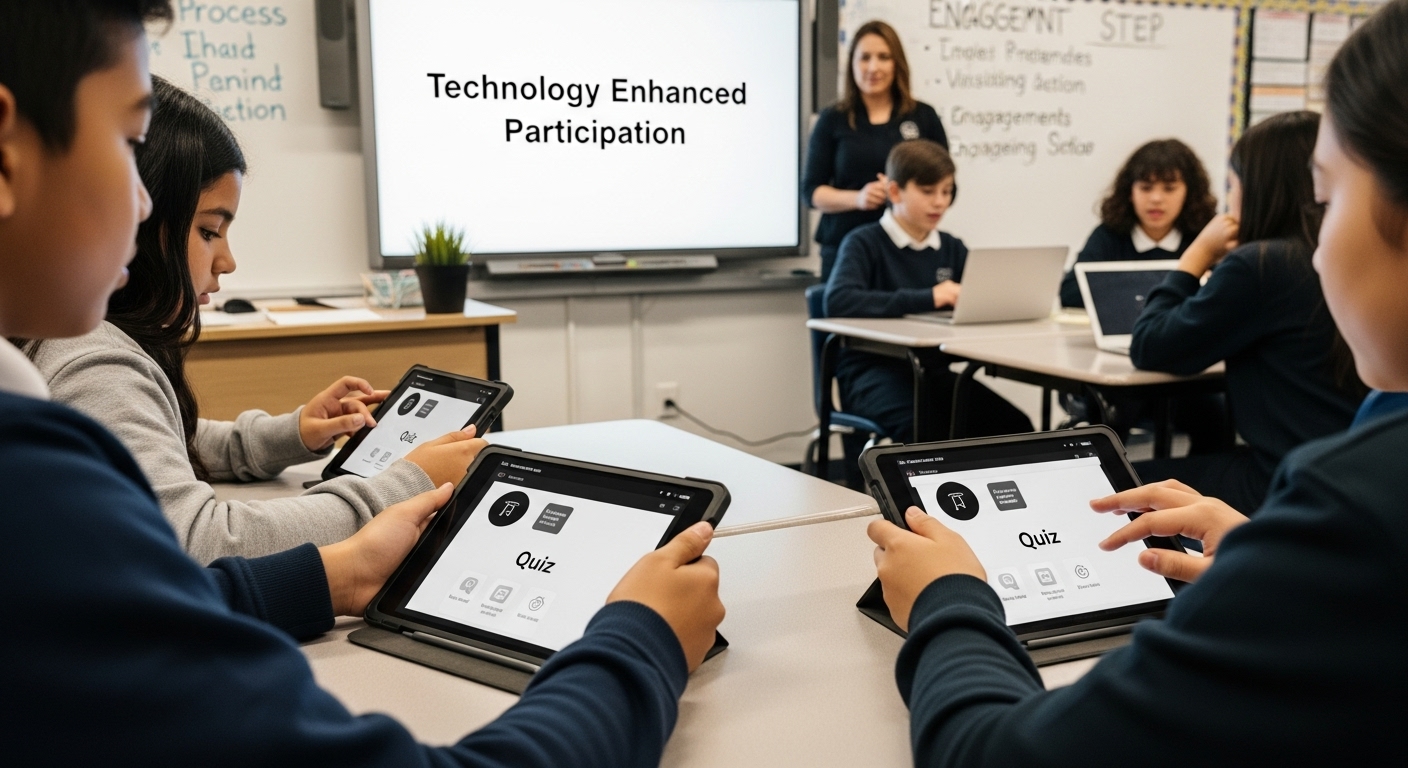
Technology offers unprecedented opportunities to transform student engagement from passive reception to active collaboration. This step explores strategic technological integration that amplifies student participation, making learning more interactive, personalized, and dynamic.
Strategic Digital Integration
Successful technology implementation goes beyond simply introducing digital tools. According to the National Education Association, effective digital strategies must align directly with learning objectives and student capabilities. Technology should serve as an engagement catalyst, not a distraction.
Begin by selecting tools that promote real-time interaction and collaborative learning. Platforms like interactive polling applications, digital discussion boards, and collaborative document editing software can dramatically increase student involvement. These technologies allow shy students to participate more comfortably and provide immediate feedback mechanisms that keep learners connected and motivated.
Creating Interactive Digital Experiences
Think of technology as an extension of your classroom’s learning ecosystem. Implement digital tools that encourage student agency and creativity. Gamification platforms can transform traditional assignments into engaging challenges, while virtual reality experiences can provide immersive learning environments that transcend physical classroom limitations.
Consider incorporating these technology-enhanced engagement strategies:
- Interactive quiz platforms with immediate feedback
- Collaborative online project management tools
- Digital portfolios showcasing student work
- Multimedia presentation platforms
- Real-time collaborative coding or writing environments
Remember that successful technology integration requires consistent teacher guidance and clear expectations. Monitor digital interactions, provide structured frameworks for online collaboration, and continuously assess how these tools contribute to learning outcomes.
This table provides a clear comparison of technology-enhanced engagement strategies mentioned in the article, highlighting their primary focus and intended classroom benefit.
| Digital Strategy | Focus Area | Intended Benefit |
|---|---|---|
| Interactive quiz platforms | Immediate feedback | Increases motivation and monitors progress |
| Collaborative project tools | Group work | Fosters teamwork and organizational skills |
| Digital portfolios | Student work display | Showcases growth and creativity |
| Multimedia presentations | Content delivery | Appeals to multiple learning styles |
| Real-time collaborative environments | Synchronous editing | Promotes instant cooperation and active participation |
| Gamification platforms | Engagement through challenge | Makes learning fun and goal-oriented |
| Virtual reality experiences | Immersive learning | Provides hands-on exploration and deepens understanding |
Verify technological engagement by tracking metrics such as increased participation rates, quality of digital interactions, and student feedback. Technology should ultimately create more meaningful, personalized learning experiences that motivate students to explore, create, and connect in ways previously impossible.
Step 6: Evaluate and Adjust Engagement Practices
Engagement is not a static destination but a continuous journey of reflection, measurement, and strategic adaptation. This final step transforms your engagement strategies from rigid approaches to dynamic, responsive frameworks that evolve with student needs and emerging educational insights.
Implementing Comprehensive Assessment
Effective evaluation requires a multidimensional approach that goes beyond traditional metrics. According to the University of Colorado Boulder’s Center for Teaching & Learning, student engagement encompasses cognitive, behavioral, and emotional dimensions. Develop a holistic assessment framework that captures these nuanced aspects of learning participation.
Create systematic data collection methods that provide meaningful insights. This might include student surveys, classroom observation protocols, performance analytics, and qualitative feedback sessions. Look for patterns that reveal engagement strengths and potential improvement areas. Pay attention not just to quantitative data like participation rates, but also to qualitative indicators such as student motivation, curiosity levels, and emotional connection to learning materials.
Designing Adaptive Improvement Strategies
Transform assessment data into actionable improvement strategies. Treat each piece of feedback as an opportunity to refine your approach. When you identify engagement barriers, develop targeted interventions that address specific challenges. This might involve adjusting instructional methods, redesigning learning activities, or providing additional support structures.
Consider implementing these continuous improvement techniques:
- Regular student feedback mechanisms
- Peer review of teaching practices
- Collaborative strategy development sessions
- Data-driven curriculum modifications
- Personalized learning pathway adjustments
Remember that successful adaptation requires a growth mindset. Be willing to experiment, make mistakes, and continuously learn from your experiences. Engagement strategies are not about achieving a perfect model but about creating a responsive, student-centered learning environment that evolves with emerging educational insights.
Verify your evaluation process by tracking long-term engagement trends, student satisfaction rates, and academic performance improvements. Celebrate incremental progress and remain committed to the ongoing journey of educational excellence.
Bring Your Engagement Strategies to Life with Interactive Assemblies
Struggling to turn student engagement from a checklist into true classroom transformation? If your school is working hard to assess, innovate, and energize participation—as detailed in the article—you already know that traditional methods only go so far. Whether you face low motivation, lackluster excitement during lessons, or difficulty fostering a supportive classroom, you deserve powerful solutions that make every objective a reality. This is where Assemblies from Scheer Genius step in, delivering curriculum-aligned, interactive experiences proven to spark genuine involvement.
If you want students to feel empowered and inspired for 2025 and beyond, choose unforgettable learning that combines hands-on fun with proven educational impact. Find out how Doug Scheer’s award-winning programs have helped schools across the Midwest achieve deeper engagement by reviewing real success stories on our Reviews page. Explore virtual shows for flexible participation options or visit AssemblyShows.com now and book your date. Demand for spring and fall assemblies is at an all-time high and spots fill quickly—take control of your school’s success story today.
Frequently Asked Questions
How can I assess my current student engagement strategies?
Start by gathering comprehensive data through student surveys, classroom observations, performance analytics, and conversations with students. Focus on metrics like participation rates and motivation levels to identify engagement challenges.
What are effective ways to set clear learning objectives for students?
Craft specific, measurable objectives that outline what students will demonstrate. Use action verbs and consider real-world applications to create objectives that spark curiosity and motivation.
What interactive learning techniques can I integrate to boost student engagement?
Implement techniques like think-pair-share, hands-on projects, and digital tools. Ensure that each activity has a clear purpose and connects directly to learning objectives for maximum impact.
How should I evaluate and adjust my engagement practices over time?
Use a multidimensional assessment approach, including student surveys and qualitative feedback. Analyze the data to identify strengths and improvement areas, and adapt your strategies based on feedback and engagement trends.
Recommended
- 8 Fun Elementary School Assembly Ideas for Engaging Students – Scheer Genius Assembly Shows
- Understanding Diversity and Inclusion Assemblies in Schools – Scheer Genius Assembly Shows
- Unlock Students’ Potential with Our Top School Assembly Shows
- Unlock Students’ Potential with Our Top School Assembly Shows
- How to Increase Website Engagement in 2025: Proven Strategies
- Best Projector for Teachers 2025: Top Choices in Malaysia – Projector Display