
Stem assembly programs are changing the way kids see science in schools and that shift is getting real results. Studies show students who attend these programs report up to 40 percent higher engagement in STEM subjects compared to regular lessons. You might expect these assemblies to be all about flashy experiments and funny presenters, but the real magic happens when kids actually get their hands on science and see how it works in real life.
Table of Contents
- What Are Stem Assembly Programs?
- The Importance Of Stem Assembly Programs In Education
- How Stem Assembly Programs Foster Collaboration And Innovation
- Key Components Of Effective Stem Assembly Programs
- Real-World Applications And Success Stories Of Stem Assembly Programs
Quick Summary
| Takeaway | Explanation |
|---|---|
| STEM assembly programs enhance learning engagement | These programs combine entertainment with educational content, making complex STEM subjects accessible to students. |
| They foster curiosity and critical thinking | By sparking interest in scientific exploration, these initiatives develop essential problem-solving skills for future innovators. |
| Interactive experiences promote collaboration | Students engage in hands-on demonstrations and group discussions, enhancing teamwork and communication skills. |
| Connection to real-world applications is crucial | Programs illustrate how scientific concepts translate into impactful career paths and innovations across industries. |
| Effective content design is essential | Successfully crafted programs align with curriculum standards and balance educational rigor with engaging performance techniques. |
What are Stem Assembly Programs?
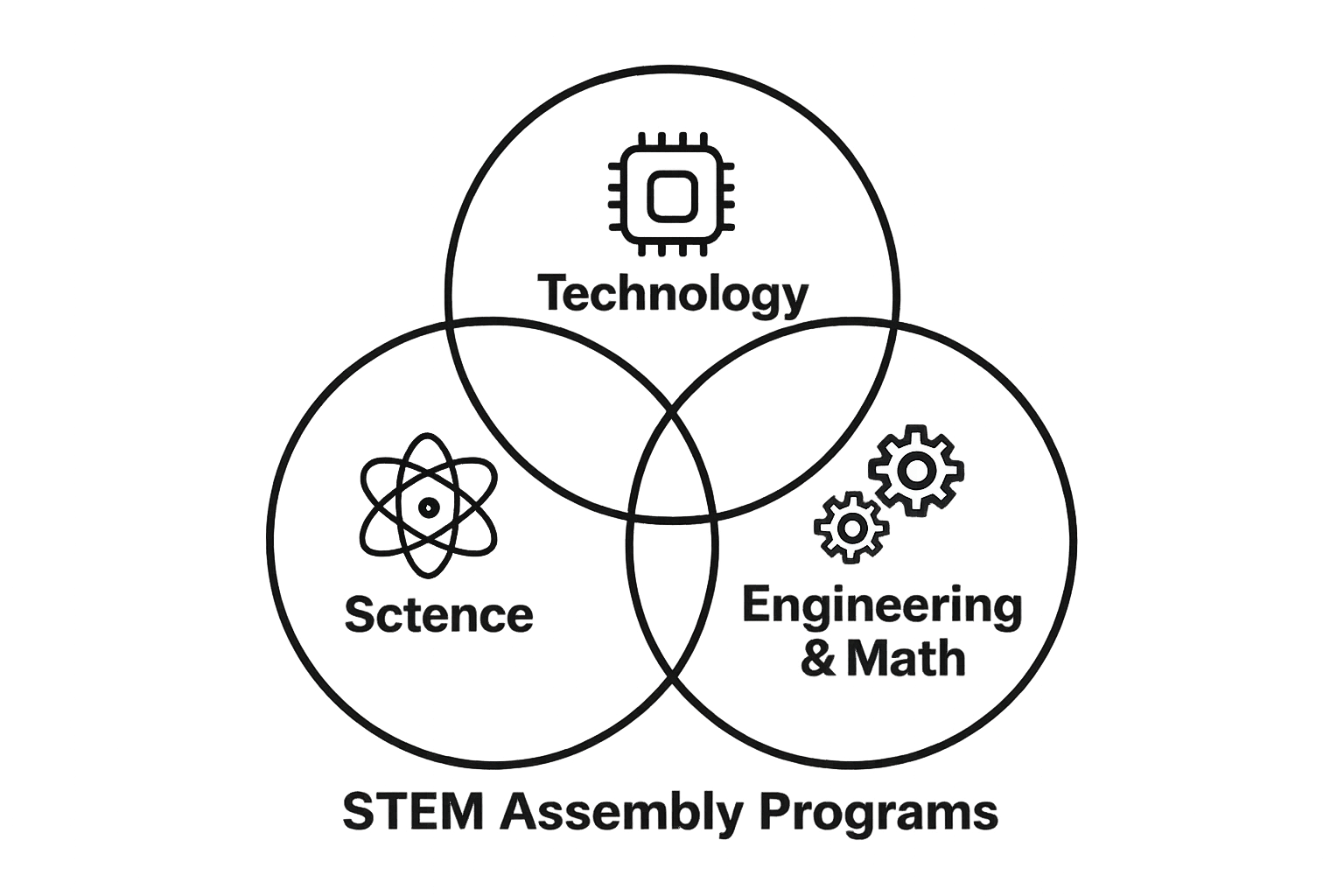
Stem assembly programs represent specialized educational experiences designed to introduce students to science, technology, engineering, and mathematics concepts through interactive, engaging presentations. These programs transform traditional learning environments by bringing dynamic, curriculum-aligned performances directly into school settings, making complex STEM subjects more accessible and exciting for young learners.
The Core Purpose of STEM Assembly Programs
At their fundamental level, stem assembly programs explained focus on sparking curiosity and enthusiasm for scientific exploration among students. The U.S. National Science Foundation’s Directorate for STEM Education supports initiatives that develop a well-informed citizenry and capable workforce of future scientists, technicians, and innovators.
These programs typically feature key characteristics:
- Interactive demonstrations that showcase scientific principles
- Engaging performances that make learning entertaining
- Curriculum-connected content that reinforces classroom teachings
- Hands-on experiences that encourage student participation
How STEM Assembly Programs Work
Stem assembly programs are carefully crafted educational experiences that blend entertainment with substantive learning. Professional educators and performers create presentations that break down complex scientific concepts into digestible, age-appropriate content. Discover more about educational assemblies that transform traditional learning approaches.
Typically, these programs involve:
- Live scientific demonstrations
- Interactive storytelling about scientific discoveries
- Practical examples of STEM applications in real-world scenarios
- Opportunities for students to ask questions and engage directly with presenters
By making science approachable and exciting, stem assembly programs play a crucial role in inspiring the next generation of innovators and critical thinkers.
To better understand the unique role of STEM assembly programs, here is a comparison of traditional classroom learning methods and STEM assembly program approaches as described in the article.
| Aspect | Traditional Classroom Learning | STEM Assembly Programs |
|---|---|---|
| Engagement Level | Often lecture-based, with limited interactivity | Highly interactive, utilizing live demonstrations and hands-on activities |
| Approach to Content | Focus on theoretical concepts, textbook material | Breaks down complex scientific concepts into digestible, age-appropriate content |
| Student Participation | Mainly passive, with teacher-centered instruction | Encourages active participation and audience involvement |
| Connection to Real Life | Limited real-world applications shown | Emphasizes real-world STEM applications and careers |
| Learning Environment | Standard classroom setting | Dynamic presentations, sometimes outside regular classrooms |
| Collaboration Opportunities | Group work may be limited or structured | Promotes teamwork and group discussions through interactive experiences |
| Impact on Future Interest | May not inspire long-term curiosity | Sparks curiosity, critical thinking, and interest in STEM |
The Importance of Stem Assembly Programs in Education
Stem assembly programs have emerged as critical educational tools that bridge the gap between traditional classroom learning and immersive scientific experiences. These innovative programs play a transformative role in preparing students for future academic and professional challenges by making complex scientific concepts engaging and accessible.
Cultivating Future Scientific Talent
Comprehensive STEM education goes beyond memorizing facts. According to the National Science Teaching Association, these programs promote critical thinking, problem-solving skills, and behavioral competencies like perseverance and adaptability. By introducing students to scientific exploration through dynamic presentations, stem assembly programs help nurture the next generation of innovators and critical thinkers.
Key benefits of stem assembly programs include:
- Sparking curiosity about scientific disciplines
- Demonstrating real-world applications of STEM concepts
- Breaking down complex ideas into understandable formats
- Encouraging student engagement and interactive learning
Addressing Educational Challenges
Traditional educational models often struggle to make scientific subjects exciting and relevant. Learn more about innovative educational approaches that transform learning experiences. Stem assembly programs offer a solution by presenting scientific concepts through dynamic, entertaining performances that capture students’ imagination and make learning enjoyable.
These programs strategically address educational gaps by:
- Providing supplemental learning experiences outside traditional classrooms
- Offering hands-on demonstrations that complement curriculum
- Inspiring students who might not typically engage with scientific subjects
- Creating memorable learning experiences that encourage further exploration
By transforming scientific education into an interactive and compelling experience, stem assembly programs play a crucial role in developing a scientifically literate and innovative future generation.
How Stem Assembly Programs Foster Collaboration and Innovation
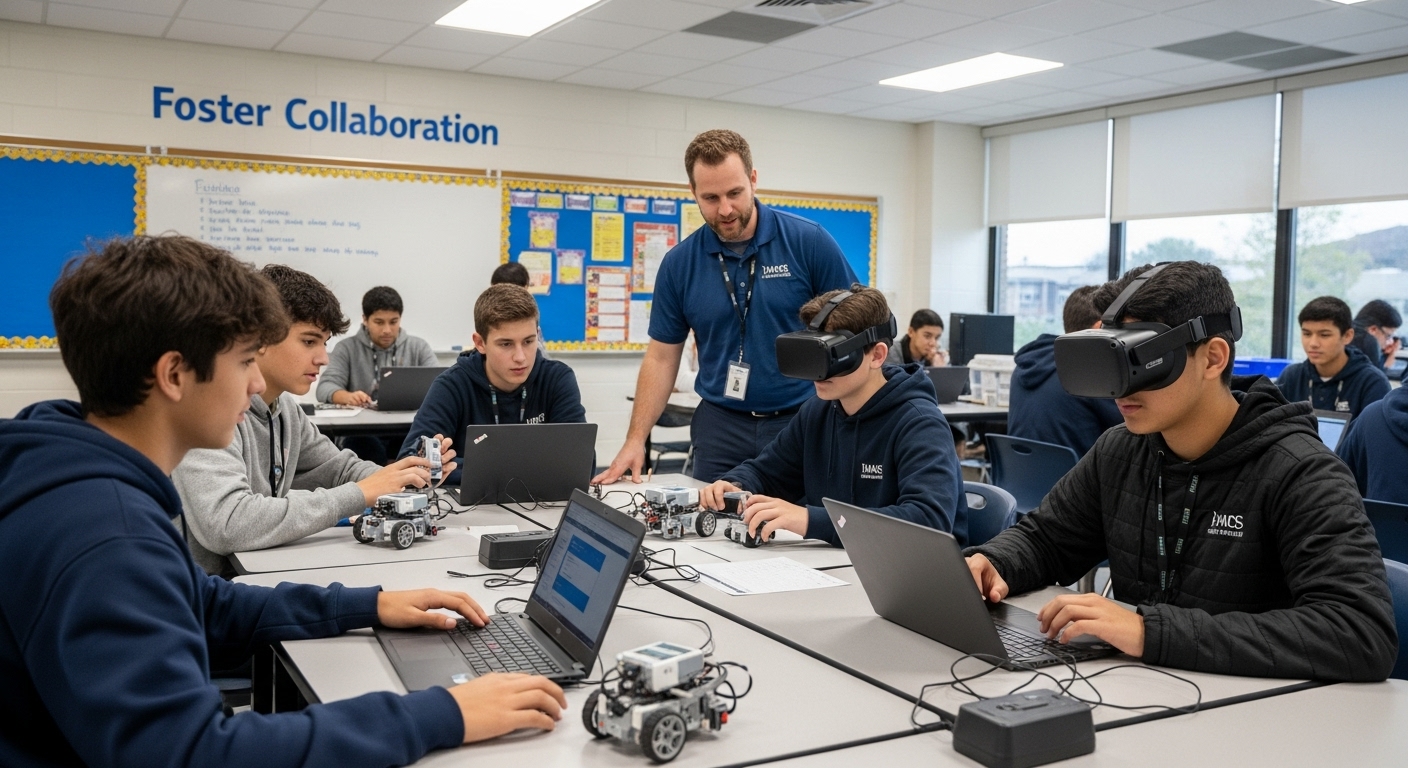
Stem assembly programs serve as powerful catalysts for collaborative learning and innovative thinking, transforming traditional educational experiences into dynamic, interactive opportunities for student engagement. By creating environments that encourage teamwork, problem-solving, and creative exploration, these programs prepare students for the complex challenges of future scientific and technological landscapes.
Creating Collaborative Learning Environments
Innovative educational approaches are crucial in developing interdisciplinary skills. According to the National Science Foundation, these programs support multidisciplinary projects that build theoretical knowledge and generate new understanding across various learning settings. Stem assembly programs achieve this by designing experiences that naturally promote student interaction and collective problem-solving.
Key collaborative aspects include:
- Encouraging group discussions and shared scientific exploration
- Developing communication skills through interactive demonstrations
- Creating opportunities for peer learning and knowledge exchange
- Stimulating collective curiosity about scientific concepts
Nurturing Innovation Through Interactive Experiences
Explore creative middle school assembly ideas that push the boundaries of traditional learning. These programs go beyond standard classroom instruction by presenting scientific concepts through engaging, hands-on experiences that inspire students to think creatively and approach problems from multiple perspectives.
Innovation is cultivated through:
- Presenting real-world scientific challenges
- Demonstrating connections between theoretical knowledge and practical applications
- Encouraging experimental thinking and hypothesis testing
- Inspiring students to view challenges as opportunities for creative solutions
By integrating collaborative techniques and innovative presentation methods, stem assembly programs equip students with essential skills for future scientific and technological endeavors, transforming passive learning into an active, inspiring journey of discovery.
Key Components of Effective Stem Assembly Programs
Effective stem assembly programs are meticulously designed educational experiences that blend scientific knowledge, interactive learning, and engaging performance techniques. These programs go beyond traditional teaching methods by creating immersive environments that inspire students to explore, question, and understand complex scientific concepts through dynamic and memorable presentations.
Designing Engaging Scientific Content
STEM education strategies require careful planning and innovative approaches. According to the Texas Education Agency’s STEM Education Toolkit, successful programs integrate cross-disciplinary connections and engineering design challenges to enhance student learning outcomes. Effective stem assembly programs achieve this by developing content that is both scientifically accurate and captivating.
Key content design principles include:
- Aligning presentations with current curriculum standards
- Creating age-appropriate scientific explanations
- Incorporating real-world scientific applications
- Balancing technical information with entertaining delivery
Interactive Performance Techniques
Discover interactive assembly strategies that transform scientific learning into an exciting experience. The most successful stem assembly programs employ performance techniques that actively engage students, turning passive observation into dynamic participation.
Critical interactive elements include:
- Live scientific demonstrations
- Audience participation opportunities
- Visual and kinesthetic learning components
- Moments of surprise and scientific wonder
By combining rigorous scientific content with compelling performance techniques, stem assembly programs create powerful learning experiences that inspire curiosity, critical thinking, and a genuine passion for scientific exploration.
Below is a table summarizing the core components and features of effective STEM assembly programs, helping clarify what makes them meaningful and memorable for students.
| Component | Description |
|---|---|
| Curriculum Alignment | Presentations and content designed to match existing academic standards |
| Age-Appropriate Explanations | Scientific concepts are tailored to the developmental stage of the audience |
| Interactive Demonstrations | Live, hands-on experiments and audience involvement |
| Real-World Applications | Examples and stories highlighting the practical uses of STEM concepts |
| Engaging Performances | Lively delivery blending education with entertainment |
| Visual and Kinesthetic Learning | Multisensory approaches, including visual aids and activities that engage movement |
| Peer Learning and Collaboration | Activities and group discussions that foster teamwork and knowledge-sharing among students |
 These carefully crafted programs serve as transformative educational tools that bridge the gap between theoretical knowledge and practical understanding.
Real-World Applications and Success Stories of Stem Assembly Programs
Stem assembly programs transform theoretical scientific knowledge into tangible, inspiring experiences that demonstrate the practical power of scientific understanding. These programs bridge the crucial gap between classroom learning and real-world innovation, showing students how scientific principles directly connect to groundbreaking achievements and career opportunities.
Inspiring Future Innovators
Invention stories from remarkable innovators highlight the transformative potential of early scientific exposure. The Lemelson Center documents numerous examples of individuals whose early scientific curiosity blossomed into extraordinary professional achievements. Stem assembly programs play a critical role in sparking this initial inspiration, helping students visualize their potential contributions to scientific and technological advancement.
Key ways these programs inspire include:
- Showcasing diverse career pathways in scientific fields
- Presenting relatable stories of young scientists and inventors
- Demonstrating practical applications of scientific principles
- Connecting classroom learning to real-world problem solving
Practical Impact Across Industries
Learn about engaging educational experiences that translate scientific concepts into actionable knowledge. Stem assembly programs provide students with concrete examples of how scientific understanding drives innovation across multiple sectors, from environmental sustainability to technological development.
Industry application highlights include:
- Environmental science solutions for climate challenges
- Medical technology and healthcare innovations
- Renewable energy development and research
- Advanced computing and artificial intelligence breakthroughs
By presenting scientific learning as a dynamic, exciting journey of discovery, stem assembly programs do more than educate. They inspire a generation of critical thinkers, problem solvers, and potential innovators who understand that scientific knowledge is a powerful tool for creating meaningful change in the world.
Bring STEM Assembly Programs to Life at Your School
Is your school struggling to spark real excitement and understanding around science and technology? The article on stem assembly programs explained how traditional lessons often leave students unengaged and scientific concepts feeling out of reach. Interactive demonstrations and hands-on experiences are essential for lasting impact, yet many educators lack the tools or resources to make science truly memorable.
If you want to break this cycle and turn your next assembly into an inspiring, curriculum-aligned experience, explore our Assemblies designed specifically for elementary and middle schools across the Midwest. Led by veteran educator Doug Scheer, every program at AssemblyShows.com is packed with high-energy science demonstrations, audience participation, and genuine learning.
Book an assembly and watch your students discover the fun side of STEM. Choose live or virtual formats from our collection of unforgettable shows and see the difference interactive science can make in your school. Visit AssemblyShows.com now to reserve your date and turn scientific curiosity into classroom success.
Frequently Asked Questions
What are stem assembly programs?
Stem assembly programs are specialized educational experiences that introduce students to science, technology, engineering, and mathematics (STEM) concepts through engaging, interactive presentations that align with their curriculum.
How do stem assembly programs engage students in learning?
These programs utilize live demonstrations, interactive storytelling, and hands-on experiences to make scientific concepts accessible and exciting, encouraging student participation and critical thinking.
What are the benefits of participating in stem assembly programs?
Stem assembly programs help spark curiosity about scientific disciplines, demonstrate real-world applications of STEM concepts, encourage student engagement, and break down complex ideas into understandable formats.
How do stem assembly programs support collaboration and innovation among students?
These programs create environments that foster teamwork, communication, and peer learning, allowing students to collaboratively explore scientific concepts and develop problem-solving skills, preparing them for future challenges in STEM fields.
Recommended
- What is STEM Education? Understanding Its Importance – Scheer Genius Assembly Shows
- Understanding Why Host Educational Assemblies in Schools – Scheer Genius Assembly Shows
- 8 Creative Middle School Assembly Ideas to Engage Students – Scheer Genius Assembly Shows
- Branch Out With This Fun History-Themed Stunt – Scheer Genius Assembly Shows