
Virtual school programs are redefining what education looks like by using technology to bring learning right into your home. More than 76 percent of US school districts now offer some form of virtual or blended instruction and the numbers keep growing every year. Many people expect online classes to just be digital versions of old lessons but these programs are actually unlocking new ways for students to customize their learning journey in ways traditional classrooms cannot match.
Table of Contents
- What Are Virtual School Programs And Their Purpose?
- The Importance Of Virtual School Programs In Today’s Education
- How Virtual School Programs Function: Key Components Explained
- Exploring Different Models Of Virtual School Programs
- Challenges And Considerations In Implementing Virtual School Programs
Quick Summary
| Takeaway | Explanation |
|---|---|
| Virtual school programs enhance educational access. | These programs provide learning opportunities for students facing barriers, such as health issues or geography, allowing equitable access to quality education. |
| Flexibility is a key feature of virtual schooling. | Students can learn at their own pace and schedule, accommodating diverse personal needs and learning styles. |
| Technological infrastructure is crucial for success. | Robust digital platforms and reliable internet access are essential to ensure effective online learning experiences for all students. |
| Digital skills are developed through virtual learning. | Students gain critical digital literacy skills necessary for navigating modern technology-driven environments. |
| Hybrid models combine online and in-person education. | Blended learning approaches merge both methods, providing a comprehensive educational experience that meets varied student needs. |
What are Virtual School Programs and Their Purpose?
Virtual school programs represent an innovative educational approach that leverages digital technologies to deliver comprehensive learning experiences outside traditional classroom settings. These programs provide students with flexible, technology-driven educational opportunities that transcend geographical limitations and traditional scheduling constraints.
Understanding the Core Concept
At their fundamental level, virtual school programs are structured online learning environments where students can access curriculum, interact with instructors, complete assignments, and progress through academic coursework entirely through internet-based platforms. According to the Texas Virtual School Network, these programs are designed to offer equitable access to quality online courses taught by state-certified educators trained in effective digital instruction.
Key characteristics of virtual school programs include:
- Instructor-led courses delivered through digital platforms
- Flexible learning schedules accommodating diverse student needs
- Comprehensive curriculum matching traditional school standards
- Interactive online learning tools and resources
Purpose and Educational Benefits
The primary purpose of virtual school programs extends beyond mere digital content delivery. These platforms aim to provide students with personalized learning experiences that accommodate individual learning styles, pace, and circumstances. Some students might require virtual schooling due to health concerns, geographic isolation, advanced academic needs, or specific personal requirements.
Virtual programs offer significant advantages by breaking down traditional educational barriers. They enable students who might otherwise struggle in conventional classroom settings to access high-quality education. Learn more about our virtual assembly options for schools that complement these innovative learning approaches.
As defined in the Code of Virginia, virtual school programs are characterized by their ability to deliver instructional content electronically, with teachers operating from remote locations and providing synchronous or asynchronous instruction. This definition underscores the program’s commitment to flexible, technology-enabled education that meets contemporary learning needs.
The Importance of Virtual School Programs in Today’s Education
Virtual school programs have become increasingly critical in modern educational landscapes, transforming how students learn, engage with curriculum, and prepare for future academic and professional challenges. These digital learning platforms represent more than a technological trend they are a fundamental shift in educational delivery and accessibility.
Addressing Educational Inequities
One of the most significant contributions of virtual school programs is their potential to bridge educational gaps across diverse student populations. According to research from the U.S. Government Accountability Office, these programs offer unique opportunities for students who might otherwise face barriers to traditional education. Students in remote areas, those with health challenges, or individuals managing complex personal schedules can now access high-quality educational resources.
Key advantages of virtual school programs include:
- Eliminating geographical constraints on learning
- Providing flexible scheduling options
- Accommodating diverse learning styles and personal circumstances
- Offering personalized learning pathways
Preparing Students for a Digital Future
Virtual school programs do more than deliver academic content they cultivate essential digital literacy skills. In an increasingly technology-driven world, students develop critical technological competencies through these platforms. Explore our tips for teachers engaging virtual learners to understand how educators can maximize these digital learning environments.
These programs teach students how to:
- Navigate complex digital interfaces
- Communicate effectively in online environments
- Manage time and resources independently
- Develop self-directed learning strategies
Comprehensive Educational Adaptation
Virtual school programs represent a comprehensive adaptation to changing educational needs. They demonstrate remarkable flexibility in responding to unexpected disruptions like global health crises, ensuring continuous learning regardless of external circumstances. By integrating advanced technological tools, interactive curriculum, and personalized learning experiences, these programs are reshaping educational paradigms and preparing students for an increasingly complex, interconnected world.
How Virtual School Programs Function: Key Components Explained
Virtual school programs represent complex digital ecosystems designed to deliver comprehensive educational experiences through sophisticated technological infrastructure. Understanding their functional mechanics requires exploring the intricate interplay between technological platforms, instructional design, and interactive learning methodologies.
Technological Infrastructure and Learning Platforms
At the core of virtual school programs are advanced digital learning management systems that serve as comprehensive educational environments. According to the University of Illinois Springfield, these platforms integrate multiple technological components to create seamless, interactive learning experiences.
Critical technological components include:
- Cloud-based course management systems
- Secure student authentication protocols
- Interactive multimedia content delivery mechanisms
- Real-time communication and collaboration tools
- Performance tracking and assessment dashboards
Instructional Design and Delivery Models
Virtual school programs employ sophisticated instructional strategies that transcend traditional classroom boundaries. Pedagogical approaches are carefully crafted to ensure engaging, effective digital learning experiences. These programs typically blend synchronous and asynchronous learning models, allowing students flexibility while maintaining structured educational progression.
Key instructional delivery mechanisms include:
- Live video lectures and interactive sessions
- Self-paced recorded instructional modules
- Discussion forums and peer collaboration spaces
- Automated quizzes and comprehensive assessment tools
Student Engagement and Support Mechanisms
Successful virtual school programs prioritize comprehensive student support beyond traditional content delivery. Check out our virtual show formats to understand how interactive digital experiences can enhance learning engagement. These programs implement robust support systems that include academic advising, technical assistance, and personalized learning pathways designed to accommodate diverse student needs and learning styles.
The integration of advanced technological tools, meticulously designed curriculum, and responsive support structures enables virtual school programs to create dynamic, inclusive educational environments that prepare students for increasingly digital and interconnected academic and professional landscapes.
Exploring Different Models of Virtual School Programs
Virtual school programs have evolved into diverse models that cater to different educational needs, learning styles, and institutional approaches. Understanding these varied frameworks helps educators, administrators, and students select the most appropriate virtual learning environment for their specific requirements.
Full-Time Virtual School Programs
Full-time virtual school programs represent comprehensive online educational experiences that completely replace traditional brick-and-mortar schooling. According to the Texas Virtual School Network, these programs provide 100% virtual instructional models that meet state curriculum standards and offer complete academic pathways for students.
Characteristics of full-time virtual school programs include:
- Complete curriculum delivered entirely online
- State-accredited educational content
- Comprehensive student support services
- Flexible scheduling and learning pace
- Dedicated online instructional staff
Hybrid and Blended Learning Models
Hybrid virtual school programs blend online and in-person learning experiences, offering students the best of both educational worlds. Blended learning approaches combine digital content delivery with traditional classroom interactions, providing flexibility and diverse learning opportunities. Explore our virtual assembly options to understand how supplementary digital experiences can enhance educational engagement.
Key components of hybrid learning models include:
- Partially online curriculum
- Periodic in-person classroom sessions
- Integrated digital and traditional learning resources
- Personalized learning pathways
- Balanced technological and face-to-face interactions
Supplemental and Specialized Virtual Programs
Supplemental virtual school programs offer targeted educational experiences that complement traditional schooling. These specialized models focus on providing additional learning opportunities, advanced coursework, or support for students with unique educational needs. They serve as crucial extensions of traditional educational frameworks, addressing specific learning requirements that standard classroom environments might not fully accommodate.
These diverse virtual school program models demonstrate the educational sector’s adaptability, showcasing how technology can create flexible, personalized learning experiences that transcend traditional educational boundaries.
To help clarify the different models of virtual school programs, the table below compares the main types based on key features.
| Model Type | Delivery Method | Curriculum Coverage | Scheduling | Interaction Level | Use Case |
|---|---|---|---|---|---|
| Full-Time Virtual School Programs | 100% online | Complete | Flexible | High (virtual only) | Replaces traditional school |
| Hybrid/Blended Learning | Online + in-person | Partial/Full | Semi-flexible | Moderate (mix of formats) | Combines onsite and online instruction |
| Supplemental/Specialized Virtual | Online (complements school) | Specific subjects/needs | Varies | Variable (targeted support) | Fills gaps or provides advanced opportunities |
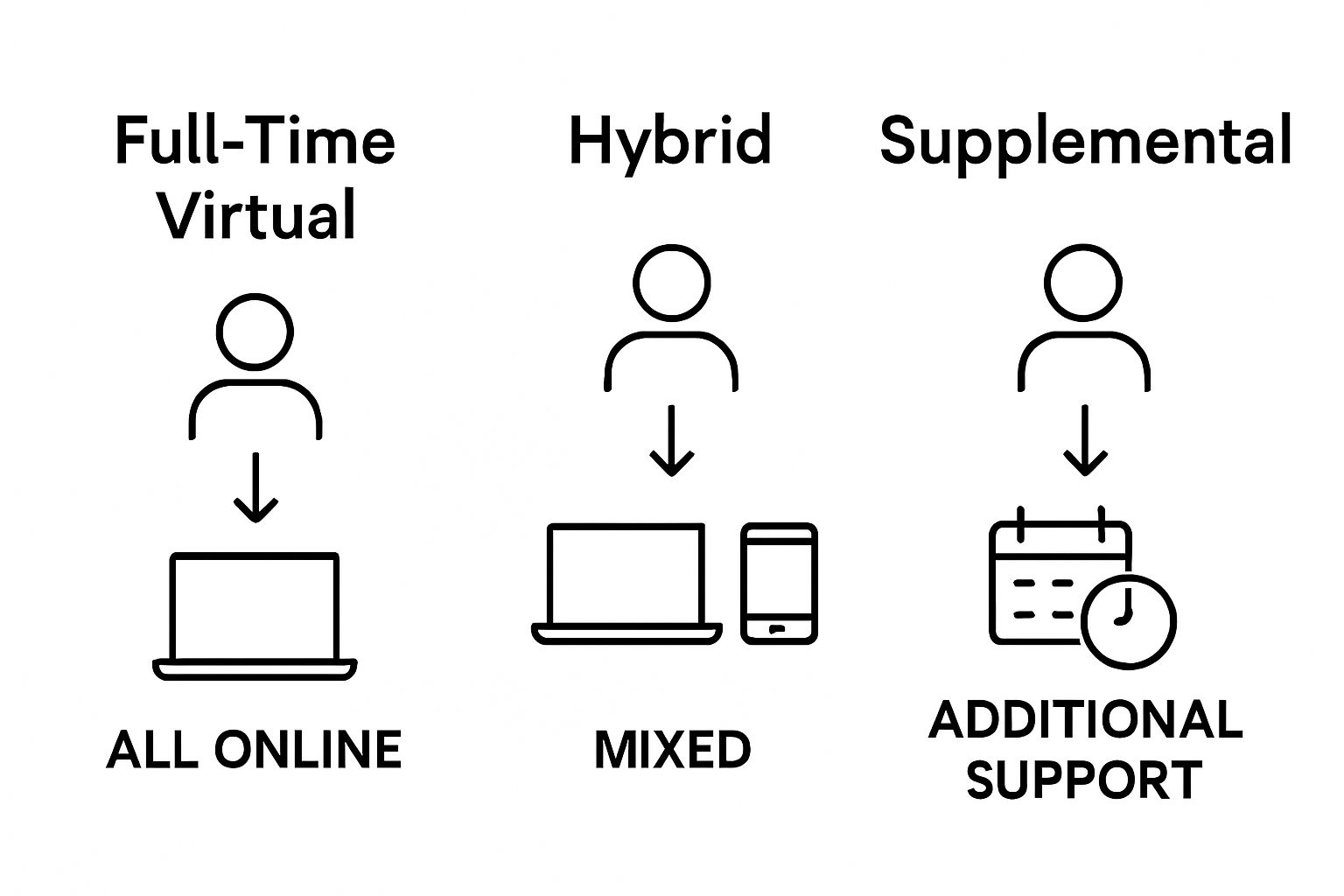 By offering multiple approaches, virtual school programs ensure that students can access education tailored to their individual circumstances, learning styles, and academic goals.
Challenges and Considerations in Implementing Virtual School Programs
Implementing virtual school programs requires navigating complex technological, pedagogical, and human factors that can significantly impact educational outcomes. While these digital learning platforms offer remarkable opportunities, they also present substantial challenges that educators, administrators, and policymakers must carefully address.
Technological Infrastructure and Access Barriers
Technological readiness represents a critical challenge in virtual school program implementation. According to research from the National Library of Medicine, inadequate infrastructure and poor internet connectivity can create significant barriers to effective online learning, potentially exacerbating existing educational inequities.
Key technological challenges include:
- Uneven internet access across different socioeconomic groups
- Variability in device availability and quality
- Technical support and maintenance requirements
- Cybersecurity and student data protection
- Digital literacy gaps among students and educators
Pedagogical and Learning Experience Considerations
Virtual school programs demand fundamentally different instructional approaches compared to traditional classroom settings. Explore how virtual experiences can enhance learning engagement, educators must redesign curriculum and teaching methodologies to suit digital environments effectively.
Critical pedagogical considerations include:
- Maintaining student motivation and engagement
- Designing interactive and compelling online content
- Addressing diverse learning styles in digital platforms
- Providing personalized support and feedback
- Managing student screen time and digital fatigue
Psychological and Social Development Implications
The shift to virtual learning environments raises important questions about students social and psychological development. While digital platforms offer unprecedented flexibility, they may potentially limit critical interpersonal interactions and emotional skill development that traditionally occur in physical classroom settings.
Implementing successful virtual school programs requires a holistic approach that balances technological innovation with comprehensive understanding of students comprehensive educational and developmental needs.
The table below summarizes the primary technological, pedagogical, and social challenges described in the article, along with key considerations for each area.
| Challenge Area | Main Issues | Key Considerations |
|---|---|---|
| Technological | Infrastructure gaps, internet access, devices | Reliable connectivity, equal access, security |
| Pedagogical | Engagement, adapting curriculum, feedback | Motivation, interactivity, personalization |
| Psychological/Social | Social development, limited in-person contact | Emotional skills, peer interaction, holistic support |
| Educational institutions must continually evaluate and adapt their strategies, ensuring that virtual learning environments not only deliver academic content but also support students holistic growth and success. |

Take Your Virtual School Program to the Next Level
Are you struggling to keep students engaged and motivated within a virtual school program? The article highlights real challenges like technology fatigue, maintaining excitement, and making learning interactive and memorable for all ages. These issues can feel overwhelming, especially when you need to create meaningful connections in a digital space. Imagine grabbing student attention with live, curriculum-aligned virtual shows rather than another routine video lesson. The Virtual Shows offered by AssemblyShows.com are designed to support the core goals of flexibility, engagement, and high-quality learning found in every comprehensive virtual school program. Our solutions bring energy, participation, and fun directly to your students—no matter where they are.
Now is the time to transform your virtual learning experience with entertainment that educates and inspires. See why so many schools trust AssemblyShows.com for unforgettable, interactive assemblies that complement any digital curriculum. Ready for proof? View authentic feedback and success stories from your peers on our Reviews page. Give your students something special in their virtual day and contact us to get started.
Frequently Asked Questions
What is a virtual school program?
A virtual school program is an online educational platform that provides students with access to a comprehensive curriculum and instruction delivered through digital technologies, allowing flexible learning outside of traditional classrooms.
What are the benefits of virtual school programs?
The benefits of virtual school programs include personalized learning experiences, elimination of geographical constraints, flexible scheduling, and access to high-quality education for students with unique needs or circumstances.
How do virtual school programs ensure student engagement?
Virtual school programs utilize interactive learning tools, live video lectures, discussion forums, and personalized support strategies to maintain student engagement and motivation in a digital learning environment.
What types of virtual school program models exist?
There are several models of virtual school programs, including full-time virtual schools, hybrid learning models that combine online and in-person instruction, and supplemental programs that provide targeted educational support alongside traditional schooling.
Recommended
- Online Assembly Shows and The Versatility of Homeschooling – Scheer Genius Assembly Shows
- Virtual Assembly Shows – Scheer Genius Assembly Shows
- Virtual Shows Archives – Scheer Genius Assembly Shows
- Tips For Teachers: Better Engage Your Virtual Learners – Scheer Genius
- Best Online Courses for Pilots in 2025: Complete Guide – VictorOne