
Schools are always searching for ways to make learning stick outside the usual classroom routine. Some schools invite experts for educational assemblies right on campus while others set off on field trips that take students out into the world. But get this. Field trips can increase test scores by up to 12 percent according to recent studies. Most people assume assemblies and field trips offer the same benefits. That is way off. The secret is how each drives very different types of learning—and that difference can reshape the way schools plan for student success.
Table of Contents
- Defining Educational Assemblies And Field Trips
- The Importance Of Educational Assemblies In Schools
- The Value Of Field Trips For Student Learning
- Comparative Benefits Of Assemblies Vs Field Trips
- Integrating Assemblies And Field Trips Into Curriculum
Quick Summary
| Takeaway | Explanation |
|---|---|
| Educational assemblies engage large groups effectively | Assemblies capture student attention through interactive presentations, delivering concentrated information within a short time frame. |
| Field trips provide hands-on learning experiences | Field trips immerse students in real-world environments, enhancing their understanding through direct interaction with content outside the classroom. |
| Strategic integration maximizes educational impact | Aligning assemblies and field trips with curriculum goals ensures meaningful learning experiences that enhance student comprehension across subjects. |
| Assemblies are more logistically manageable than field trips | Assemblies require less planning and resources, allowing for easy implementation within school settings compared to field trips. |
Defining Educational Assemblies and Field Trips
Educational experiences outside traditional classroom settings play a crucial role in student learning. Two primary methods schools use to expand educational horizons are educational assemblies and field trips. While both aim to enhance student knowledge and engagement, they differ significantly in structure, implementation, and learning outcomes.
What Are Educational Assemblies?
Educational assemblies are structured presentations conducted within the school environment, typically involving external presenters or performers who deliver curriculum-related content to multiple grade levels simultaneously. Learn more about the importance of educational assemblies in enhancing student learning experiences. These events are designed to provide concentrated bursts of information, often featuring interactive demonstrations, performances, or expert presentations that supplement classroom learning.
Key characteristics of educational assemblies include:
- Conducted within the school premises
- Involve large groups of students
- Usually last between 30-60 minutes
- Focused on specific educational themes or subjects
- Typically do not require extensive logistical planning
Understanding Field Trips
Field trips represent organized excursions where students leave their school environment to explore real-world learning environments. According to National Education Association research, these experiences provide hands-on learning opportunities that connect theoretical knowledge with practical applications.
Unlike assemblies, field trips require more comprehensive planning, involve transportation logistics, and often necessitate additional supervision. Students directly interact with external environments such as museums, historical sites, scientific laboratories, or natural landscapes, gaining immersive learning experiences that cannot be replicated within classroom walls.
While both educational assemblies and field trips serve critical roles in experiential learning, they offer distinct approaches to expanding students’ understanding of various subjects. The choice between them depends on educational objectives, resource availability, and specific learning goals.
The table below compares educational assemblies and field trips across key dimensions to help clarify their differences and guide school planning decisions.
| Aspect | Educational Assemblies | Field Trips |
|---|---|---|
| Location | Conducted within the school | Offsite, external environments |
| Duration | 30-60 minutes | Typically several hours or full day |
| Group Size | Large groups; multiple grade levels | Usually individual classes or small groups |
| Logistical Requirements | Minimal planning and resources needed | Extensive planning, transportation, supervision |
| Learning Style | Interactive presentations, expert-led | Hands-on, experiential, real-world |
| Curriculum Connection | Supplements classroom content efficiently | Connects theory to real-world application |
| Accessibility | Easier for all students to attend | May be limited by budget or logistics |
The Importance of Educational Assemblies in Schools
Educational assemblies serve as powerful supplemental learning experiences that extend beyond traditional classroom instruction. Discover why elementary assemblies matter for schools, these unique educational events provide students with engaging opportunities to explore complex concepts through interactive and dynamic presentations.
Enhancing Learning Engagement
One of the primary benefits of educational assemblies is their ability to capture student attention and create memorable learning experiences. By breaking away from standard lecture formats, these presentations introduce novel ways of understanding academic content. Research from the American Psychological Association indicates that innovative learning approaches significantly improve student motivation and knowledge retention.
Key advantages of educational assemblies include:
- Providing immersive learning experiences
- Introducing complex topics through engaging presentations
- Offering exposure to external experts and perspectives
- Creating shared learning moments across grade levels
- Stimulating curiosity and critical thinking skills
Curriculum Supplementation and Diversity
Educational assemblies play a crucial role in supplementing existing curriculum by introducing specialized knowledge that might not be feasible within traditional classroom constraints. These presentations offer students insights into diverse subjects, ranging from scientific demonstrations to cultural performances, effectively broadening their intellectual horizons.
Moreover, assemblies can address important social and academic themes that might be challenging to incorporate into standard lesson plans. They provide schools with flexible platforms to introduce complex topics such as environmental awareness, historical perspectives, or social skills development through compelling, interactive formats.
By strategically selecting educational assemblies that align with academic goals, schools can create transformative learning experiences that inspire students and complement classroom instruction. The dynamic nature of these presentations ensures that learning remains engaging, interactive, and memorable.
The following table summarizes the main benefits and unique features of educational assemblies and field trips as discussed in the article.
| Feature/Benefit | Educational Assemblies | Field Trips |
|---|---|---|
| Engagement Method | Large group interactive presentations | Immersive, hands-on activities in real-world settings |
| Exposure to External Experts | Yes, experts visit school | Yes, students visit expert environments |
| Supports Social Development | Creates shared experiences across grades | Fosters peer interaction and teamwork |
| Focus of Content | Specific themes or subjects, curriculum-aligned | Broad, practical application of academic concepts |
| Motivation and Curiosity | Stimulates curiosity within familiar environment | Increases motivation through novelty and exploration |
| Risk and Supervision | Low; within school | Higher; offsite supervision required |
| Test Score Impact | Not specifically noted | Up to 12 percent increase per cited studies |
The Value of Field Trips for Student Learning
Field trips represent transformative educational experiences that extend learning beyond traditional classroom boundaries. Stanford University research highlights the profound impact these excursions have on student understanding, engagement, and real-world skill development.
Experiential Learning Opportunities
Unlike classroom-based instruction, field trips provide immersive learning environments where students can directly observe, interact, and engage with subject matter in authentic contexts. These experiences bridge theoretical knowledge with practical applications, allowing students to see academic concepts manifest in real-world settings.
Key benefits of field trips include:
- Direct hands-on learning experiences
- Exposure to professional and specialized environments
- Enhanced contextual understanding of academic subjects
- Development of observational and analytical skills
- Increased student motivation and curiosity
Cognitive and Social Development
Field trips contribute significantly to students’ cognitive and social development by presenting learning opportunities that challenge traditional educational frameworks. Students learn to navigate unfamiliar environments, interact with experts, and develop critical thinking skills through direct observation and engagement.
Moreover, these experiences foster collaborative learning as students work together, share observations, and collectively interpret new information. They provide opportunities for peer interaction outside standard classroom dynamics, promoting social skills, teamwork, and interpersonal communication.
The multifaceted nature of field trips transforms academic learning from abstract concepts into tangible, memorable experiences. By connecting classroom curriculum with real-world contexts, schools create powerful educational moments that inspire curiosity, critical thinking, and lifelong learning passion.
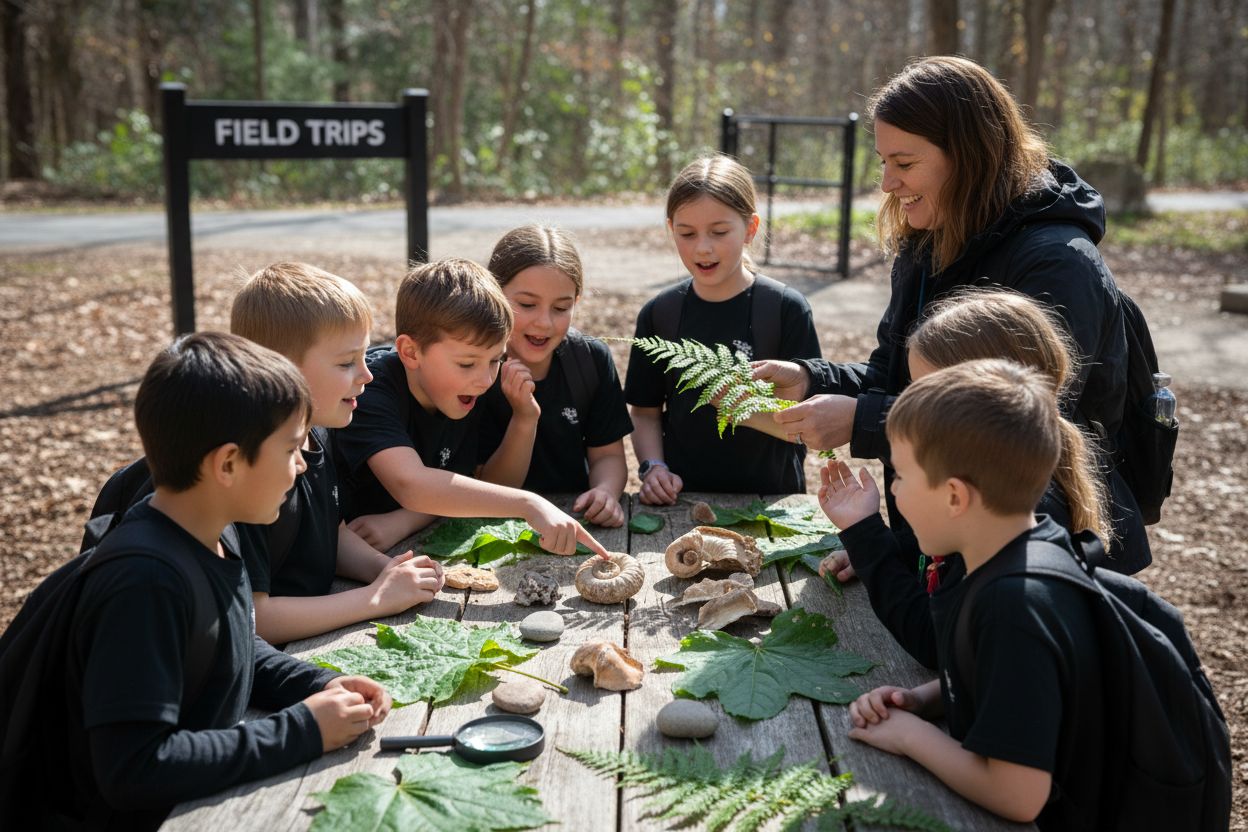
Comparative Benefits of Assemblies vs Field Trips
While both educational assemblies and field trips aim to enhance student learning, they offer distinct advantages and challenges. Explore key interactive assembly tips for maximizing student engagement, which can help schools optimize these unique learning experiences.
Cost and Logistical Considerations
One of the most significant differences between educational assemblies and field trips lies in their resource requirements. Pennsylvania Department of Education research highlights the practical distinctions between these educational approaches.
Key comparative factors include:
- Transportation requirements
- Supervision complexity
- Overall financial investment
- Time commitment for planning
- Accessibility for all students
Learning Experience Intensity
Educational assemblies and field trips provide different levels of immersive learning. Assemblies offer concentrated, high-energy presentations within the school environment, allowing for immediate curriculum connection. Field trips, conversely, provide direct, hands-on experiences in authentic settings that cannot be replicated inside classroom walls.
Assemblies excel in:
- Reaching entire student populations simultaneously
- Minimizing logistical challenges
- Delivering focused, curriculum-aligned content
- Creating shared learning experiences
- Reducing individual student transportation risks
Field trips shine by:
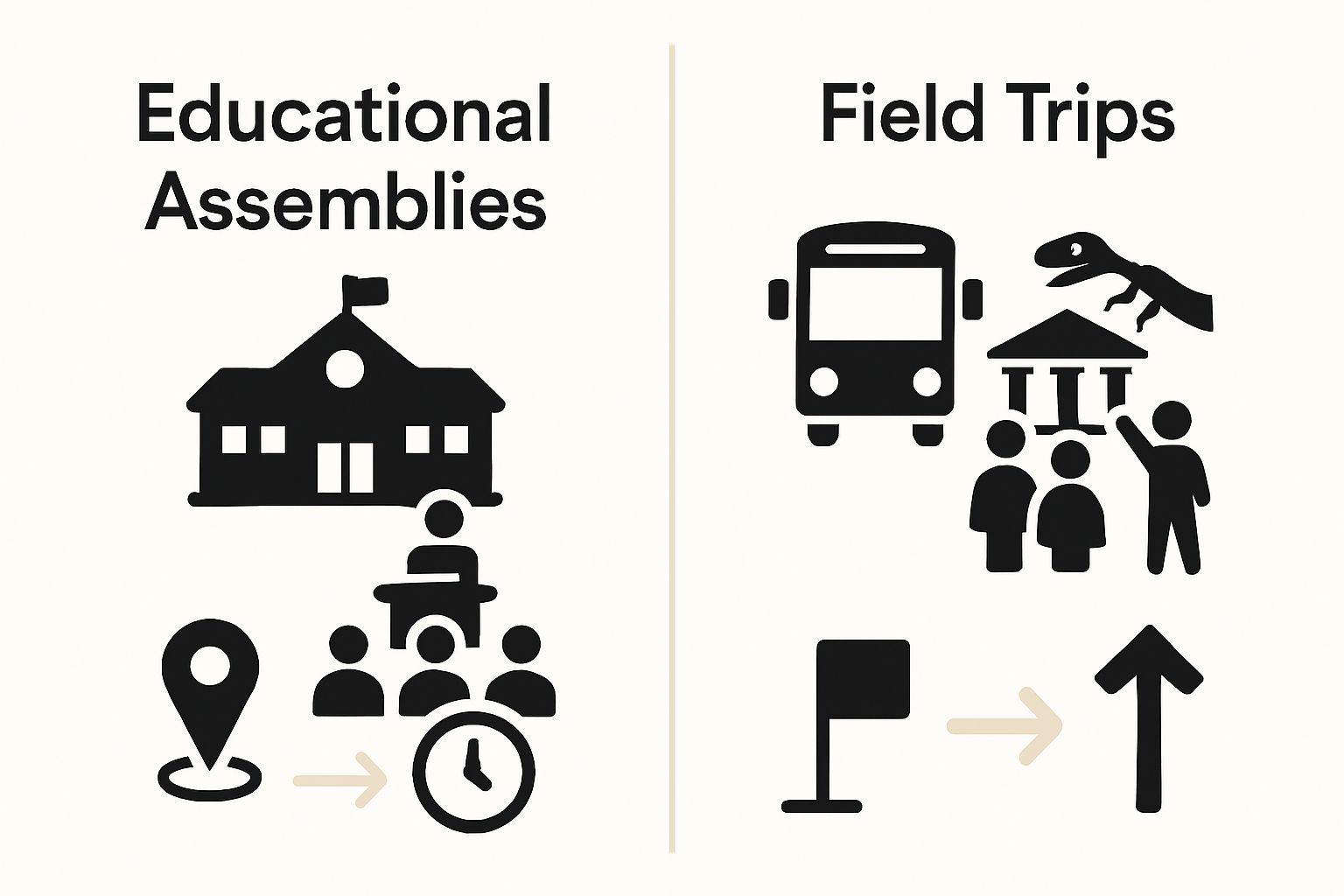
- Offering direct, experiential learning
- Providing real-world context
- Encouraging independent observation
- Developing spatial and environmental awareness
- Supporting kinesthetic learning styles
Ultimately, the choice between educational assemblies and field trips depends on specific educational objectives, available resources, and desired learning outcomes. Successful schools often integrate both approaches to create comprehensive, dynamic learning experiences that engage students through diverse educational strategies.
Integrating Assemblies and Field Trips into Curriculum
Successful curriculum development requires strategic incorporation of diverse learning experiences that extend beyond traditional classroom instruction. Learn more about creating inclusive educational experiences through thoughtful integration of assemblies and field trips.
Strategic Planning and Alignment
Effective curriculum integration demands careful alignment between supplemental learning experiences and core academic objectives. According to Educational Research Review, successful educational programs create seamless connections between experiential learning opportunities and established curriculum standards.
Key considerations for integration include:
- Mapping learning objectives across different educational formats
- Identifying curriculum gaps that assemblies or field trips can address
- Creating pre and post-learning activities to maximize educational impact
- Developing assessment strategies that measure learning from external experiences
- Ensuring age-appropriate and developmentally aligned content
Maximizing Learning Outcomes
Integrating assemblies and field trips requires a holistic approach that transforms these experiences from standalone events into meaningful educational journeys. Teachers play a crucial role in preparing students before the experience and facilitating reflective discussions afterward.
Effective integration strategies involve:
- Developing comprehensive preparatory materials
- Creating structured observation frameworks
- Designing reflective assignments that connect external experiences to classroom learning
- Encouraging students to draw personal and academic connections
- Implementing collaborative follow-up projects
By treating assemblies and field trips as integral components of the learning process rather than isolated events, schools can create rich, multidimensional educational experiences that engage students and deepen their understanding across multiple disciplines.
Bring the Power of Educational Assemblies to Your School
Choosing between educational assemblies and field trips can be challenging for schools searching for the best way to boost student engagement while balancing resources. This article explored the benefits of live, interactive presentations right in your gym, especially when logistical barriers make field trips difficult. If your school community wants memorable, curriculum-aligned experiences without the stress of planning transportation and supervision, our assembly solutions are designed for you.
Discover our assemblies and see how easy it is to enrich your curriculum
Let Doug Scheer and the team at AssemblyShows.com deliver learning that students remember and teachers appreciate. Explore our virtual show options as well for even greater flexibility. Book now and give your students the hands-on engagement they deserve—right at your school.
Frequently Asked Questions
What is the main difference between educational assemblies and field trips?
Educational assemblies take place within the school and involve presentations from external experts, while field trips are excursions to real-world settings for hands-on learning. To determine which method to use, consider your educational goals and available resources.
How can our school effectively plan an educational assembly?
To plan an educational assembly, outline the educational objectives and identify suitable external presenters or performance topics that align with your curriculum. Aim to schedule the assembly at a time that allows for optimal student engagement, typically lasting 30-60 minutes.
What are the key benefits of field trips for student learning?
Field trips provide immersive learning experiences that connect theoretical concepts with real-world applications. To enhance the benefits, choose locations that reinforce your curriculum and encourage students to engage in observation and discussion during the visit.
How do I integrate both assemblies and field trips into our curriculum?
To effectively integrate both assemblies and field trips, first identify curriculum gaps that each can address. Then, develop pre- and post-experience activities that enhance understanding, ensuring a cohesive educational journey.
What logistical considerations should be taken into account for field trips?
Field trips require thorough planning around transportation, supervision, and financial resources. Create a checklist outlining these logistics well in advance to avoid last-minute complications and ensure smooth execution.
How can I measure the impact of assemblies and field trips on student learning?
To measure the impact, develop assessment tools such as surveys or reflective assignments that gauge students’ understanding before and after the experiences. Implement these assessments within 1-2 weeks of the event to capture fresh insights on the learning outcomes.
Recommended
- Understanding Why Host Educational Assemblies in Schools – Scheer Genius Assembly Shows
- Understanding Why Elementary Assemblies Matter for Schools – Scheer Genius Assembly Shows
- What is an Elementary School Assembly? Understanding Its Importance – Scheer Genius Assembly Shows
- 7 Essential Interactive Assembly Tips for Schools – Scheer Genius Assembly Shows