
Did you know that students remember up to 75 percent more when learning through hands-on activities compared to traditional lessons? Engaging approaches like interactive STEM projects, group reading circles, and creative arts challenges spark curiosity and encourage real-world thinking. As education evolves, these dynamic methods help students develop essential skills, fostering deeper understanding and long-lasting enthusiasm for learning.
Quick Summary
| Takeaway | Explanation |
|---|---|
| 1. Interactive STEM challenges boost engagement. | These hands-on activities significantly enhance student participation and curiosity in scientific concepts. |
| 2. Group reading circles enhance communication skills. | Collaborative reading fosters critical thinking and helps students connect with texts more deeply through shared insights. |
| 3. Creative projects develop critical thinking. | Art-based tasks encourage innovative problem-solving while engaging students in complex cognitive tasks beyond traditional learning. |
| 4. Team-based problem solving fosters collaboration. | Students develop essential interpersonal skills by collaboratively tackling challenges, mirroring real-world team dynamics. |
| 5. Outdoor learning increases real-world connections. | Immersive outdoor activities deepen engagement and understanding of academic concepts through direct environmental interaction. |
Table of Contents
- Interactive Stem Challenges For Hands-On Learning
- Group Reading Circles To Build Communication Skills
- Creative Arts Projects To Enhance Critical Thinking
- Team-Based Problem Solving For Collaboration
- Live Assembly Shows For Curriculum Reinforcement
- Outdoor Learning Activities For Real-World Connection
- Technology-Integrated Games For Digital Literacy
1. Interactive STEM Challenges for Hands-On Learning
Interactive STEM challenges transform traditional learning by turning classrooms into dynamic exploration zones where students become real world problem solvers. These hands-on experiences go far beyond textbook theories by immersing students in practical scientific and technological adventures.
Recent research highlights the powerful impact of interactive learning strategies. A comprehensive survey of 120 U.S. teachers revealed remarkable insights into student engagement with interactive learning tools. An impressive 90% of educators reported significant boosts in student participation, while 83% noted heightened curiosity about scientific concepts.
What makes these challenges so effective? They blend theoretical knowledge with practical application, allowing students to experience science and technology through direct manipulation and experimentation. For instance, a groundbreaking academic study demonstrated how middle school students built and programmed a bioinspired robotic blimp nicknamed “Flappy” during a one-day workshop. The results were extraordinary students achieved substantial learning gains in physics, engineering, and computer science while developing critical teamwork skills.
Practical implementation of interactive STEM challenges can take multiple forms:
- Design mini engineering projects that solve real-world problems
- Create collaborative robotics workshops
- Develop computer programming challenges
- Construct scientific simulation experiments
- Organize team-based technology design competitions
The key is moving beyond passive learning. When students physically interact with scientific concepts they transform from passive recipients to active creators. They learn to ask questions, experiment, fail, and ultimately succeed through hands-on discovery.
“Interactive learning turns students from spectators into scientists” – STEM Education Research Consortium
By embracing these dynamic learning approaches schools can spark genuine curiosity and prepare students for future technological challenges. The goal is not just teaching scientific facts but inspiring a lifelong passion for discovery and innovation.
2. Group Reading Circles to Build Communication Skills
Group reading circles transform reading from a solitary activity into a collaborative learning adventure that nurtures critical communication and comprehension skills. These structured discussions create dynamic spaces where students explore literature together learning far more than they could independently.
Research on hands-on learning demonstrates the powerful potential of interactive educational approaches. A recent action research study with 5th-grade students revealed fascinating insights into the qualitative benefits of reading circles. Students experienced significant improvements in reading motivation, real-life text connections, summarization techniques, and group collaboration skills.
The magic of group reading circles lies in their unique structure. Unlike traditional classroom reading assignments these collaborative sessions encourage active participation and shared discovery. Students are not passive recipients of information but active interpreters who learn from each other perspectives.
Implementing effective reading circles requires strategic planning:
- Establish clear discussion guidelines
- Rotate participant roles each session
- Select engaging age appropriate texts
- Encourage respectful dialogue
- Create opportunities for personal reflection
Teachers play a crucial facilitator role by selecting compelling texts that spark curiosity and designing discussion prompts that encourage deeper thinking. The goal is not just reading comprehension but developing communication confidence and critical thinking skills.
“Reading together builds bridges of understanding beyond individual perspectives”
Successful reading circles go beyond academic skills. They help students develop empathy listening abilities and the confidence to share their interpretations. By creating safe collaborative spaces schools can transform reading from a mundane task into an exciting journey of collective discovery.
3. Creative Arts Projects to Enhance Critical Thinking
Creative arts projects are powerful catalysts for transforming student learning from passive absorption to active intellectual exploration. These dynamic experiences push students beyond traditional academic boundaries by encouraging innovative problem solving and imaginative thinking.
Understanding hands-on learning techniques reveals the profound impact of creative engagement. Remarkable nonprofit programs like Publicolor demonstrate how art-based interventions can revolutionize student experiences. In their multi-year design programs students actively transform school environments gaining not just artistic skills but increased academic engagement community connection and personal confidence.
The true power of creative arts projects lies in their ability to develop multidimensional thinking skills. Unlike conventional learning methods these projects require students to analyze synthesize and create solutions through imaginative processes. Environmental education programs like Project Learning Tree showcase how creative approaches can stimulate critical thinking decision making and responsible action particularly when students are challenged to solve real world problems.
Practical implementation strategies include:
- Design collaborative murals addressing social issues
- Create environmental design projects
- Develop storytelling workshops
- Construct architectural model challenges
- Produce multimedia presentations on community topics
These projects move beyond traditional artistic expression. They become vehicles for complex cognitive development where students learn to observe interpret and communicate sophisticated ideas through creative mediums.
“Creativity is intelligence having fun” Albert Einstein
By integrating creative arts schools can unlock students potential transforming them from passive learners to active innovative thinkers. The goal is not just artistic skill but developing adaptable problem solving capabilities that will serve students throughout their lives.
4. Team-Based Problem Solving for Collaboration
Team-based problem solving transforms learning from an individual pursuit into a dynamic collective intelligence experience. By bringing students together to tackle complex challenges schools can unlock remarkable potential for collaborative learning and skill development.
Our insights on STEM education highlight the incredible power of collaborative learning approaches. A fascinating academic study in physics education revealed an extraordinary phenomenon where student groups successfully solved problems even when no individual member initially understood the complete solution. This demonstrates the remarkable synergy of collective problem solving.
The magic of team-based problem solving lies in its ability to develop skills far beyond academic content. Students learn to communicate effectively negotiate different perspectives and build shared understanding. These experiences mirror real-world professional environments where collaboration is key to innovation.
Successful implementation requires strategic design:
- Create diverse team compositions
- Establish clear collaborative guidelines
- Rotate team leadership roles
- Design challenges with multiple solution paths
- Encourage constructive feedback
- Provide structured reflection opportunities
Teachers play a crucial role as facilitators who design meaningful challenges and guide students through collaborative processes. The goal is not just solving problems but developing interpersonal skills critical thinking and mutual respect.
“Alone we can do so little together we can do so much” Helen Keller
By embracing team-based problem solving schools can prepare students for future collaborative challenges. These experiences teach students that collective intelligence often surpasses individual capabilities creating powerful learning environments where everyone contributes and grows.
5. Live Assembly Shows for Curriculum Reinforcement
Live assembly shows transform traditional learning into an electrifying educational experience that captures students attention and reinforces classroom curriculum through engaging performance and interactive storytelling. These dynamic presentations bring academic concepts to life in ways textbooks simply cannot.
Why host educational assemblies represents a powerful strategy for breaking through learning barriers. Assembly shows create immersive experiences that trigger curiosity spark imagination and make complex topics accessible and memorable for students across different learning styles.
The transformative power of live educational performances lies in their ability to combine entertainment with substantive academic content. Unlike passive classroom lectures these shows actively involve students through storytelling visual demonstrations and interactive participation. Students become active participants rather than passive observers creating deep connections with educational material.
Effective assembly shows incorporate several key strategies:
- Align content with specific curriculum objectives
- Use high energy performance techniques
- Include interactive audience participation
- Integrate visual and auditory learning elements
- Create memorable storytelling experiences
- Provide follow up educational resources
Teachers and administrators play a crucial role in selecting assembly programs that complement existing educational goals. The most impactful shows not only entertain but also provide meaningful learning experiences that extend beyond the performance itself.
“Education is not the filling of a pail but the lighting of a fire” William Butler Yeats
By strategically incorporating live assembly shows schools can create unforgettable learning moments that inspire students curiosity ignite their passion for learning and make educational concepts come alive in ways traditional instruction cannot achieve.
6. Outdoor Learning Activities for Real-World Connection
Outdoor learning activities break down classroom walls transforming the entire world into a vibrant educational laboratory where students discover knowledge through direct experience and engagement. These immersive experiences connect academic concepts to tangible real world contexts creating deeper more meaningful learning opportunities.
Our hands-on learning approach demonstrates how moving beyond traditional classroom boundaries can revolutionize student understanding. Remarkable examples like the School of Environmental Studies in Minnesota showcase the extraordinary potential of outdoor educational models. Students collaborate with professionals participate in team-based ecological challenges and develop authentic connections between academic learning and environmental stewardship.
The transformative power of outdoor learning extends far beyond conventional instructional methods. By engaging directly with natural environments students develop critical observation skills systems thinking and interdisciplinary problem-solving capabilities. These experiences nurture a profound understanding that academic knowledge is not isolated but intricately connected to lived experiences.
Effective outdoor learning strategies include:
- Design place-based ecological investigations
- Create community science research projects
- Develop environmental monitoring activities
- Organize local ecosystem mapping challenges
- Facilitate professional expert collaborations
- Integrate technology for data collection
Teachers serve as crucial guides helping students transition from passive recipients of information to active investigators of their surrounding environment. The goal is not just learning about the world but developing genuine connections and responsibility towards it.
“In nature nothing exists alone” Rachel Carson
By embracing outdoor learning schools can cultivate students curiosity critical thinking skills and deep appreciation for the interconnected systems that shape our world. These experiences prepare young learners to become thoughtful engaged citizens capable of understanding and addressing complex environmental challenges.
7. Technology-Integrated Games for Digital Literacy
Technology-integrated games represent a revolutionary approach to learning where digital platforms transform education from passive absorption to active interactive exploration. These innovative tools engage students by turning complex skills into exciting challenges that feel more like play than traditional instruction.
Understanding virtual school programs reveals the incredible potential of digital learning platforms. Groundbreaking initiatives like Globaloria demonstrate how technology can empower students to become creators not just consumers of digital content. Students learn to design code and develop educational games while simultaneously building critical digital literacy skills.
The transformative power of technology-integrated games extends far beyond simple entertainment. These platforms create immersive learning environments where students develop complex skills through engagement problem solving and creative thinking. The U.S. ConnectEd Initiative has been instrumental in supporting technology integration by expanding broadband access digital devices and comprehensive teacher training.
Implementing effective technology-integrated learning requires strategic approaches:
- Select age appropriate game-based learning platforms
- Align digital games with curriculum objectives
- Provide structured guidance and reflection opportunities
- Encourage collaborative game design projects
- Balance screen time with active learning
- Integrate digital skill development across subjects
Teachers serve as critical guides helping students navigate digital learning landscapes. The goal is not just skill acquisition but developing adaptable digital citizens who can think critically create innovatively and collaborate effectively in technological environments.
“The future belongs to those who learn more skills and combine them in creative ways” Eric Hoffer
By embracing technology-integrated games schools can prepare students for a rapidly evolving digital world transforming education from a standardized experience into a personalized dynamic journey of discovery.
Below is a comprehensive table summarizing the various educational strategies discussed in the article, highlighting their key features and benefits.
| Educational Approach | Key Features | Benefits/Outcomes |
|---|---|---|
| Interactive STEM Challenges | Blends theoretical knowledge with practical application; Includes projects like robotics and programming | Enhances engagement, boosts curiosity, and develops teamwork and problem-solving skills |
| Group Reading Circles | Encourages active participation and shared discovery; Involves structured discussions and rotating roles | Improves reading motivation, comprehension, and communication skills |
| Creative Arts Projects | Focuses on multidimensional thinking and problem solving; Involves projects like murals and storytelling | Enhances critical thinking and develops innovative problem-solving abilities |
| Team-Based Problem Solving | Utilizes diverse team compositions and collaborative guidelines | Builds communication skills and stimulates collective intelligence |
| Live Assembly Shows | Combines entertainment with academic content; Utilizes interactive storytelling | Enhances engagement and reinforces curriculum in an exciting format |
| Outdoor Learning Activities | Connects academic concepts to real-world contexts; Involves ecological investigations and community science projects | Develops critical observation skills and fosters environmental stewardship |
| Technology-Integrated Games | Utilizes digital platforms for learning through play; Involves game design and coding | Builds digital literacy and encourages creative collaboration |
Bring Essential Learning Activities to Life With Unforgettable School Assemblies
Looking to transform your students from passive learners into active creators and problem solvers? The article highlights the need for hands-on STEM challenges, group reading circles, creative arts, team-based problem solving, and dynamic curriculum reinforcement. Yet, schools often struggle to find resources that truly engage every student and bridge the gap between theory and exciting real-world experiences.
Explore the impact of high-energy, curriculum-aligned assemblies featured in the Assemblies Archives. These live and virtual shows, led by nationally recognized educator Doug Scheer, are designed to spark curiosity, boost participation, and make concepts stick through interactive fun.
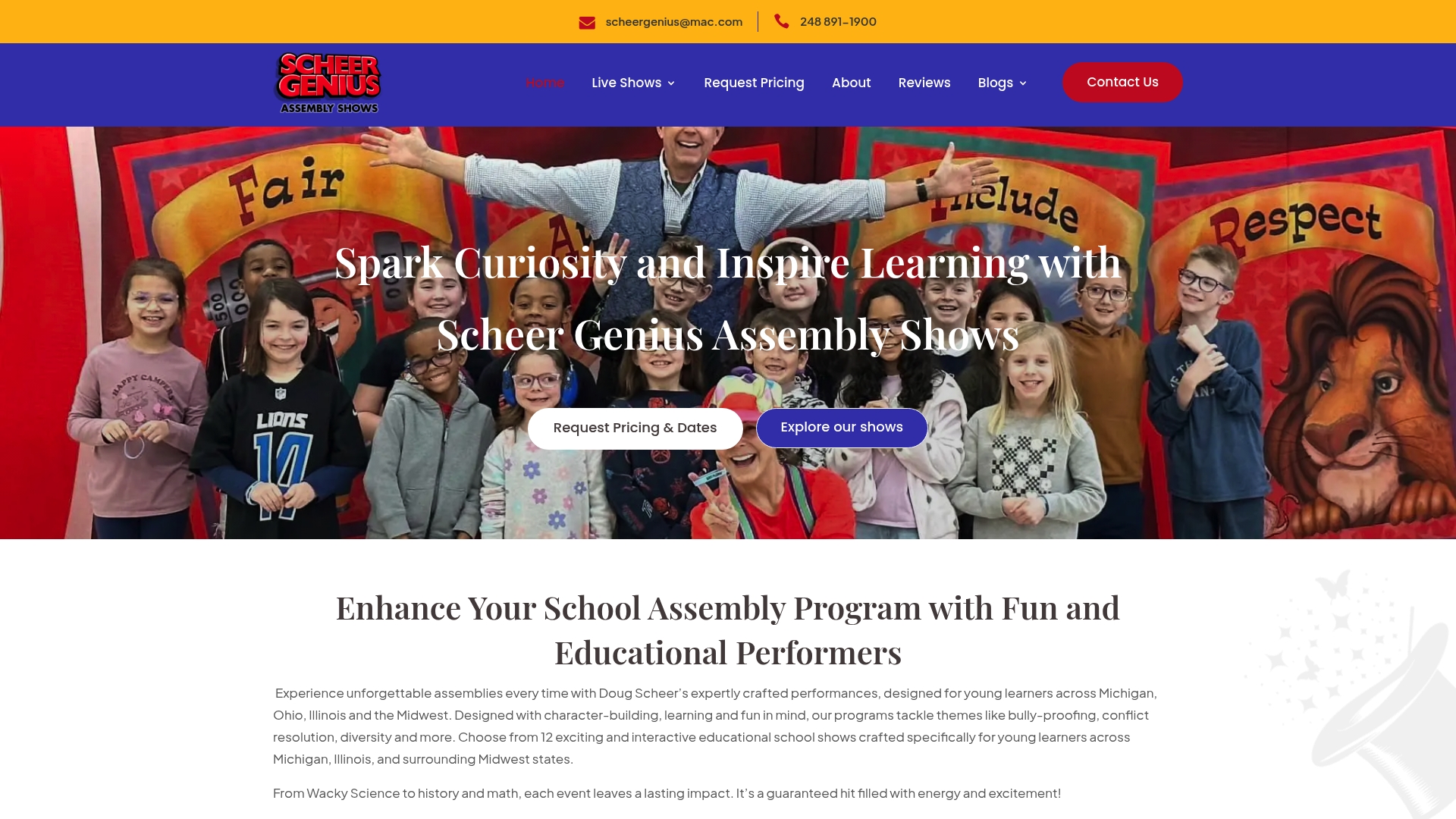
Ready to ignite a passion for discovery and collaboration at your school? Don’t let ordinary teaching limit your students’ growth. Visit Assembly Shows now to learn how these proven programs can elevate your next educational event. Secure your date and give your students an experience they will never forget.
Frequently Asked Questions
What are some interactive STEM challenges I can implement in my classroom?
Interactive STEM challenges can include designing mini engineering projects, collaborative robotics workshops, and scientific simulation experiments. Start by selecting a real-world problem and encourage students to create a solution through hands-on project work.
How do I organize effective group reading circles?
To organize effective group reading circles, establish clear discussion guidelines, rotate participant roles, and select engaging texts appropriate for the age group. Begin by creating a schedule that allows for regular meetings and encourage students to share their insights and reflections each session.
What types of creative arts projects can enhance critical thinking in students?
Creative arts projects can include collaborative murals, environmental design projects, and storytelling workshops. Choose a theme that resonates with your students and invite them to brainstorm ideas, fostering an environment of open collaboration and imaginative exploration.
How can I promote team-based problem-solving in the classroom?
Promote team-based problem-solving by creating diverse teams and establishing clear collaborative guidelines. Assign problems that have multiple solution paths, enabling students to communicate and negotiate different perspectives as they work together to find solutions.
What are key elements to include in live assembly shows to reinforce curriculum?
Key elements for live assembly shows include aligning content with specific curriculum objectives, using interactive audience participation, and integrating visual storytelling techniques. Design follow-up discussions to reinforce concepts introduced during the show and allow students to connect the experience back to their lessons.
How can I implement outdoor learning activities effectively?
To implement outdoor learning activities effectively, design place-based ecological investigations and organize local ecosystem mapping challenges. Begin by selecting a nearby outdoor location and plan activities that connect classroom concepts to the natural environment, encouraging hands-on discovery and critical thinking.
Recommended
- Understanding Student Engagement Checklists for Schools – Scheer Genius Assembly Shows
- Understanding the Importance of Fun in Learning – Scheer Genius Assembly Shows
- What is Hands-On Learning? Understanding Its Impact – Scheer Genius Assembly Shows
- 6 Ways to Boost Student Engagement for 2025 Success – Scheer Genius Assembly Shows