
Over half of American students report feeling disconnected in class at least once per week. This growing sense of disengagement affects learning outcomes, classroom dynamics, and even long-term success. Discover how understanding the real dimensions of student engagement can transform both student motivation and school performance, empowering educators and families to address the root causes behind these widespread challenges.
Key Takeaways
| Point | Details |
|---|---|
| Engagement Dimensions | Student engagement comprises behavioral, emotional, and cognitive dimensions that influence learning participation. |
| School Climate | A positive school climate fosters student engagement by creating a sense of safety, respect, and support. |
| Student-Teacher Relationships | Strong relationships between students and teachers enhance motivation and willingness to participate in the learning process. |
| Holistic Measurement | Effective measurement of student engagement requires both quantitative and qualitative approaches to capture the full scope of participation. |
Defining Student Engagement in Schools
Student engagement represents a complex, multidimensional concept that goes far beyond simple classroom participation. Analyzing student engagement reveals three critical dimensions: behavioral, emotional, and cognitive involvement in the learning process.

At its core, behavioral engagement involves observable actions that demonstrate a student’s commitment to learning. These include consistent classroom attendance, active participation in discussions, completing assignments on time, and following academic protocols. Students who are behaviorally engaged show up prepared, pay attention, and contribute meaningfully to classroom activities.
Emotional engagement delves deeper into students’ psychological connection with their educational environment. This dimension explores how students feel about school, their sense of belonging, and their intrinsic motivation to learn. Student engagement checklists often assess emotional factors like enthusiasm, curiosity, and personal interest in academic subjects. When students feel emotionally connected, they’re more likely to persist through challenges and maintain a positive attitude toward learning.
The cognitive dimension represents perhaps the most sophisticated aspect of student engagement. It measures the intellectual effort and strategic thinking students invest in their academic growth. Cognitively engaged students don’t just complete assignments—they approach learning with critical thinking, seek deeper understanding, and demonstrate intellectual curiosity beyond surface-level comprehension. They ask probing questions, make connections across different subjects, and actively seek strategies to enhance their own learning processes.
Types of Student Engagement Explained
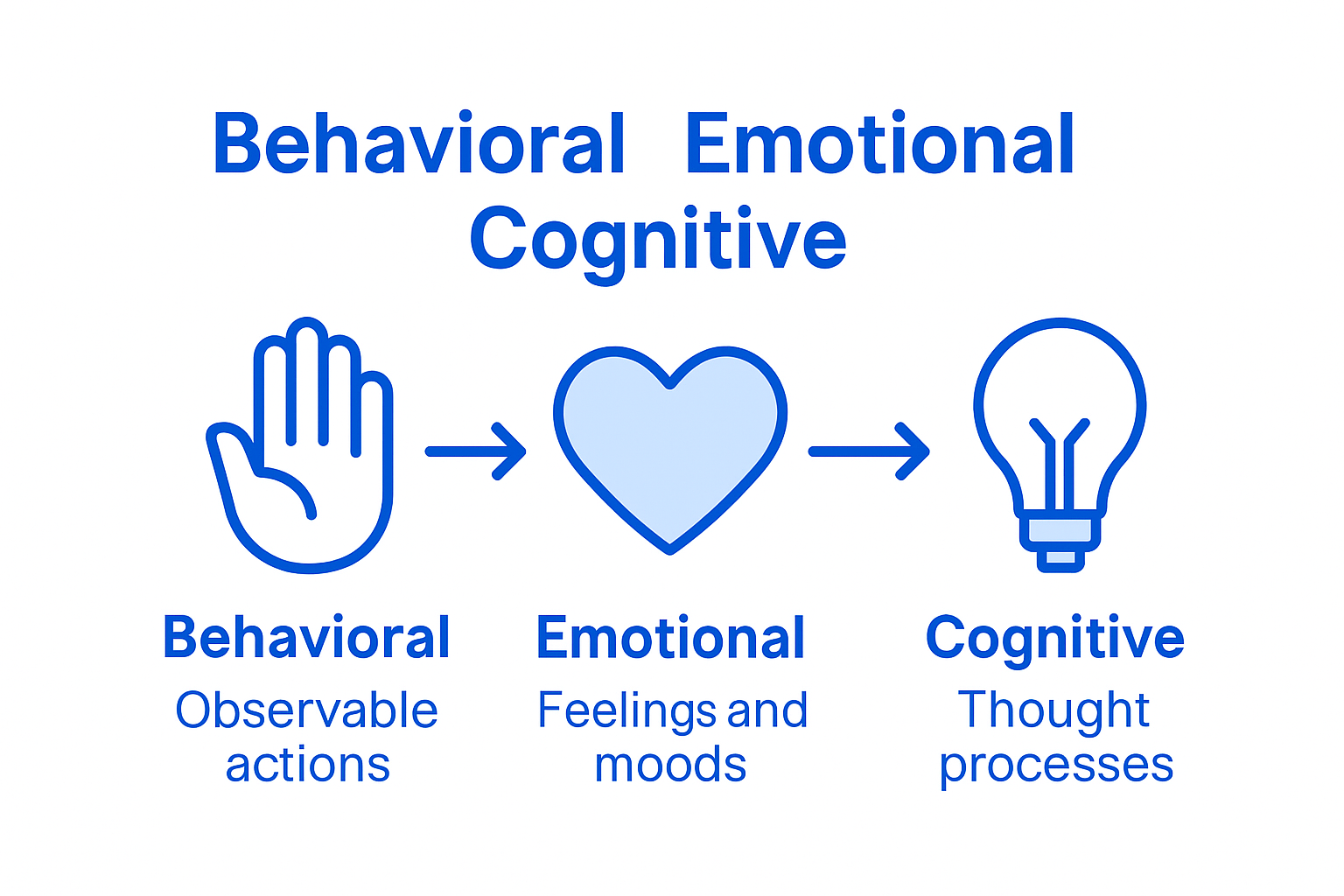
Student engagement is not a monolithic concept but a nuanced framework comprising multiple interconnected dimensions. Boost student engagement strategies by recognizing three primary types of engagement that collectively shape a student’s learning experience: behavioral, emotional, and cognitive.
Behavioral engagement represents the most visible and measurable dimension. This type focuses on students’ active participation, observable actions, and direct involvement in academic activities. Students demonstrating strong behavioral engagement consistently attend classes, complete assignments, follow classroom rules, participate in discussions, and maintain positive interactions with teachers and peers. Their physical presence and tangible contributions signal a fundamental commitment to the learning process.
Emotional engagement delves into the psychological and affective aspects of learning. This dimension explores students’ internal experiences, including their sense of belonging, motivation, and emotional connection to their educational environment. Emotionally engaged students feel genuine enthusiasm for learning, experience positive relationships with educators and classmates, and maintain an intrinsic curiosity about their academic subjects. Their emotional investment transcends mere compliance, driving them to approach challenges with resilience and genuine interest.
The cognitive engagement dimension represents the most sophisticated and intellectually demanding aspect of student participation. This type of engagement measures students’ mental investment, strategic thinking, and deep learning approaches. Cognitively engaged students go beyond surface-level understanding, actively seeking to comprehend complex concepts, make meaningful connections across different subjects, and develop advanced problem-solving skills. They demonstrate critical thinking, self-regulation, and a proactive approach to their own learning journey.
Key Drivers and Indicators of Engagement
Understanding student engagement requires a comprehensive examination of the complex factors that motivate and sustain academic participation. Boost student engagement step by step reveals that key drivers emerge from multiple interconnected systems within the educational environment.
School climate stands as a primary driver of student engagement. This encompasses the overall psychological and emotional atmosphere created by school leadership, teachers, and institutional practices. A positive school climate characterized by respect, safety, supportive relationships, and clear expectations significantly influences students’ willingness to invest emotionally and intellectually in their learning experience. Students are more likely to participate actively when they perceive their educational environment as welcoming, inclusive, and responsive to their individual needs.
Student-teacher relationships represent another critical driver of engagement. Meaningful connections between educators and students go beyond traditional instructional interactions, creating a foundation of trust, mutual respect, and personalized support. When students feel genuinely valued and understood by their teachers, they become more motivated to participate, take academic risks, and persist through challenging learning experiences.
Key indicators of engagement extend beyond mere academic performance, encompassing a holistic view of student involvement. These indicators include consistent classroom attendance, active participation in discussions, completion of assignments with demonstrated effort, intrinsic motivation, emotional investment in learning, and the ability to connect academic content with personal experiences and broader real-world contexts. Engaged students exhibit curiosity, ask meaningful questions, demonstrate critical thinking skills, and show resilience when confronting complex academic challenges.
Measuring and Enhancing Participation
Measuring student engagement requires a sophisticated, multi-dimensional approach that goes beyond traditional academic metrics. Ways to boost student participation illuminate the complex strategies schools can implement to accurately assess and improve student involvement.
Quantitative assessment methods provide a structured framework for measuring student participation. These approaches include tracking objective indicators such as classroom attendance rates, assignment completion percentages, class participation frequency, and academic performance metrics. Sophisticated schools employ data collection tools that capture nuanced participation patterns, analyzing not just the quantity but the quality of student engagement across different learning contexts.
Qualitative measurement techniques complement quantitative assessments by capturing the deeper, more subjective dimensions of student involvement. These methods include structured interviews, focus group discussions, student self-reflection journals, and observational studies that provide insights into students’ emotional and cognitive engagement. Educators can gain a profound understanding by exploring students’ perspectives, motivations, motivation levels, and perceived barriers to active participation.
Enhancing student participation requires a holistic, strategic approach that addresses multiple interconnected factors. Successful strategies include designing interactive and personalized learning experiences, creating supportive classroom environments, implementing flexible teaching methodologies, providing timely and constructive feedback, and developing strong student-teacher relationships. Schools must recognize that participation is not a one-size-fits-all concept, but a dynamic process that requires continuous adaptation, personalized interventions, and a genuine commitment to understanding individual student needs and learning preferences.
Common Challenges and How to Address Them
Student engagement challenges represent complex systemic issues that require nuanced, multifaceted approaches. Ways to boost student engagement highlight the critical need for targeted interventions that address underlying motivational and structural barriers.
Motivational disengagement emerges as a primary challenge, particularly among secondary students experiencing academic fatigue. This phenomenon manifests through decreased classroom participation, reduced academic effort, and diminishing intrinsic interest in learning. Schools can counteract this challenge by designing curriculum that connects academic content to real-world applications, incorporating interactive learning experiences, and providing personalized learning pathways that recognize individual student strengths and interests.
Social and emotional barriers significantly impact student engagement, creating complex psychological obstacles to active participation. Students struggling with social anxiety, low self-confidence, or unaddressed emotional challenges may withdraw from academic interactions. Effective strategies include developing supportive classroom environments, implementing peer mentorship programs, providing accessible counseling resources, and training educators to recognize and respond to diverse emotional needs.
Structural impediments within educational systems can inadvertently suppress student engagement. These include rigid teaching methodologies, one-size-fits-all curriculum designs, limited opportunities for student voice and autonomy, and assessment practices that prioritize standardized performance over individual learning progression. Addressing these challenges requires a fundamental reimagining of educational approaches, emphasizing flexible learning models, personalized instruction, and creating multiple pathways for students to demonstrate academic growth and intellectual curiosity.
Elevate Student Engagement with Dynamic School Assemblies
The challenge of fostering deep behavioral, emotional, and cognitive engagement in schools is clear. Students need experiences that spark curiosity, build connections, and encourage active participation. Our interactive assembly programs are designed to address these pain points by creating memorable moments that inspire students to show up excited, stay motivated, and think critically—just as highlighted in your study of student engagement’s impact on school participation.

Discover the power of educational entertainment that aligns with your goals at Assemblies Archives – Scheer Genius Assembly Shows. With over 12 curriculum-aligned assemblies led by veteran performer Doug Scheer, our shows blend high-energy interaction with meaningful learning to strengthen school climate and student-teacher connections. Don’t miss your chance to transform engagement this school year. Explore our offerings now at AssemblyShows.com and see why educators rave about our impact in Reviews Archives – Scheer Genius Assembly Shows. Step up your strategy today and turn participation challenges into success stories.
Frequently Asked Questions
What are the main dimensions of student engagement?
Student engagement consists of three critical dimensions: behavioral, emotional, and cognitive involvement in the learning process. Behavioral engagement focuses on actions like attendance and participation, emotional engagement addresses feelings of belonging and motivation, and cognitive engagement involves intellectual effort and critical thinking.
How can schools measure student engagement effectively?
Effective measurement of student engagement requires both quantitative and qualitative methods. Quantitative methods include tracking attendance rates and assignment completion, while qualitative methods involve structured interviews and observational studies to understand students’ emotional and cognitive involvement.
What challenges do schools face in promoting student engagement?
Schools often encounter challenges such as motivational disengagement, social and emotional barriers, and structural impediments within educational systems. Addressing these challenges requires tailored interventions that cater to individual student needs and foster a supportive learning environment.
What strategies can improve student engagement in the classroom?
To enhance student engagement, schools can implement personalized learning experiences, interactive teaching methodologies, and provide strong feedback. Building meaningful student-teacher relationships and creating a supportive classroom atmosphere are also vital to encouraging active participation.
Recommended
- Ways to Boost Student Participation for School Success – Scheer Genius Assembly Shows
- Understanding Student Engagement Checklists for Schools – Scheer Genius Assembly Shows
- Understanding the Value of Student Engagement in Education – Scheer Genius Assembly Shows
- How to Boost Student Engagement for School Success – Scheer Genius Assembly Shows