
Did you know that interactive science assemblies can increase student interest in STEM fields by over 60 percent compared to regular classroom instruction? Many students struggle to connect abstract scientific ideas with the real world. These assemblies bring science to life with exciting demonstrations, hands-on activities, and inspiring presenters. Students walk away with memorable experiences that foster deeper curiosity and stronger scientific understanding.
Key Takeaways
| Point | Details |
|---|---|
| Engagement Through Interactivity | Science assemblies utilize hands-on activities and interactive presentations to foster student involvement in scientific exploration. |
| Curriculum Alignment | These events are designed to complement and reinforce existing curricula, promoting deeper understanding of scientific concepts. |
| Diverse Presentation Formats | Various formats, such as live demonstrations and workshops, cater to different learning styles, enhancing student engagement and retention. |
| Safety and Planning | Effective planning must address safety protocols, legal considerations, and logistical arrangements to ensure a positive learning environment. |
Defining Science Assemblies and Their Purpose
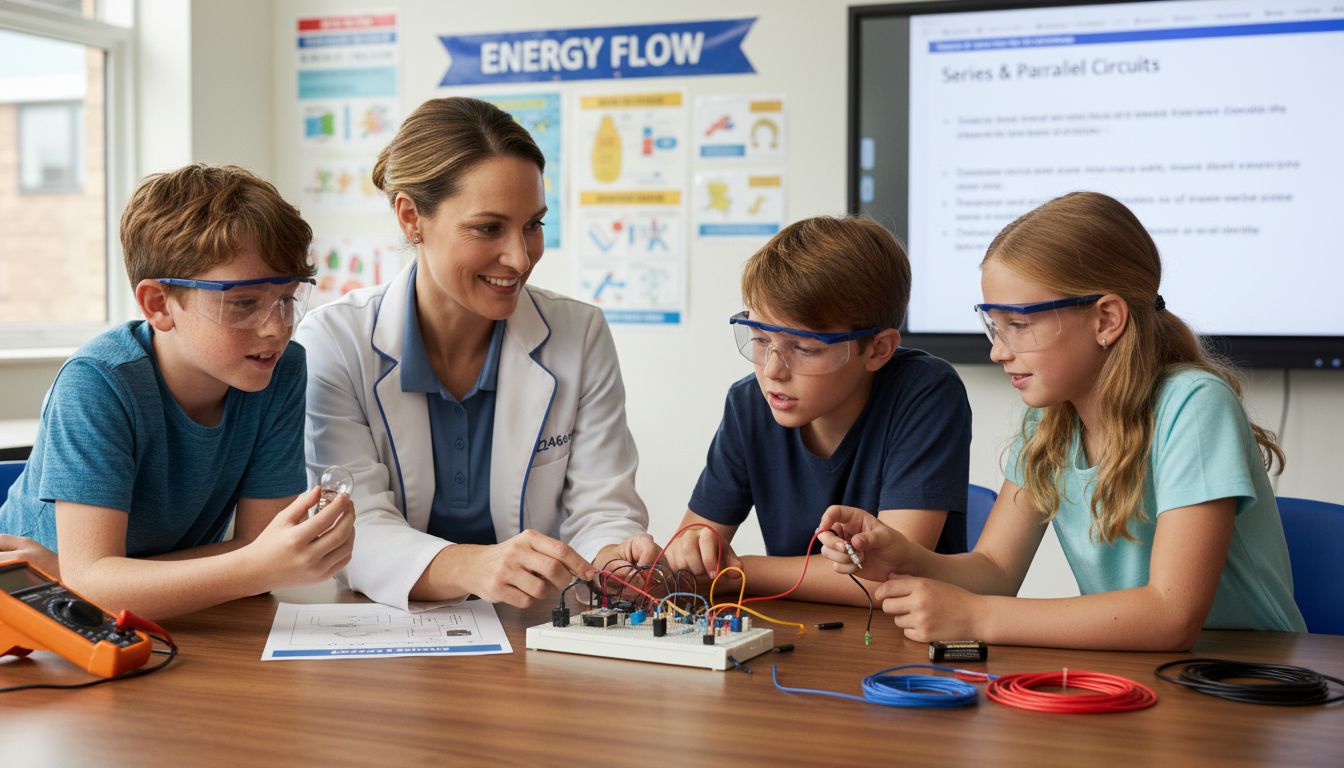
Science assemblies are powerful educational experiences designed to transform how students engage with scientific concepts and investigation methods. Schmahlscience describes these events as large-group educational opportunities that introduce students to interactive scientific processes through engaging presentations and demonstrations.
At their core, science assemblies aim to make scientific learning accessible, exciting, and interactive for students across different grade levels. According to National Academies Press, these assemblies reflect contemporary scientific practices by promoting active learning and sparking curiosity about scientific exploration. They go beyond traditional classroom instruction by providing immersive, hands-on experiences that can inspire future scientists and critical thinkers.
Key characteristics of effective science assemblies typically include:
- Interactive demonstrations that allow student participation
- Curriculum-aligned scientific content
- Engaging presenters who can communicate complex ideas simply
- Visual and kinesthetic learning opportunities
- Age-appropriate scientific explanations
These educational events serve multiple purposes: they introduce students to scientific concepts, demonstrate real-world applications of science, and create memorable learning experiences that can ignite long-term interest in scientific disciplines.
 Learn more about why educational assemblies matter to understand their broader educational impact.
Different Formats and Presentation Styles
Science assemblies employ a diverse range of presentation formats to capture students’ attention and effectively communicate scientific concepts. Smithsonian Institution highlights that science presentations can take multiple forms, each designed to engage audiences in unique and compelling ways.
The most common presentation styles for science assemblies include live demonstrations, multimedia presentations, interactive workshops, and hands-on experiment sessions. These formats are strategically chosen to match the age group, scientific topic, and learning objectives. Scientific Supercourse emphasizes the importance of selecting presentation styles that maximize student engagement and understanding.
Key presentation formats for science assemblies include:
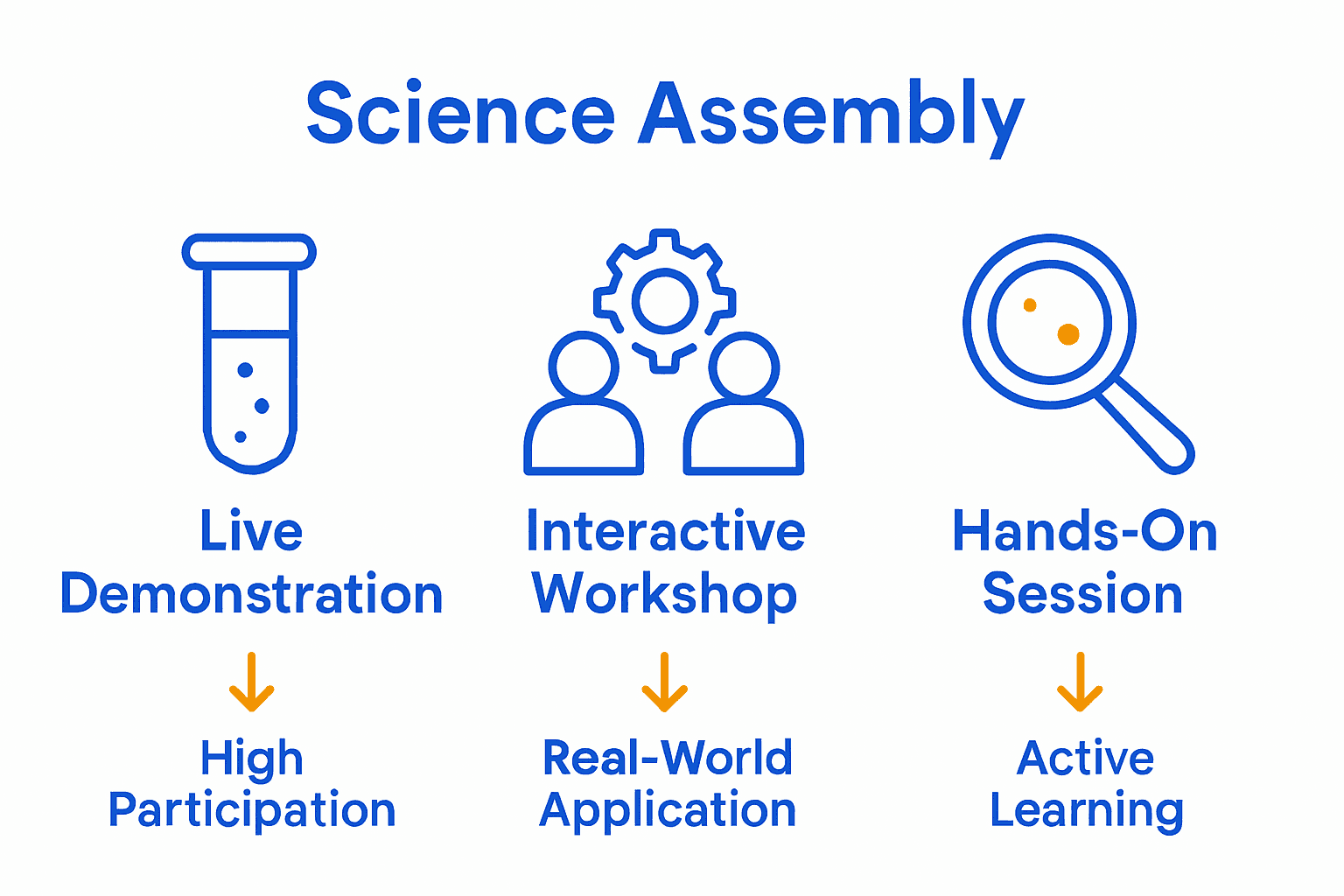
- Live Demonstrations: Real-time scientific experiments performed by presenters
- Multimedia Presentations: Engaging slideshows with videos, animations, and graphics
- Interactive Workshops: Small-group activities where students directly participate
- Hands-on Experiment Sessions: Collaborative scientific investigations
- Digital Simulations: Computer-based models showing complex scientific processes
The goal of these varied presentation styles is to transform scientific learning from passive observation to active exploration.
VIDEO:video_content] [Learn more about why educational assemblies matter to understand how different formats can inspire student curiosity and scientific thinking.
Here’s a comparison of science assembly presentation formats and their key features:
| Format | Student Involvement | Learning Style | Typical Activities |
|---|---|---|---|
| Live Demonstrations | High Volunteers invited | Visual Kinesthetic | Experiments Scientific tricks |
| Multimedia Presentations | Moderate | Visual Auditory | Videos Animations Slideshows |
| Interactive Workshops | Very High | Kinesthetic Collaborative | Group projects Problem-solving |
| Hands-on Experiment Sessions | Very High | Kinesthetic Inquiry-based | Lab activities Data collection |
| Digital Simulations | Moderate | Visual Technological | Computer models Virtual labs |
Curriculum Alignment and Educational Benefits
Science assemblies play a critical role in enhancing educational experiences by closely aligning with established curriculum standards. Next Generation Science Standards provides a comprehensive framework that emphasizes depth, coherence, and the integration of scientific practices across different grade levels.
According to National Academies Press, the Framework for K–12 Science Education guides curriculum development to ensure students receive comprehensive scientific learning. These assemblies are strategically designed to complement classroom instruction, offering dynamic and interactive experiences that reinforce key scientific concepts and skills students are learning in their regular academic settings.
Key curriculum alignment and educational benefits include:
- Direct connection to current scientific learning standards
- Supplemental learning experiences beyond traditional classroom instruction
- Exposure to advanced scientific concepts and real-world applications
- Development of critical thinking and scientific inquiry skills
- Inspiration for future scientific exploration and career interests
By bridging theoretical knowledge with engaging, hands-on experiences, science assemblies transform abstract scientific concepts into memorable learning moments. Discover more about curriculum enrichment to understand how these educational events can dramatically enhance student learning and scientific understanding.
Maximizing Student Engagement and Participation
Student engagement lies at the heart of effective science assemblies, transforming passive learning into dynamic, interactive experiences. New Jersey Department of Education emphasizes that engaging students in science requires active participation in critical scientific practices like analyzing data, developing models, and constructing explanations.
National Academies Press highlights that active learning approaches in science education encourage students to directly engage in scientific practices, which dramatically improves understanding and knowledge retention. By creating immersive, participatory environments, science assemblies can spark curiosity and transform students from passive listeners to active scientific investigators.
Strategies for maximizing student engagement include:
- Interactive problem-solving challenges
- Live scientific demonstrations with volunteer participation
- Hands-on experimental stations
- Real-time data collection and analysis
- Q&A sessions that encourage critical thinking
- Multimedia presentations with interactive elements
These engagement techniques ensure that students are not just watching, but actively participating in scientific exploration. Discover creative ways to boost student engagement and transform your school’s science learning experiences into memorable, impactful moments of discovery and wonder.
Safety, Legal, and Logistical Considerations
Planning science assemblies requires meticulous attention to safety protocols, legal requirements, and logistical complexities. National Academies Press emphasizes the critical importance of carefully implementing instructional materials, considering design, selection, and strict adherence to educational standards.
According to California Department of Education, science education frameworks underscore the necessity of aligning instructional materials with established standards to ensure both safety and educational effectiveness. This involves comprehensive planning that addresses potential risks, secures necessary permissions, and creates a structured environment conducive to learning.
Key considerations for science assemblies include:
- Comprehensive risk assessment before the event
- Obtaining necessary school and district approvals
- Ensuring presenter qualifications and background checks
- Preparing appropriate safety equipment and protective gear
- Developing clear emergency response protocols
- Verifying insurance coverage and liability protections
- Obtaining parental consent for interactive demonstrations
Learn how to ensure student safety by implementing a comprehensive approach that prioritizes student well-being while creating engaging scientific experiences. Successful science assemblies balance educational excitement with careful, responsible planning.
Bring Science Assemblies to Life with Engaging, Curriculum-Aligned Programs
Struggling to make science captivating and interactive for your students Can it be a challenge to find assemblies that truly align with your curriculum and keep kids actively involved Science assemblies should not only educate but inspire and engage students through hands-on learning and dynamic presentations. AssemblyShows.com understands these challenges and offers a solution that bridges the gap between educational standards and exciting assembly experiences.
Explore our wide selection of assembly programs designed by veteran performer Doug Scheer. With options available in both live and virtual formats, you can provide memorable science assemblies that emphasize active participation, curriculum connection, and safety. Discover how to transform scientific concepts into captivating experiences by visiting the Assemblies Archives – Scheer Genius Assembly Shows today. Ready to make your next science assembly unforgettable Act now and bring proven educational entertainment to your school by visiting AssemblyShows.com. For virtual options that keep learning alive no matter the distance, check out our Virtual Shows Archives – Scheer Genius Assembly Shows.
Frequently Asked Questions
What are science assemblies?
Science assemblies are large-group educational events designed to engage students with interactive scientific concepts and investigation methods through presentations and demonstrations. They aim to make scientific learning exciting, accessible, and memorable.
How do science assemblies enhance student learning?
Science assemblies enhance student learning by providing supplemental experiences that align with curriculum standards, reinforce key scientific concepts, develop critical thinking skills, and inspire future interest in scientific exploration.
What are common presentation styles used in science assemblies?
Common presentation styles include live demonstrations, multimedia presentations, interactive workshops, hands-on experiment sessions, and digital simulations. Each style is chosen to maximize engagement and match the learning objectives of the assembly.
What considerations should be taken when planning a science assembly?
When planning a science assembly, it’s essential to assess risks, secure necessary approvals, ensure presenter qualifications, prepare safety equipment, develop emergency response protocols, and verify liability coverage to create a safe and effective learning environment.