
Every year, over 50 million students attend school assemblies across the United States, making safety a top priority for educators and families. Gathering hundreds of young people in one place presents real risks, from crowd control to emergency situations. With so much at stake, understanding how to create and uphold effective safety protocols is crucial. Practical steps and clear strategies can transform assemblies into secure, positive experiences where everyone feels protected.
Key Takeaways
| Point | Details |
|---|---|
| Comprehensive Safety Protocols | School assembly safety protocols must proactively assess risks, establish emergency operations, and create effective communication strategies. |
| Assembly-Specific Risk Management | Each type of school assembly presents unique risks; thus, tailored strategies are essential for ensuring participant safety and engagement. |
| Supervision and Staff Responsibilities | Clear guidelines for staff duties before, during, and after assemblies are critical for maintaining student safety and accountability. |
| Regulatory Compliance and Best Practices | Schools must adhere to federal and state safety regulations, continuously updating protocols to ensure a genuinely safe learning environment. |
Defining School Assembly Safety Protocols
School assembly safety protocols are comprehensive systems designed to protect students, staff, and visitors during large group gatherings. According to the Comprehensive School Safety Framework (CSSF), these protocols are fundamental to creating a secure learning environment by addressing potential risks and establishing clear guidelines for emergency management.
The foundational elements of effective school assembly safety protocols typically include:
- Threat Assessment: Proactively identifying potential risks before they escalate
- Emergency Operations Planning: Developing clear procedures for various potential scenarios
- Facility Management: Ensuring physical spaces are conducive to safe interactions
- Communication Strategies: Establishing clear communication channels during potential emergencies
Research from How to Ensure Student Safety: A Step-by-Step Guide highlights that successful safety protocols require continuous evaluation and adaptation. School administrators must regularly review and update their approach, considering factors like crowd management, entry and exit procedures, and rapid response mechanisms.
Ultimately, creating robust school assembly safety protocols is not about generating fear, but about building confidence. By implementing comprehensive, thoughtful strategies, schools can ensure that assemblies remain positive, enriching experiences where learning and community connection can thrive safely.
Common Assembly Types and Risk Factors
School assemblies encompass a wide range of gatherings, each presenting unique safety considerations and potential risks. According to research from the School Safety Resource Center, these assembly types can include educational presentations, performance events, guest speaker programs, whole-school meetings, and emergency preparedness drills.
The primary assembly types and their associated risk factors include:
- Educational Presentations: Potential risks include audience management, speaker screening, and maintaining appropriate student engagement
- Performance Events: Challenges include crowd control, stage safety, and managing large audience movements
- Guest Speaker Programs: Critical considerations involve background checks, content appropriateness, and audience interaction protocols
- Emergency Drills: Risks center around realistic simulation without causing undue student anxiety
According to 7 Essential Interactive Assembly Tips for Schools, managing these diverse assembly types requires a multifaceted approach. Safety professionals emphasize the importance of pre-event planning, clear communication protocols, and designated staff responsibilities during each gathering.
Ultimately, understanding assembly-specific risks allows schools to develop targeted safety strategies. By recognizing the unique challenges of different assembly types, administrators can create tailored safety protocols that protect students while maintaining an engaging and positive learning environment.
Core Safety Guidelines and Supervision Duties
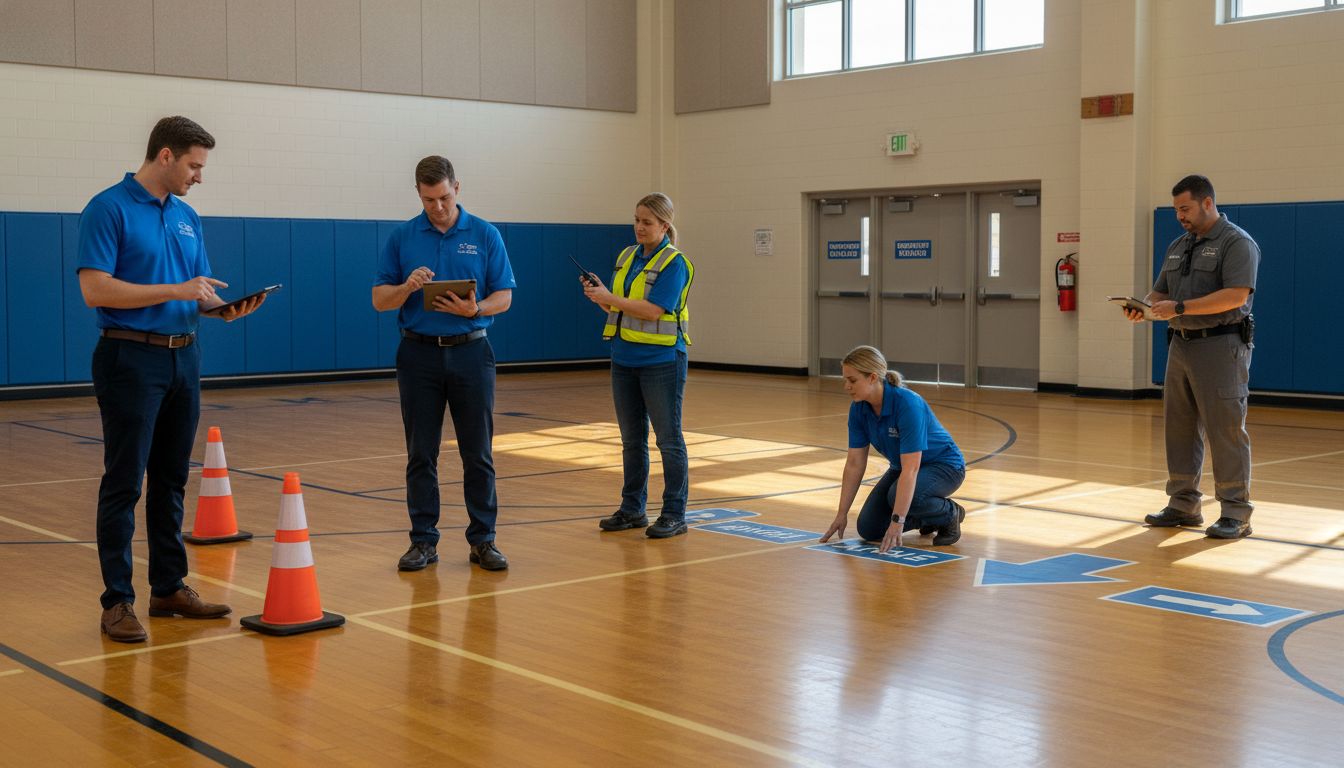
Effective school assembly safety hinges on comprehensive supervision guidelines that clearly define staff responsibilities and proactive safety protocols. According to the Safe School Certification framework, these guidelines must establish a collaborative approach involving school leadership, staff, and administrative personnel in maintaining a secure learning environment.
Key supervision duties for school assemblies include:
Here’s a summary of core supervision duties during school assemblies:
| Supervision Duty | Main Purpose | Key Actions |
|---|---|---|
| Pre-Assembly Preparation | Identify venue risks | Risk assessment Verify emergency exits |
| Student Monitoring | Ensure student safety | Strategic staff positioning Monitor crowds |
| Communication Protocols | Facilitate rapid information sharing | Supervisory staff channels Clear signals |
| Emergency Response | Guide crisis actions | Assign roles Lead students/staff |
| Post-Assembly Accountability | Confirm safe dismissal | Account for all students Safe exit |
- Pre-Assembly Preparation: Conducting venue risk assessments and verifying emergency exit routes
- Student Monitoring: Implementing strategic staff positioning to ensure comprehensive crowd oversight
- Communication Protocols: Establishing clear communication channels between supervisory staff
- Emergency Response: Defining specific staff roles during potential crisis scenarios
- Post-Assembly Accountability: Ensuring all students are accounted for and safely dismissed
Research from How to Ensure Student Safety: A Step-by-Step Guide emphasizes that successful supervision requires ongoing training and clear, well-communicated expectations. School administrators must develop detailed protocols that outline precise actions for various potential scenarios, ensuring staff are prepared and confident in their roles.
Effective supervision transforms safety from a theoretical concept into a practical, living strategy. By creating comprehensive guidelines that empower staff and prioritize student well-being, schools can create assembly environments that are not just safe, but also supportive and conducive to positive educational experiences.
State and Federal Safety Regulations for Assemblies
School assembly safety regulations are complex frameworks designed to protect students and staff across different jurisdictional levels. According to SchoolSafety.gov, federal guidelines provide a comprehensive baseline for safety protocols that schools must implement during large gatherings and educational events.
Key regulatory considerations include:
- Federal Compliance: Adhering to nationwide safety standards established by the Department of Education
- State-Specific Requirements: Implementing local regulations that may vary between jurisdictions
- Emergency Preparedness: Developing detailed response plans for potential crisis scenarios
- Accessibility Standards: Ensuring assembly spaces accommodate students with diverse needs
- Background Check Protocols: Screening all external presenters and event participants
When scheduling an assembly show, schools must navigate these intricate regulatory landscapes carefully. The Massachusetts Department of Elementary and Secondary Education emphasizes that safety regulations are not just bureaucratic checklists, but critical mechanisms for creating supportive learning environments.
Navigating safety regulations requires a proactive, comprehensive approach. School administrators must stay informed about evolving federal and state guidelines, continuously update their protocols, and foster a culture of safety that goes beyond mere compliance to genuine student protection.
Emergency Response and Incident Prevention Strategies
Emergency response and incident prevention strategies represent critical components of comprehensive school safety planning. According to the Colorado School Safety Resource Center, these strategies must be proactively designed to address potential crisis scenarios while maintaining a supportive learning environment.
Key emergency response strategies include:
- Threat Assessment: Identifying potential risks before they escalate
- Rapid Communication Protocols: Establishing clear channels for immediate information sharing
- Evacuation and Lockdown Procedures: Developing precise, practiced response mechanisms
- Staff and Student Training: Conducting regular emergency preparedness drills
- Mental Health Support: Creating frameworks for psychological recovery post-incident
The What is an Elementary School Assembly? guide emphasizes that effective prevention goes beyond reactive measures. The Safe Schools/Healthy Students Framework highlights the importance of creating a proactive culture that addresses potential incidents through comprehensive mental health support and violence prevention strategies.
Incident prevention is not about creating fear, but building resilience. By developing robust, compassionate strategies that prioritize both physical safety and emotional well-being, schools can create environments where students feel protected, supported, and empowered to learn and grow.
Strengthen School Assembly Safety with Expertly Crafted Programs
Ensuring student safety during school assemblies involves clear supervision, emergency preparedness, and understanding unique assembly risks. The challenge lies in creating engaging programs that not only captivate students but also align with proactive safety protocols and thoughtful planning highlighted in this article. Schools need trusted solutions that combine education and security without compromising energy or fun.

Discover dynamic, curriculum-aligned assembly shows led by veteran performer Doug Scheer crafted to complement your comprehensive school safety strategies. Explore our School Assembly Performers Archives for safe, interactive assemblies designed for Michigan, Ohio, Illinois, and nearby Midwest states. Whether you prefer in-person or remote experiences, our Virtual Shows Archives provide flexible options that uphold emergency preparedness and communication protocols. Take action now to enhance your school’s assembly experience while supporting vital safety considerations by visiting AssemblyShows.com.
Frequently Asked Questions
What are the primary components of school assembly safety protocols?
School assembly safety protocols include threat assessment, emergency operations planning, facility management, and communication strategies to ensure student and staff safety during gatherings.
How can schools develop safety protocols for different types of assemblies?
Schools can identify unique risks associated with assembly types such as educational presentations, performance events, and emergency drills. Tailored strategies should address crowd management, audience engagement, and emergency procedures specific to each type.
What are the key supervision duties during a school assembly?
Key supervision duties include pre-assembly preparation to assess risks, student monitoring through staff positioning, establishing communication protocols among staff, guiding emergency responses, and ensuring post-assembly accountability to confirm safe dismissal of students.
Why is ongoing training important for school assembly safety?
Ongoing training is crucial for staff to ensure they are familiar with safety protocols, communication strategies, and their specific roles during emergencies, fostering a proactive culture of safety within the school environment.
Recommended
- How to Ensure Student Safety: A Step-by-Step Guide – Scheer Genius Assembly Shows
- What is an Elementary School Assembly? Understanding Its Importance – Scheer Genius Assembly Shows
- A Crucial Question When Scheduling An Assembly Show – Scheer Genius
- The Reality of Schooling Post COVID-19 – Scheer Genius Assembly Shows