
More than 80 percent of schools regularly hold assemblies that shape campus culture and student growth. These gatherings go far beyond simple announcements or roll calls. They connect students, teachers, and leaders in ways that lift school spirit, encourage positive values, and highlight achievements. Whether through lively performances or important conversations, assemblies create memorable moments that support learning and help each student feel part of something bigger.
Key Takeaways
| Point | Details |
|---|---|
| Role of Assemblies | Assemblies foster community spirit, reinforce core values, and serve as platforms for holistic student development. |
| Types of Assemblies | Different assembly types, such as educational, motivational, and cultural, serve unique purposes that enhance student engagement and learning. |
| Teachers’ Involvement | Educators play critical roles in preparation, coordination, and active engagement during assemblies, enhancing their effectiveness. |
| Benefits of Assemblies | Assemblies enhance cognitive engagement, social skills, and emotional intelligence, transforming traditional educational experiences into dynamic learning opportunities. |
Table of Contents
- Defining The Role Of Assemblies In Schools
- Types Of School Assemblies And Their Purposes
- Teachers’ Responsibilities During Assemblies
- Educational Benefits And Classroom Impact
- Common Challenges And Effective Solutions
Defining the Role of Assemblies in Schools
School assemblies serve as powerful platforms for educational institutions to unite students, staff, and administrators in shared experiences that extend far beyond simple gatherings. According to research from schools-us.org, these events play a crucial role in fostering community spirit and reinforcing core values like respect, responsibility, and kindness through strategic presentations, performances, and communal rituals.
At their core, school assemblies are structured gatherings designed to accomplish multiple objectives simultaneously. As defined by Wikipedia’s educational resources, these events provide a unified space where educational institutions can effectively:
- Communicate important announcements
- Recognize student and staff achievements
- Present educational programs
- Build school-wide morale and community engagement
Beyond logistical communication, assemblies represent strategic opportunities for holistic student development. They create environments where learners can experience collective learning moments, witness inspirational presentations, and understand broader institutional goals. Whether featuring guest speakers, celebrating academic achievements, or addressing critical social topics, these gatherings transform traditional educational spaces into dynamic platforms for comprehensive learning and community building.
By bringing together diverse student populations and school personnel, assemblies transform isolated educational experiences into interconnected community narratives. Learn more about how educational assemblies can enhance school experiences.
Types of School Assemblies and Their Purposes
School assemblies are not one-size-fits-all events, but rather dynamic platforms with diverse purposes and formats tailored to specific educational objectives. According to the Blessed Mama Network, these gatherings can be categorized into several distinct types, each serving a unique role in student development and school community engagement.
Educational Assemblies
Subject-focused assemblies transform traditional learning by bringing curricular topics to life through engaging demonstrations. As research from Learning Mole indicates, these events connect classroom learning to broader themes through interactive activities like science experiments or math puzzles, stimulating student curiosity and involvement. Key characteristics include:
- Interactive scientific demonstrations
- Mathematical problem-solving showcases
- Live educational performances
- Expert-led presentations on specific academic subjects
These assemblies extend learning beyond textbook boundaries, offering students immersive experiences that make complex concepts more accessible and exciting.
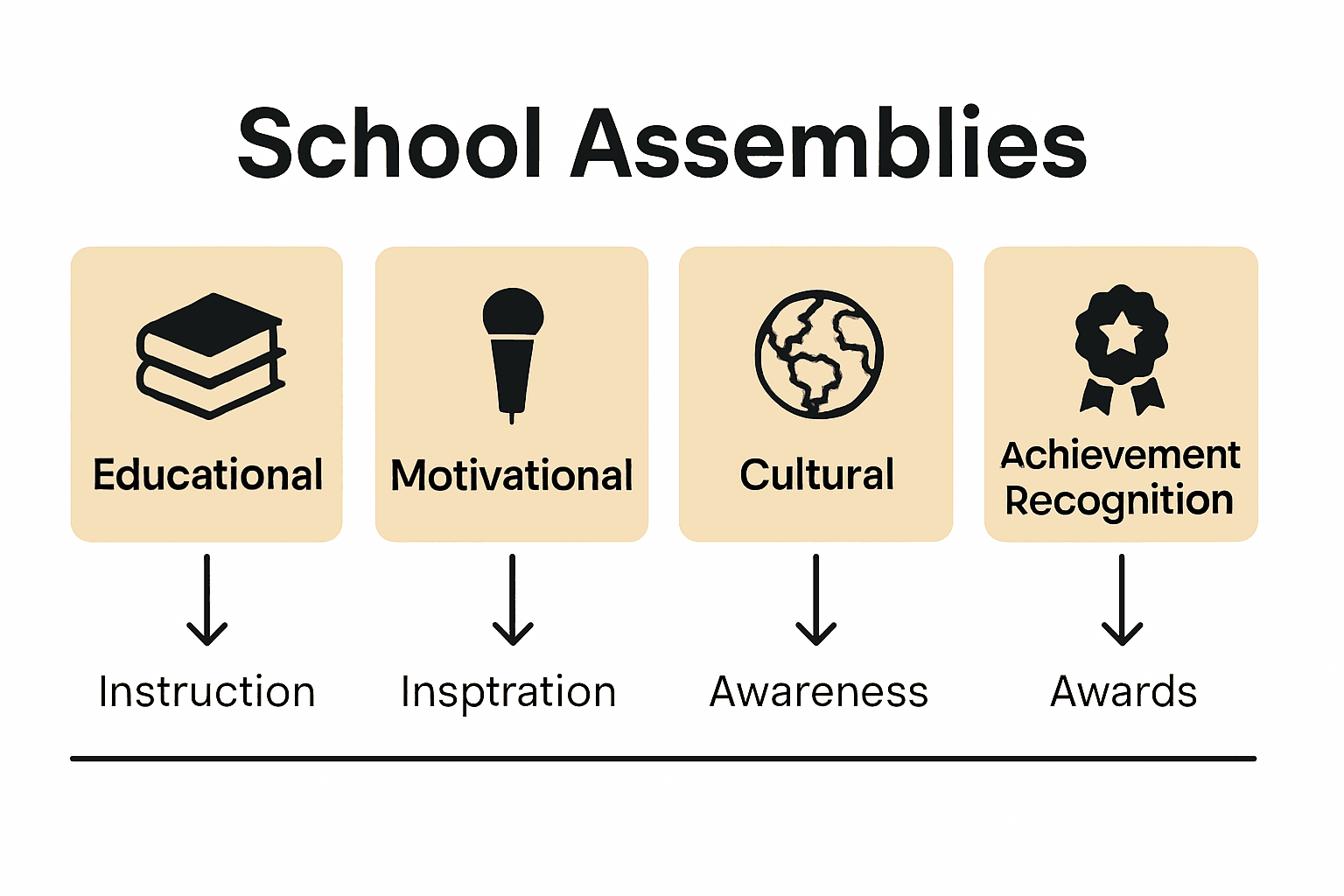
Here’s a comparison of common types of school assemblies and their main objectives:
| Assembly Type | Primary Purpose | Key Activities |
|---|---|---|
| Educational | Enhance subject understanding | Science demos Math puzzles Guest experts |
| Motivational | Inspire and build confidence | Speaker stories Goal setting |
| Cultural | Celebrate diversity and traditions | Cultural performances Festivals |
| Achievement Recognition | Honor student/staff accomplishments | Awards Certificates Applause |
Motivational and Cultural Assemblies
Beyond academic enrichment, school assemblies also serve critical social-emotional purposes. Motivational speaker assemblies leverage personal narratives to inspire students, while cultural celebration events showcase diversity and community traditions. These gatherings help students develop:
- Emotional intelligence
- Cultural awareness
- Personal motivation
- Community connection
Explore more about creating impactful educational assemblies that engage and transform student experiences.
Teachers’ Responsibilities During Assemblies
School assemblies require strategic preparation and active involvement from teachers, who serve as critical facilitators in these collective educational experiences. According to research from schools-us.org, educators play multifaceted roles that extend far beyond passive supervision, actively managing event logistics, coordinating student participation, and delivering important institutional messages.
Preparation and Coordination
Teachers’ responsibilities before an assembly involve comprehensive planning and strategic coordination. Their key tasks include:
- Reviewing assembly content and objectives
- Preparing students for appropriate behavior and participation
- Collaborating with administrators and guest presenters
- Ensuring smooth transitions between assembly segments
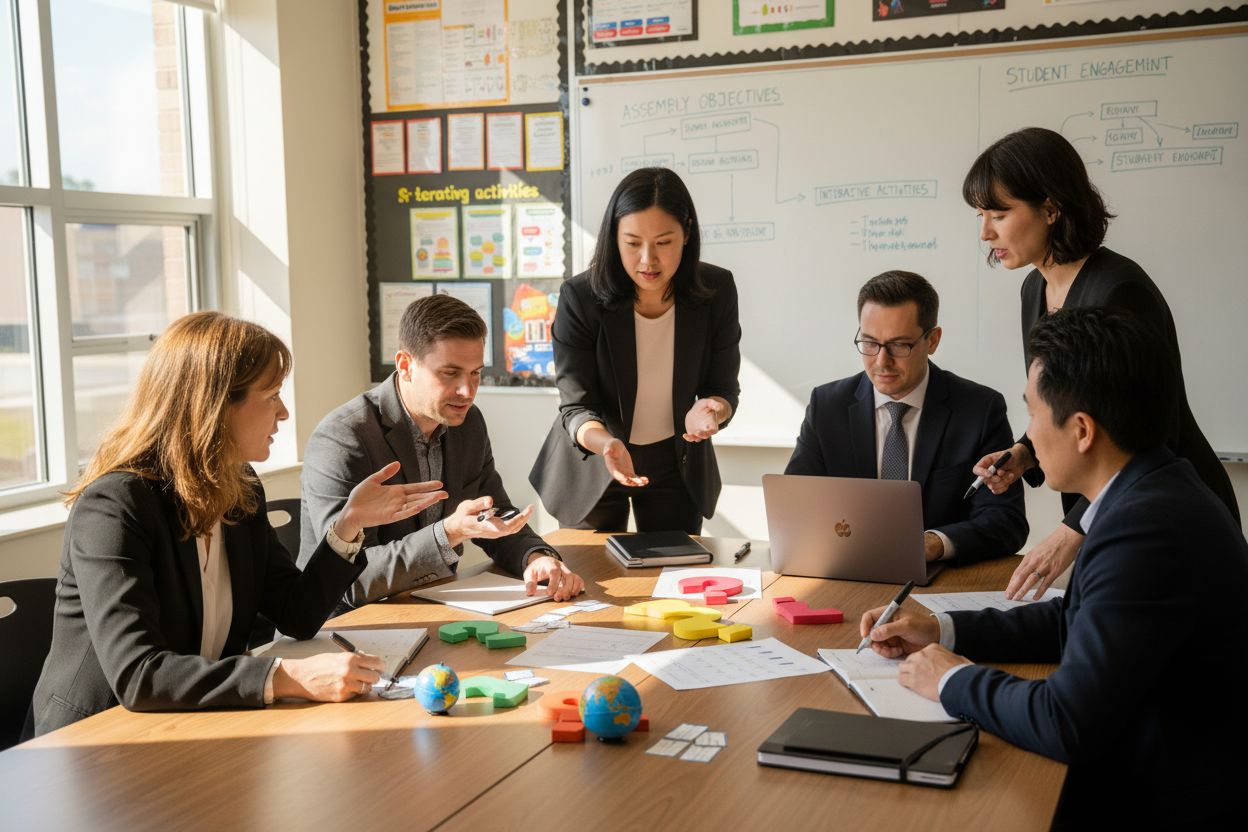
- Managing student seating and movement
Active Engagement and Supervision
During the assembly, teachers transform from background coordinators to active engagement facilitators. They must:
- Monitor student attention and behavior
- Support presenters by modeling attentive listening
- Help students interpret and reflect on presented content
- Assist with any technical or logistical challenges
- Reinforce key learning moments and messages
Beyond logistical management, teachers use assemblies as powerful instructional moments to reinforce school values, celebrate collective achievements, and foster a sense of community and cultural understanding. Learn more about creating meaningful educational assemblies that maximize student learning and engagement.
Educational Benefits and Classroom Impact
Educational assemblies represent transformative learning experiences that extend far beyond traditional classroom instruction. According to research from Academic Entertainment, these dynamic events enhance cognitive engagement through multisensory, interactive formats that promote advanced learning outcomes such as improved information retention and critical thinking skills.
Cognitive and Learning Enhancements
School assemblies create unique educational environments that stimulate student learning through several powerful mechanisms:
- Presenting complex concepts through engaging, visual demonstrations
- Breaking traditional learning monotony
- Encouraging interdisciplinary connections
- Promoting active participant learning
- Developing critical thinking and analytical skills
Psychological and Social Learning Impact
Beyond academic benefits, assemblies provide crucial psychological and social learning opportunities. They help students develop:
- Enhanced listening and observation skills
- Improved social interaction capabilities
- Greater appreciation for diverse perspectives
- Increased emotional intelligence
- Stronger sense of community and shared experience
These holistic learning experiences transform passive educational moments into dynamic, interactive journeys of discovery. Explore more about curriculum enrichment strategies that can revolutionize student engagement and learning outcomes.
Common Challenges and Effective Solutions
School assemblies present unique organizational and pedagogical challenges that require strategic planning and proactive management. While these events offer tremendous educational opportunities, administrators and teachers must navigate complex dynamics to ensure their effectiveness and meaningful student engagement.
Logistical and Behavioral Challenges
Common assembly challenges often emerge from practical and behavioral considerations:
- Managing large student groups simultaneously
- Maintaining student attention and discipline
- Coordinating complex scheduling requirements
- Ensuring inclusive and accessible programming
- Balancing entertainment with educational content
Social-Emotional Learning Considerations
According to Wikipedia’s research on social-emotional learning, addressing sensitive topics during assemblies requires careful navigation. Social-emotional initiatives can be controversial, demanding:
- Alignment with school community values
- Sensitivity to diverse perspectives
- Age-appropriate content selection
- Respectful and inclusive messaging
- Clear communication with stakeholders
Successful assemblies require thoughtful preparation, adaptable strategies, and a commitment to creating meaningful, inclusive educational experiences that resonate with diverse student populations. Discover strategies for creating impactful school programs that overcome common implementation challenges.
Unlock the True Potential of School Assemblies With Professional Support
Are you struggling with the complexities and challenges highlighted in “Role of Assemblies for Teachers: Complete Guide”? Effective school assemblies can be difficult to organize—teachers often juggle planning, engagement, and classroom impact while aiming to make assemblies meaningful and hassle-free. When teachers feel overwhelmed by logistics or worry that the event might not capture all students’ attention, it puts your entire school’s educational goals at risk. Your focus should be on inspiring students and building community, not on managing every detail alone.
Explore expert assembly performers who understand firsthand what makes truly effective school assemblies.
Empower your next event with AssemblyShows.com: where curriculum-aligned learning meets high-energy fun. Choose from a variety of engaging programs created for Michigan, Ohio, Illinois, and Midwest schools. Discover how our live and virtual assemblies can relieve stress for faculty, increase student participation, and create lasting community memories. Ready to transform your next school assembly into a remarkable experience? Browse our full list of dynamic assemblies and schedule with us today.
Frequently Asked Questions
What is the primary role of school assemblies for teachers?
School assemblies serve as platforms for teachers to communicate important announcements, recognize student achievements, present educational programs, and build a sense of community within the school.
How can teachers prepare for an effective school assembly?
Teachers can prepare by reviewing the assembly content, coordinating with administrators and guest presenters, preparing students for appropriate behavior, and ensuring smooth transitions during the event.
What are the benefits of attending school assemblies for students?
School assemblies enhance student learning by providing engaging, interactive experiences that promote cognitive engagement, emotional intelligence, and social interaction skills, creating a sense of community.
How can teachers effectively manage student behavior during assemblies?
Teachers can manage behavior by actively engaging students, modeling attentive listening, reinforcing key messages, and addressing any disruptions promptly to ensure a positive assembly experience.
Recommended
- What is an Elementary School Assembly? Understanding Its Importance – Scheer Genius Assembly Shows
- Understanding Why Elementary Assemblies Matter for Schools – Scheer Genius Assembly Shows
- Understanding Why Host Educational Assemblies in Schools – Scheer Genius Assembly Shows
- 7 Essential Interactive Assembly Tips for Schools – Scheer Genius Assembly Shows