
Did you know that students remember up to 90 percent of what they learn through active participation compared to only 10 percent from passive reading? Schools everywhere are rethinking how they teach by bringing learning to life outside the classroom. Curriculum-based assemblies help create experiences students actually remember, connecting big ideas with real-world moments and making academic topics feel both meaningful and exciting.
Key Takeaways
| Point | Details |
|---|---|
| Curriculum Enhancement | Curriculum-based assemblies directly complement academic objectives, extending learning beyond the classroom. |
| Interactive Learning | These assemblies offer engaging, participatory experiences that enhance student understanding of complex concepts. |
| Diverse Program Types | Various formats, including guest speakers and thematic demonstrations, cater to diverse learning experiences and interests. |
| Safety and Equity | Schools must prioritize legal, safety, and equity considerations to create inclusive and secure assembly environments. |
Table of Contents
- Defining Curriculum-Based School Assemblies
- Types of Curriculum-Aligned Assembly Programs
- Educational Benefits and Real-World Applications
- Planning and Implementing Effective Assemblies
- Legal, Safety, and Equity Considerations
Defining Curriculum-Based School Assemblies
A curriculum-based assembly represents a strategic educational experience designed to extend learning beyond traditional classroom boundaries. Unlike standard school gatherings, these assemblies are carefully crafted to directly complement and enhance academic curriculum objectives. Read more about elementary school assemblies to understand their comprehensive educational value.
According to research from teachers’ academic resources, curriculum-based assemblies serve multiple critical educational purposes:
- Introduce students to broader academic themes
- Foster intellectual curiosity and critical thinking skills
- Expose learners to experts and diverse perspectives
- Create shared learning experiences across different classrooms
These specialized assemblies function as dynamic learning platforms that connect academic content with real-world experiences. By integrating curriculum-aligned presentations, schools can transform standard gatherings into powerful educational opportunities. Students benefit from interactive experiences that break traditional instructional patterns, allowing them to engage with complex concepts through innovative presentation methods.
The core advantage of curriculum-based assemblies lies in their ability to spark student engagement while maintaining rigorous educational standards. They provide a unique opportunity for learners to explore subjects from perspectives that traditional textbook learning cannot capture, making complex ideas more accessible and memorable.
Types of Curriculum-Aligned Assembly Programs
Curriculum-aligned assembly programs represent a diverse range of educational experiences designed to enhance student learning through engaging, interactive presentations. Learn more about why educational assemblies matter, these programs go far beyond traditional one-dimensional school gatherings.
According to research from educational resources, curriculum-aligned assembly programs typically encompass several dynamic formats:
- Guest Speaker Presentations: Experts from various professional domains sharing insights
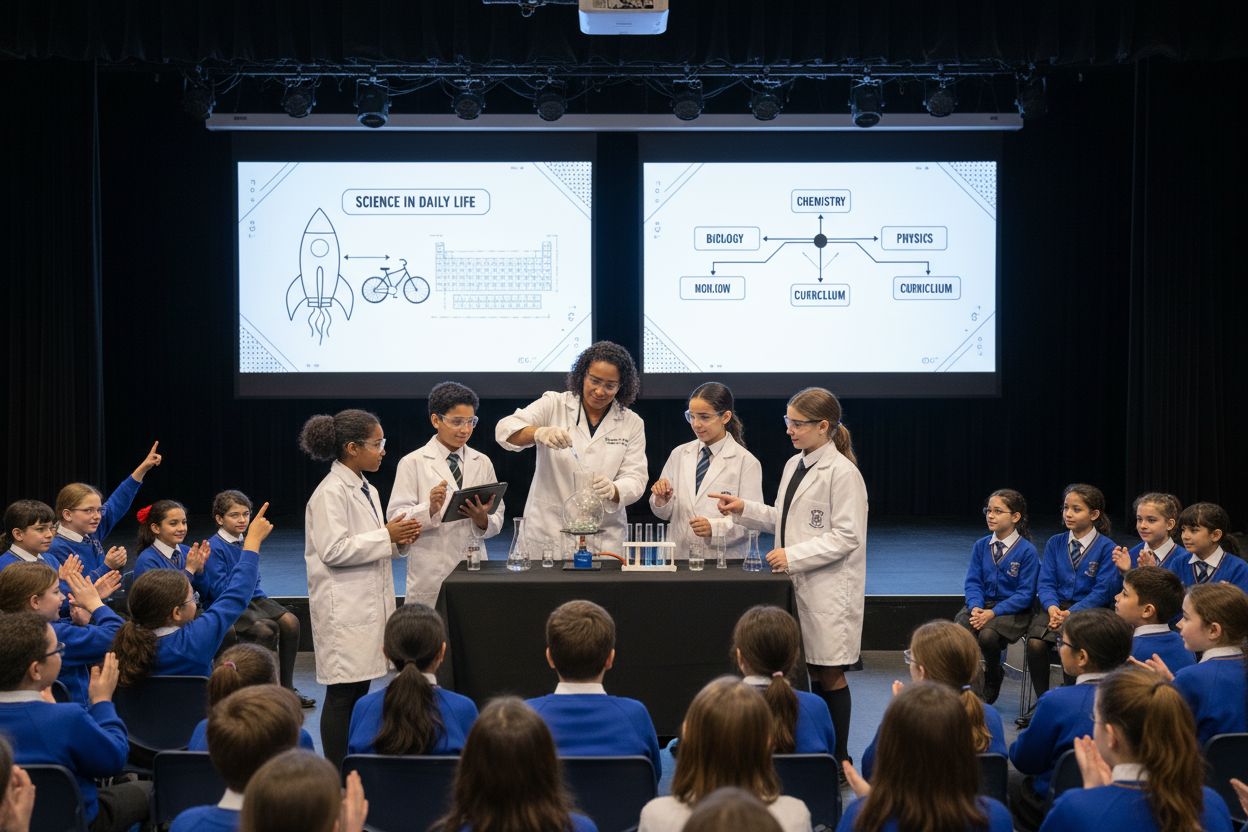
- Thematic Demonstrations: Interactive shows connecting academic concepts to real-world applications
- Cultural Performance Programs: Showcasing diverse historical and cultural narratives
- Career Exploration Assemblies: Introducing students to professional pathways and skill development
- Scientific Demonstration Shows: Bringing complex scientific principles to life through hands-on experiences
Research indicates that these programs integrate multimedia, interactive components, and active student participation. By transforming assemblies into participatory events, schools can create immersive learning experiences that reflect curricular objectives across different grade levels. The key is maintaining a balance between entertainment and educational substance.
Successful curriculum-aligned assembly programs share common characteristics: they are age-appropriate, directly connected to learning standards, and designed to spark curiosity. Whether exploring environmental science through a theatrical presentation or understanding historical events through a dramatic performance, these programs offer students unique opportunities to engage with academic content in memorable, dynamic ways.
Here’s a comparison of key types of curriculum-aligned assembly programs:
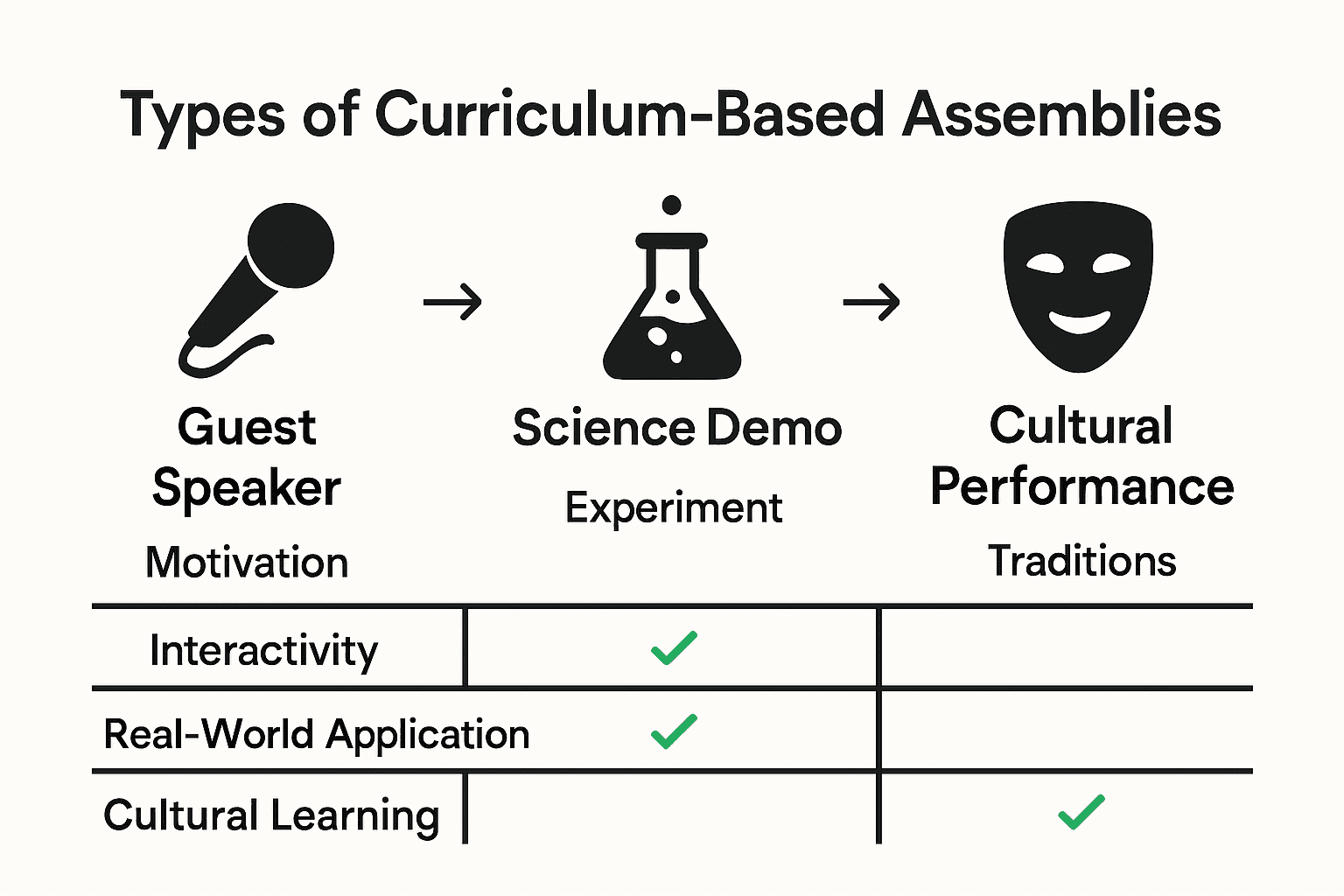
| Program Type | Main Focus | Typical Format |
|---|---|---|
| Guest Speaker Presentations | Expert insights | Talks Q&A sessions |
| Thematic Demonstrations | Real-world applications | Interactive shows Live demos |
| Cultural Performance Programs | Cultural and historical narratives | Performances Storytelling |
| Career Exploration Assemblies | Professional paths Skill development | Job talks Workshops |
| Scientific Demonstration Shows | Scientific principles Hands-on learning | Live experiments Participation |
Educational Benefits and Real-World Applications
Curriculum-based assemblies transform traditional learning by bridging academic concepts with practical, real-world experiences. Learn more about hands-on learning techniques to understand how these programs create meaningful educational connections for students.
The educational benefits of these assemblies extend far beyond typical classroom instruction:
- Cognitive Development: Stimulate critical thinking and problem-solving skills
- Experiential Learning: Provide direct exposure to complex concepts through interactive demonstrations
- Skill Transfer: Help students understand how academic knowledge applies to real-world scenarios
- Motivation and Engagement: Create memorable learning experiences that inspire curiosity
- Interdisciplinary Understanding: Connect multiple academic disciplines through integrated presentations
These assemblies serve as powerful platforms for students to explore concepts that might seem abstract in traditional textbook learning. By presenting information through dynamic, interactive formats, schools can help students develop deeper comprehension and practical understanding of complex topics. Whether it’s a scientific demonstration, a cultural performance, or a career exploration presentation, these programs offer students unique opportunities to see academic concepts in action.
Moreover, curriculum-based assemblies play a crucial role in preparing students for future challenges. They help develop essential soft skills like critical thinking, communication, and adaptability by exposing students to diverse perspectives and innovative learning approaches. The goal is not just to transfer information, but to inspire students to become active, curious learners who can connect classroom knowledge with real-world applications.
Planning and Implementing Effective Assemblies
Successful curriculum-based assemblies require strategic planning and thoughtful implementation. Discover essential interactive assembly tips to ensure your school creates engaging and impactful learning experiences.
Effective assembly planning involves several critical components:
- Curriculum Alignment: Directly connect assembly themes with current academic learning objectives
- Age-Appropriate Content: Tailor presentations to match students’ developmental stages
- Interactive Design: Incorporate multimedia, student participation, and dynamic presentation methods
- Clear Learning Goals: Establish measurable educational outcomes for each assembly
- Engaging Presentation Formats: Select diverse presentation styles to maintain student interest
Research highlights that successful implementation requires more than just selecting an interesting topic. Schools must design assemblies that encourage active student participation, use dynamic media, and reflect both curricular requirements and developmental needs. This means moving beyond passive listening to creating immersive, interactive learning experiences that spark curiosity and deep engagement.
Practical implementation strategies include collaborating closely with teachers to understand current curriculum themes, involving students in pre and post-assembly activities, and creating opportunities for reflection and further exploration. By treating assemblies as integral learning experiences rather than standalone events, schools can transform these gatherings into powerful educational tools that complement and enhance classroom instruction.
Legal, Safety, and Equity Considerations
Curriculum-based assemblies require comprehensive legal and safety protocols to ensure student protection and inclusive learning environments. Learn more about student safety guidelines to understand the critical considerations for school administrators.
Key legal and safety considerations include:
- Speech Regulation: Maintaining appropriate communication standards during assemblies
- Risk Assessment: Proactively identifying potential physical and emotional safety concerns
- Inclusive Environment: Ensuring equitable representation and participation
- Consent and Privacy: Protecting student rights during presentations
- Emergency Preparedness: Developing clear protocols for unexpected situations
According to U.S. Supreme Court precedent, schools have the legal authority to regulate student speech during assemblies, particularly to maintain a safe and appropriate educational environment. This means administrators can establish guidelines that prevent inappropriate or disruptive communication while protecting students’ fundamental rights.
Equity in assembly programming goes beyond legal compliance. Schools must create supportive environments that encourage trusted adult reporting, avoid punitive zero-tolerance policies, and design inclusive experiences that represent diverse student backgrounds. By prioritizing safety, legal compliance, and equitable representation, curriculum-based assemblies can become powerful tools for learning that respect and protect every student’s educational experience.
Make Your Next Assembly Unforgettable and Meaningful
Many schools struggle to transform standard assemblies into truly impactful, curriculum-based experiences. From aligning assemblies with academic objectives to ensuring every presentation is interactive and memorable, it can feel overwhelming to make each event both educational and engaging. If you are seeking proven ways to spark curiosity, boost learning, and ensure inclusivity for every student, our curriculum-based assembly programs offer the solution your school needs.
Why settle for an average assembly when your students deserve something remarkable? Now is the time to bring high-energy, curriculum-aligned entertainment directly to your school. Visit AssemblyShows.com to explore our award-winning programs, available in both live and virtual show formats. Give your students a live learning experience beyond the classroom and see firsthand how the right assembly can inspire and motivate every learner.
Frequently Asked Questions
What are curriculum-based assemblies?
Curriculum-based assemblies are educational experiences designed to enhance and complement academic curriculum objectives, providing students with opportunities to engage in learning beyond the traditional classroom setting.
How do curriculum-aligned assembly programs benefit students?
These programs benefit students by stimulating critical thinking, providing experiential learning, enhancing motivation and engagement, and helping students connect academic concepts to real-world applications.
What types of programs are included in curriculum-aligned assemblies?
Curriculum-aligned assemblies can include various formats such as guest speaker presentations, thematic demonstrations, cultural performance programs, career exploration assemblies, and scientific demonstration shows, all aimed at enhancing student learning.
What are key considerations for planning a successful assembly?
Successful planning involves aligning the assembly themes with academic learning objectives, ensuring age-appropriate content, designing interactive presentations, establishing clear learning goals, and selecting diverse formats to engage students.
Recommended
- What is an Elementary School Assembly? Understanding Its Importance – Scheer Genius Assembly Shows
- Understanding Why Host Educational Assemblies in Schools – Scheer Genius Assembly Shows
- Understanding Why Elementary Assemblies Matter for Schools – Scheer Genius Assembly Shows
- 7 Essential Interactive Assembly Tips for Schools – Scheer Genius Assembly Shows