
School assemblies can either inspire students or leave them counting the minutes. Over 60 percent of school administrators report that assemblies are more impactful when tailored to student interests. With each group of learners bringing unique needs and expectations, a one-size-fits-all approach just doesn’t work. If you want assemblies that feel relevant and memorable, it all starts with understanding your audience and building from there.
Quick Summary
| Key Point | Explanation |
|---|---|
| 1. Assess Goals and Audience Needs | Understand school objectives and gather student input to design meaningful assemblies. |
| 2. Choose Engaging and Relevant Programs | Select assembly programs that are educational, inspiring, and aligned with student interests. |
| 3. Coordinate Logistics Meticulously | Plan all logistical details to ensure a smooth assembly experience with minimal disruptions. |
| 4. Foster Active Participation | Implement interactive strategies that encourage student involvement and make assemblies engaging. |
| 5. Collect and Act on Feedback | Establish a transparent feedback process to improve future assemblies based on student insights. |
Step 1: Assess Assembly Goals and Audience Needs
Effectively planning a student assembly starts with understanding your specific school objectives and student population. According to research from Eric.ed.gov, successful assembly planning requires a clear understanding of the school’s goals and the unique needs of your student body. This initial assessment will help you design an engaging and meaningful experience that resonates with your audience.
To conduct a thorough assessment, gather input directly from key stakeholders. Interview school administrators about curriculum alignment and learning objectives. Survey students to understand their interests and concerns. Safe Supportive Learning research highlights that involving students in planning ensures assemblies address their genuine interests, creating a more inclusive school environment.
Pro tip: Create a simple survey or focus group with student representatives from different grade levels. Ask questions like what topics they find interesting, what challenges they face, and what types of presentations might capture their attention. This approach not only helps you design a more targeted assembly but also makes students feel valued and heard. By taking the time to understand your audience, you transform assemblies from mandatory events into exciting learning opportunities that students actually look forward to experiencing.
With your goals and audience needs clearly defined, you are now ready to move forward with selecting the right assembly content and format.
Step 2: Select Dynamic, Relevant Assembly Programs
Selecting the right assembly programs is crucial for capturing student interest and maximizing engagement. According to OppTrends, choosing programs that showcase student talents and creativity can significantly boost overall school community engagement. Your goal is to find assembly experiences that not only educate but also inspire and excite your students.
Young Citizens research emphasizes the importance of utilizing resources with diverse assembly themes to keep content relevant and dynamic. When evaluating potential programs, consider multiple factors such as curriculum alignment, age appropriateness, interactive elements, and potential learning outcomes. Look for assemblies that offer a mix of entertainment and educational value a combination that keeps students actively involved and interested.
Pro tip: Create a selection matrix that rates potential assembly programs across key criteria like educational value, student engagement potential, alignment with school goals, and presenter quality. This systematic approach helps ensure you choose programs that truly resonate with your student body.
 For additional inspiration, check out our guide on curriculum-based assemblies to help refine your selection process.
With the right assembly programs selected, you are now prepared to move forward with planning and implementation.
Step 3: Coordinate Logistics and Setup Seamlessly
Successful assembly execution hinges on meticulous logistical planning. According to NCTE, adhering to established organizational guidelines ensures smooth coordination and maximum student participation. Your primary objective is to create a seamless experience that minimizes disruptions and maximizes learning potential.
Drawing from Eric.ed.gov research, proper planning of assembly logistics is essential for creating a cohesive and engaging experience for the entire student body. Start by creating a comprehensive checklist that covers key logistical elements location setup, audio visual equipment, seating arrangements, timing, and student flow. Communicate clearly with all stakeholders including teachers, administrators, technical staff, and assembly presenters to ensure everyone understands their role and responsibilities.
Pro tip: Conduct a pre-assembly walkthrough to identify and resolve potential logistical challenges. Test all audio visual equipment, confirm room configurations, and create contingency plans for unexpected scenarios. Check our 8 Engaging Arts Assembly Program Ideas for additional insights on smooth program execution. By anticipating potential issues and preparing thoroughly, you will create a professional and engaging assembly experience that keeps students focused and inspired.
With logistics carefully coordinated, you are now ready to move forward with final implementation and student engagement strategies.
Step 4: Foster Active Student Participation Onsite
Transforming assemblies from passive experiences to interactive learning opportunities requires intentional engagement strategies. Edutopia research highlights the importance of implementing movement-based activities and interactive discussions to encourage active student participation. Your goal is to create an environment where students are not just observers but enthusiastic contributors.
Keep Teaching emphasizes creating collaborative opportunities that enhance the learning experience. Design your assembly with multiple participation touchpoints such as live polling, group challenges, real-time Q&A sessions, and interactive demonstrations. Encourage student volunteers to participate in presentations, ask thought provoking questions, and create moments that invite spontaneous interaction. When students feel their input is valued, they become more invested in the assembly experience.
Pro tip: Leverage interactive teaching methods in assemblies to maintain high energy and engagement. Consider implementing strategies like quick movement breaks, rapid response activities, and small group discussions that break up traditional presentation formats. By varying participation methods and keeping students physically and mentally active, you will transform assemblies from mandatory events to memorable learning experiences.
With active participation strategies in place, you are now ready to evaluate and refine your assembly approach.
Step 5: Gather and Act on Feedback Effectively
Collecting meaningful student feedback is crucial for continuous improvement of assembly programs. Safe Supportive Learning research emphasizes the importance of providing platforms where students can share their experiences and insights. Your objective is to create a transparent feedback process that makes students feel genuinely heard and valued.
EDC highlights how encouraging student voice can foster a sense of ownership and increase engagement. Design multiple feedback collection methods such as anonymous digital surveys, suggestion boxes, small group discussions, and post-assembly reflection sessions. Ensure these methods are accessible, low pressure, and provide genuine opportunities for students to share both positive experiences and constructive suggestions.
Pro tip: To maximize feedback quality, combine quantitative survey data with qualitative discussion opportunities. Boost Student Engagement Step by Step can provide additional strategies for creating meaningful dialogue. Most importantly, demonstrate that you are not just collecting feedback but actively implementing student suggestions. Close the feedback loop by sharing how their input has influenced future assembly planning, which builds trust and encourages continued participation.
With a robust feedback mechanism in place, you have completed the key steps to creating engaging and dynamic school assemblies.
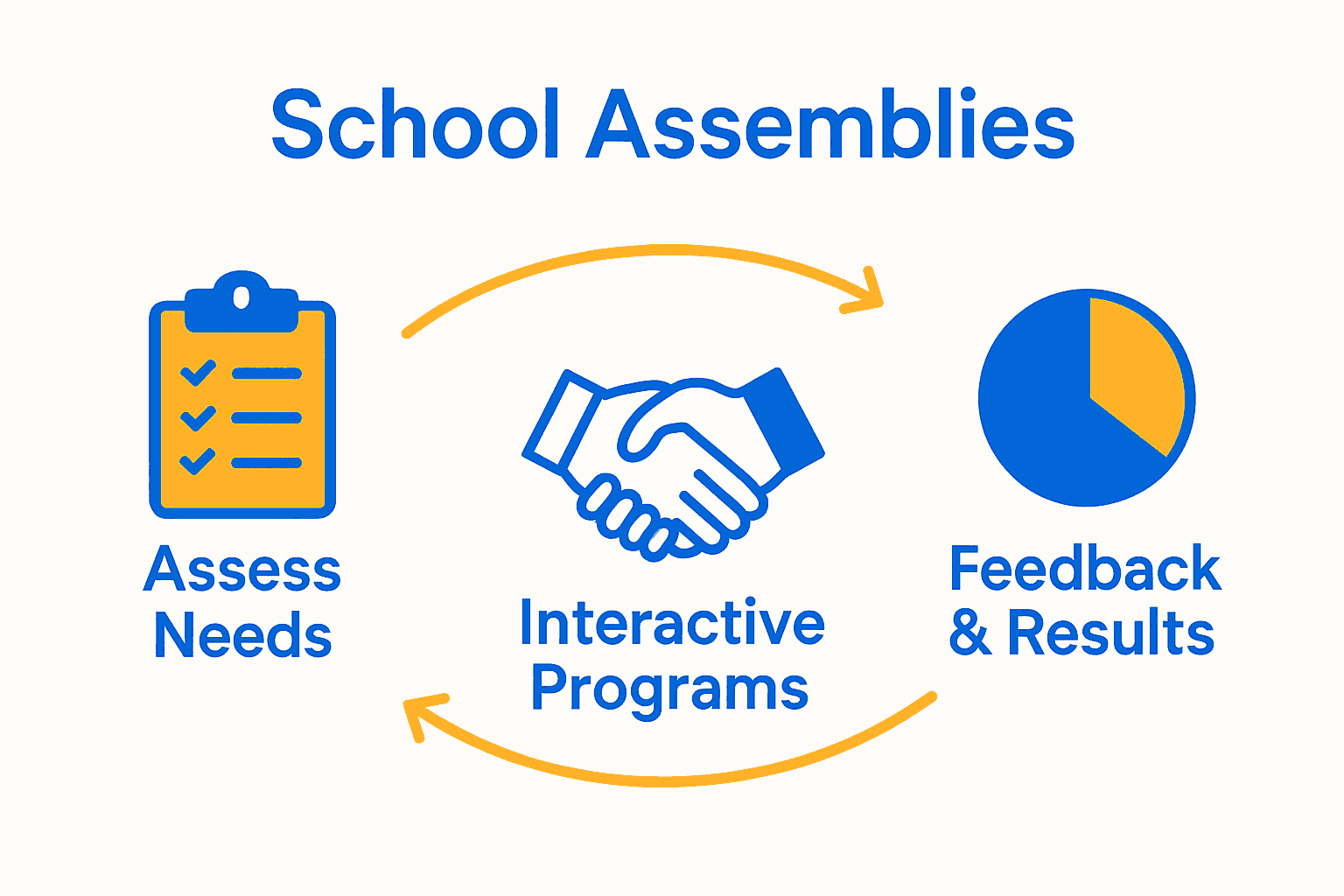
Transform Your Student Assemblies Into Unforgettable Learning Experiences
Struggling to turn mandatory student assemblies into moments of active participation and genuine excitement? This article highlights the challenges of engaging diverse student audiences and the importance of dynamic, curriculum-aligned programs that foster interaction and student voice. Common pain points include finding relevant content that captures attention, coordinating seamless logistics, and creating opportunities for authentic student involvement.
AssemblyShows.com understands these challenges and offers a proven solution to help you energize your assemblies. Led by Doug Scheer, a nationally recognized educational performer, our wide selection of 12 interactive, curriculum-based programs is designed to meet your school goals and student interests. Whether you need live or virtual formats, our shows drive engagement through activities that inspire high energy and meaningful learning.
Explore our full range of Assemblies Archives – Scheer Genius Assembly Shows to find the perfect program tailored for your students.
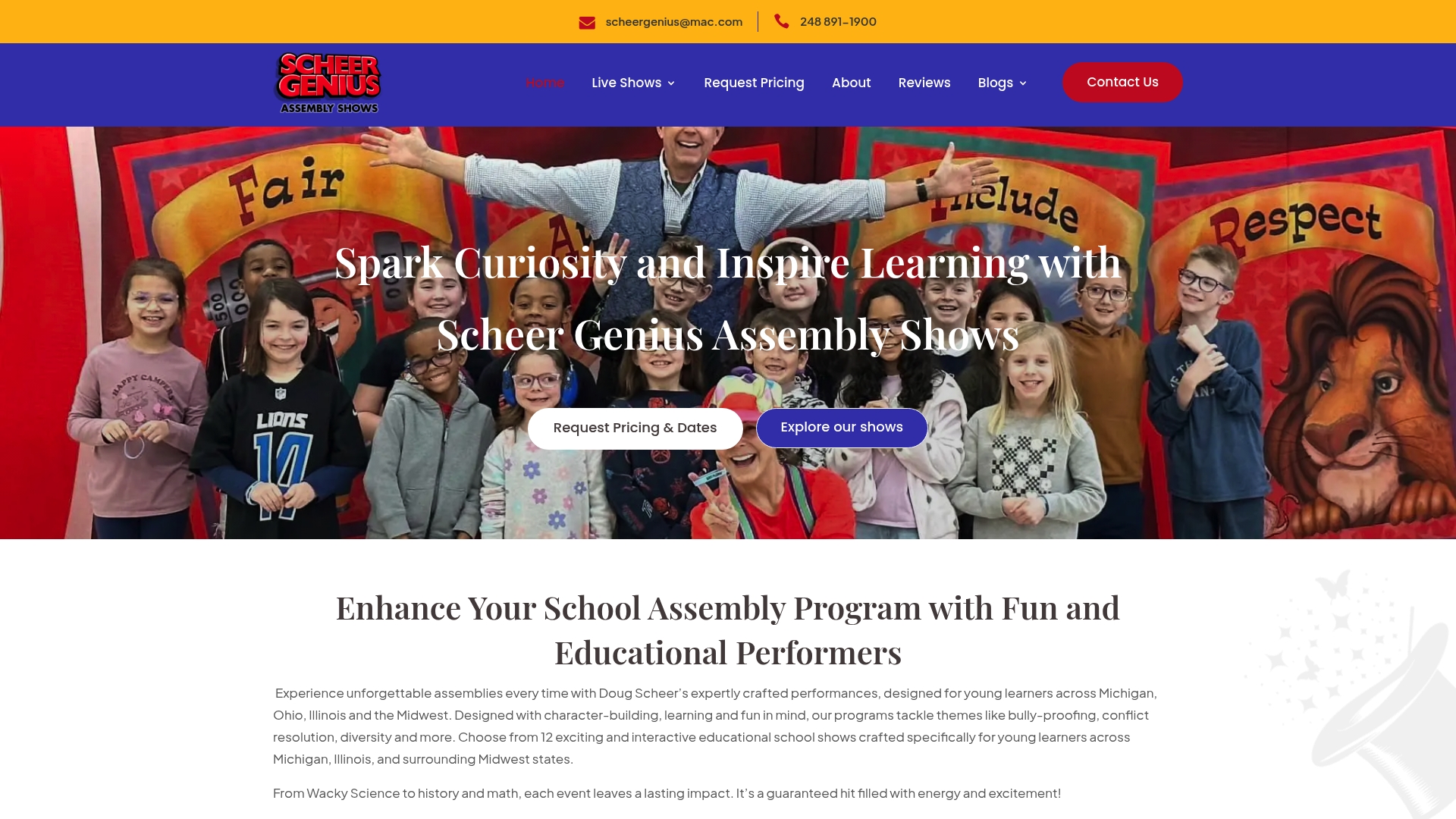
Don’t wait to elevate your school assemblies from routine events to memorable educational experiences. Visit AssemblyShows.com to discover how our expert performers and carefully crafted shows align with your goals and boost student participation. For insights on our talented team, check out School Assembly Performers Archives – Scheer Genius Assembly Shows. Act now to bring high-impact educational entertainment to your school this year.
Frequently Asked Questions
How can I assess students’ interests for assemblies?
To assess students’ interests, create a simple survey or hold focus group discussions with student representatives from various grade levels. Ask questions about topics they find engaging and challenges they face, which will help tailor the assembly content to what truly resonates with them.
What characteristics should I look for in assembly programs?
When selecting assembly programs, prioritize characteristics like educational value, interactive elements, and alignment with school goals. Use a selection matrix to evaluate potential programs based on these criteria to ensure they engage students effectively.
How can I encourage active participation during assemblies?
Encourage active participation by incorporating movement-based activities, live polls, and group discussions into the assembly structure. Plan specific moments for student volunteers to engage actively, which can increase overall enthusiasm and investment in the assembly content.
What are effective ways to gather feedback from students after assemblies?
Effective ways to gather feedback include using anonymous digital surveys, suggestion boxes, and reflection sessions. Ensure these methods are low-pressure and accessible, allowing students to share their experiences openly, which will help refine future assemblies.
How can I ensure smooth logistics for my assembly event?
To ensure smooth logistics, create a comprehensive checklist that addresses all necessary elements, such as setup, seating, and equipment checks. Conduct a pre-assembly walkthrough to pinpoint and address potential issues, minimizing disruptions on the day of the event.
What steps can I take to create a transparent feedback process?
To create a transparent feedback process, design multiple methods for collecting feedback and actively implement students’ suggestions into future planning. By closing the feedback loop and communicating how their input shaped changes, you will foster a sense of ownership among students.
Recommended
- How to Boost Student Engagement Assemblies Effectively – Scheer Genius Assembly Shows
- 7 Essential Interactive Assembly Tips for Schools – Scheer Genius Assembly Shows
- Understanding Interactive Teaching Methods in Assemblies – Scheer Genius Assembly Shows
- Role of Assemblies for Teachers: Complete Guide – Scheer Genius Assembly Shows