
Only about 53 percent of students report feeling truly engaged in their learning, according to recent national surveys. Low engagement can quietly undermine motivation, academic success, and even classroom morale. Understanding how to increase participation and emotional investment opens new pathways for achievement and well-being. With practical steps backed by research, schools can create environments where every student feels connected, motivated, and ready to learn.
Quick Summary
| Key Point | Explanation |
|---|---|
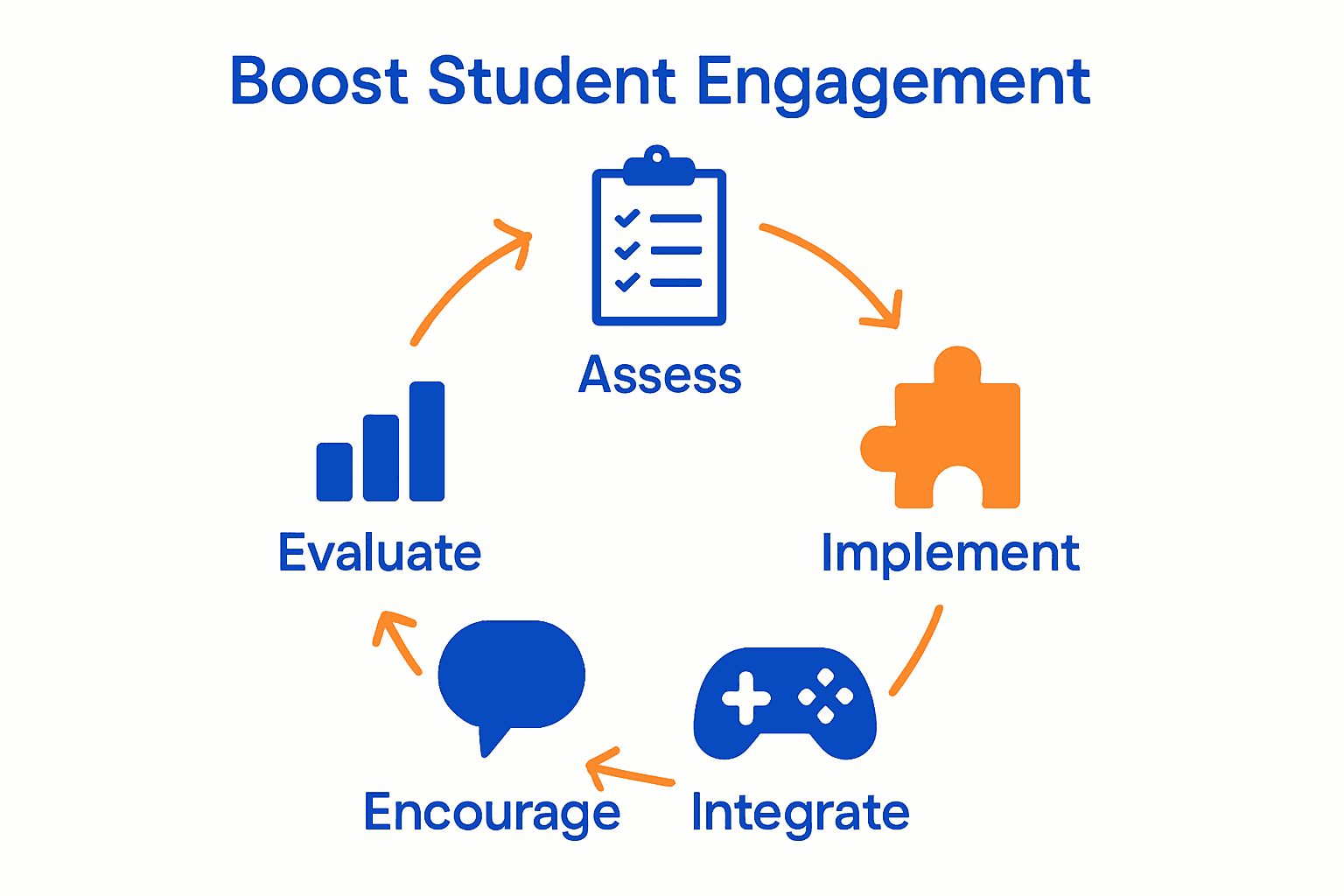
| 1. Assess current engagement levels | Evaluate cognitive, social, and emotional dimensions to understand student involvement. Use surveys for nuanced insights. |
| 2. Implement interactive learning strategies | Incorporate hands-on activities and technology to foster active participation. Use collaborative projects to enhance engagement. |
| 3. Integrate educational entertainment | Transform learning with entertaining content that aligns with curriculum goals, making education enjoyable while reinforcing objectives. |
| 4. Encourage student feedback and participation | Create safe channels for student input through various strategies, ensuring their voices are heard and valued in the educational process. |
| 5. Continuously evaluate and adapt strategies | Use systematic assessment to track engagement changes and performance, adapting methods to better meet student needs and preferences. |
Step 1: Assess current student engagement levels
To unlock student success, you need a strategic approach to understanding their current involvement and motivation. This step focuses on systematically evaluating how connected and invested students are in their learning environment.
According to the National Association of Independent Schools, assessing student engagement requires examining cognitive, social, and emotional dimensions. Start by developing a comprehensive assessment strategy that goes beyond traditional metrics.
Begin with a multi-faceted engagement survey that captures students perspectives. Design questions exploring their academic interests, classroom participation, sense of belonging, and emotional connection to learning. Use a mix of quantitative rating scales and open ended qualitative responses to get nuanced insights.
Key areas to evaluate include:
- Classroom participation levels
- Motivation and academic effort
- Emotional connection to learning subjects
- Social interactions and peer relationships
- Sense of belonging within the school community
The National Center on Safe Supportive Learning Environments recommends using validated measurement tools that capture multiple engagement dimensions. Consider utilizing established assessment instruments designed specifically for your student age group.
Warning: Avoid making students feel like they are being interrogated. Frame your assessment as a collaborative process to improve their learning experience. Create a safe space where they can provide honest feedback without fear of judgment.
Once you complete this assessment, you will have a clear baseline understanding of student engagement levels.
 The next step involves analyzing these results and developing targeted strategies to enhance student motivation and participation.
Step 2: Incorporate dynamic, interactive learning methods
Transforming student engagement requires moving beyond traditional lecture formats and embracing interactive learning strategies that spark curiosity and active participation. This step focuses on creating vibrant classroom experiences that capture students attention and motivate deeper learning.
According to Brookings Institution research, implementing dynamic learning methods can significantly enhance student interest and academic outcomes. Start by integrating collaborative projects that encourage students to interact directly with course material through hands-on activities and technology-driven experiences.
Consider these interactive learning approaches:
- Group problem solving challenges
- Technology enhanced learning modules
- Real world simulation exercises
- Peer teaching and collaborative learning sessions
- Interactive multimedia presentations
The National Center on Safe Supportive Learning Environments emphasizes that active participation in academic activities creates a stimulating educational environment. Design learning experiences that allow students to explore concepts through multiple sensory channels.
Warning: Avoid overwhelming students with too many interactive elements. Balance is key. Introduce new methods gradually and provide clear guidance to help students navigate these engaging learning experiences.
Once you implement these interactive strategies, youll likely see increased student motivation and deeper understanding of course content.
The next step involves monitoring and refining these approaches to maximize their effectiveness.
Step 3: Integrate curriculum-aligned educational entertainment
Bringing excitement and learning together requires thoughtful integration of entertainment that directly supports academic goals. This step focuses on transforming educational content into engaging experiences that capture students imagination while reinforcing critical learning objectives.
Education Week highlights the powerful potential of educational entertainment in making learning more enjoyable and relevant. Start by identifying core curriculum concepts that can be transformed through interactive and entertaining approaches.
Consider these strategic integration methods:
- Interactive educational games aligned with learning standards
- Multimedia presentations with storytelling elements
- Role playing scenarios that demonstrate complex concepts
- Performance based learning experiences
- Gamified learning modules that reward academic progress
The National Center on Safe Supportive Learning Environments suggests that educational entertainment can bridge the gap between learning objectives and student interests. Design experiences that feel more like play than traditional instruction.
Warning: Ensure entertainment elements do not overshadow educational content. The goal is to enhance learning, not distract from core academic goals. Maintain a clear balance between engagement and educational rigor.
Once you implement these curriculum aligned entertainment strategies, you will create a more dynamic and motivating learning environment. The next step involves continuously adapting and refining these approaches based on student feedback and engagement levels.
Step 4: Encourage student participation and feedback
Creating a dynamic learning environment requires actively soliciting and valuing student input. This step focuses on developing robust channels for student voice that transform passive learners into engaged educational partners.
Challenge Success provides insights into understanding student experiences through comprehensive survey tools. Begin by designing feedback mechanisms that go beyond traditional evaluation methods and create safe spaces for honest communication.
Effective participation strategies include:
- Anonymous suggestion boxes
- Regular student council meetings
- Digital feedback platforms
- Small group discussion sessions
- Quarterly student experience surveys
The Student Engagement Instrument developed by the University of Minnesota emphasizes measuring both cognitive and emotional aspects of student engagement. Design feedback tools that capture nuanced insights into students learning experiences and emotional connections to their educational journey.
Warning: Collecting feedback is only the first step. Demonstrate that you are actively listening by implementing visible changes based on student input. Nothing discourages participation more than feeling ignored.
Once you establish these participatory channels, you will create a more responsive and student centered learning environment. The final step involves synthesizing this feedback to continuously refine your engagement strategies.
Step 5: Evaluate impact and refine engagement strategies
Sustaining student engagement requires continuous assessment and strategic adaptation. This step focuses on transforming collected data into actionable insights that will progressively enhance your educational approach.
National Association of Independent Schools research highlights the importance of systematic evaluation in understanding engagement effectiveness. Begin by establishing clear metrics and benchmarks that allow you to track meaningful changes in student participation and academic performance.
Key evaluation methods include:
- Quantitative performance tracking
- Comparative analysis of engagement strategies
- Student satisfaction survey results
- Academic achievement correlation studies
- Longitudinal engagement trend monitoring
The National Center on Safe Supportive Learning Environments recommends utilizing multiple measurement instruments to gain comprehensive insights. Cross reference different evaluation tools to develop a nuanced understanding of student engagement dynamics.
Warning: Avoid making drastic changes based on single data points. Look for consistent patterns and trends before implementing significant strategy modifications.
Once you complete this evaluation process, you will have a robust framework for continuous improvement. The goal is to create a responsive educational environment that evolves with student needs and emerging learning strategies.
Ignite Student Engagement with Interactive Assembly Experiences
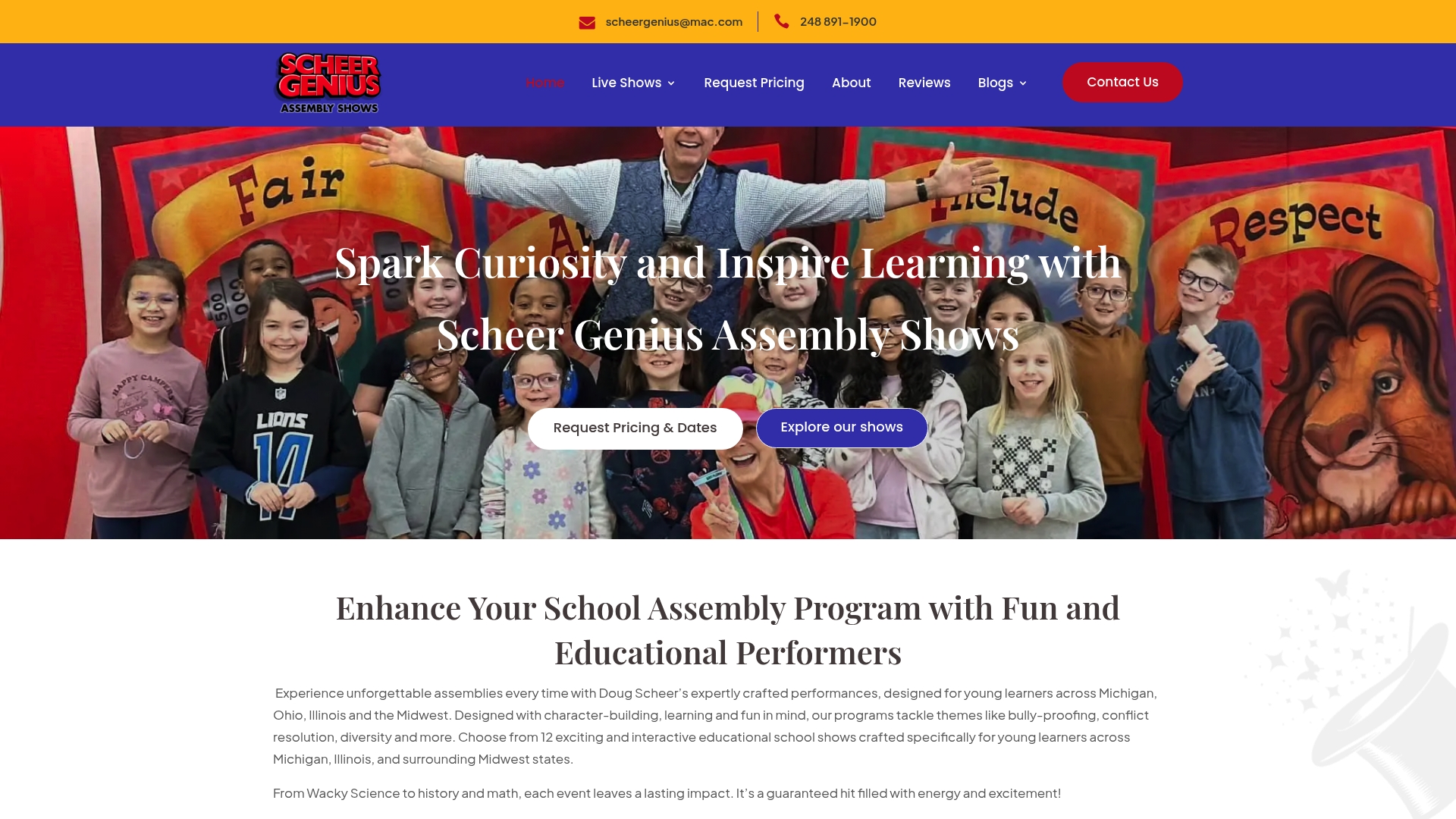
Boosting student engagement involves more than just measuring classroom participation or seeking feedback. It requires creating dynamic, curriculum-aligned learning moments that captivate students’ attention and inspire active involvement. AssemblyShows.com specializes in exactly this challenge by delivering high-energy, educational entertainment programs that connect directly with core academic goals while making learning fun and memorable.
Our 12 unique assemblies, available in both live and virtual formats, are designed to spark curiosity, encourage collaboration, and deepen emotional connections to learning. These shows transform traditional lessons into interactive experiences that help students participate more confidently and with genuine enthusiasm. Discover how these expert-designed programs can be a key part of your strategy to enhance student motivation and academic success.
Experience the power of tailored educational entertainment by exploring our Assemblies Archives – Scheer Genius Assembly Shows and Virtual Shows Archives – Scheer Genius Assembly Shows today.
Don’t let student engagement remain a constant challenge. Act now to bring unforgettable learning experiences into your school and watch motivation soar. Visit AssemblyShows.com to find the perfect program for your students and transform your engagement strategies with energy, fun, and proven results.
Frequently Asked Questions
How can I assess current student engagement levels?
To assess current student engagement levels, create a multi-faceted engagement survey that evaluates cognitive, social, and emotional dimensions. Design questions focused on classroom participation, sense of belonging, and emotional connections to learning.
What interactive learning methods can I incorporate to boost student engagement?
Incorporate dynamic learning methods like group problem-solving challenges, peer teaching sessions, and technology-enhanced learning modules. Start with one or two new methods to avoid overwhelming students and gradually expand based on their feedback.
How can educational entertainment be integrated into the curriculum?
Integrate educational entertainment by using interactive games, multimedia presentations, and role-playing scenarios that align with learning objectives. Aim to create learning experiences that feel enjoyable while still reinforcing key academic concepts.
What strategies can encourage student participation and feedback?
Encourage student participation by implementing anonymous suggestion boxes, regular student council meetings, and digital feedback platforms. Actively show that feedback is valued by making visible changes based on student input.
How should I evaluate the impact of my engagement strategies?
Evaluate the impact of your engagement strategies by tracking performance metrics like student satisfaction survey results and academic achievement correlations. Look for consistent trends over time to inform any necessary adjustments to your methods.
What steps can I take if student engagement levels are still low?
If student engagement levels remain low, review your current assessment data and seek additional input from students about their experiences. Test new interactive methods or adjust existing strategies based on this collected feedback to foster a more engaging learning environment.
Recommended
- Understanding Student Engagement Checklists for Schools – Scheer Genius Assembly Shows
- 6 Ways to Boost Student Engagement for 2025 Success – Scheer Genius Assembly Shows
- Understanding What is Curriculum Enrichment – Scheer Genius Assembly Shows
- 7 Essential Interactive Assembly Tips for Schools – Scheer Genius Assembly Shows
- Online Learning Engagement: Practical Strategies for Organisations|CS
- Making Learning Fun: Engaging Activities for Your Kids – The Zoofamily