
Over 80 percent of educators report that assemblies make a lasting impact on school culture. Character education assemblies go beyond routine gatherings by shaping how students learn, interact, and grow together. In a world where social and emotional skills matter as much as academic achievement, these assemblies offer powerful lessons that help students build respect, empathy, and a sense of community they carry for life.
Key Takeaways
| Point | Details |
|---|---|
| Character Education Assemblies | Serve as strategic platforms to promote social-emotional learning and core values among students. |
| Types of Assemblies | Motivational speakers, interactive performances, and educational demonstrations each offer unique benefits for character development. |
| Benefits to School Community | Foster a cohesive environment by creating shared learning experiences that promote school spirit and mutual understanding. |
| Best Practices for Effectiveness | Design assemblies with clear objectives, age-appropriate content, and interactive elements to maximize student engagement and learning impact. |
Defining Assemblies in Character Education
Character education assemblies represent strategic, structured educational experiences designed to promote fundamental social and emotional learning objectives within school environments. According to Wikipedia, social and emotional learning (SEL) aims to foster critical skills that prepare students to become “knowledgeable, responsible, and caring members of society.”
These assemblies serve as powerful platforms for delivering targeted character development lessons that extend beyond traditional classroom instruction. They typically involve large-group presentations where students simultaneously receive consistent messaging about essential values, ethical behaviors, and interpersonal skills. By bringing entire grade levels or school populations together, assemblies create shared learning moments that reinforce core character principles.
Key components of character education assemblies often include:
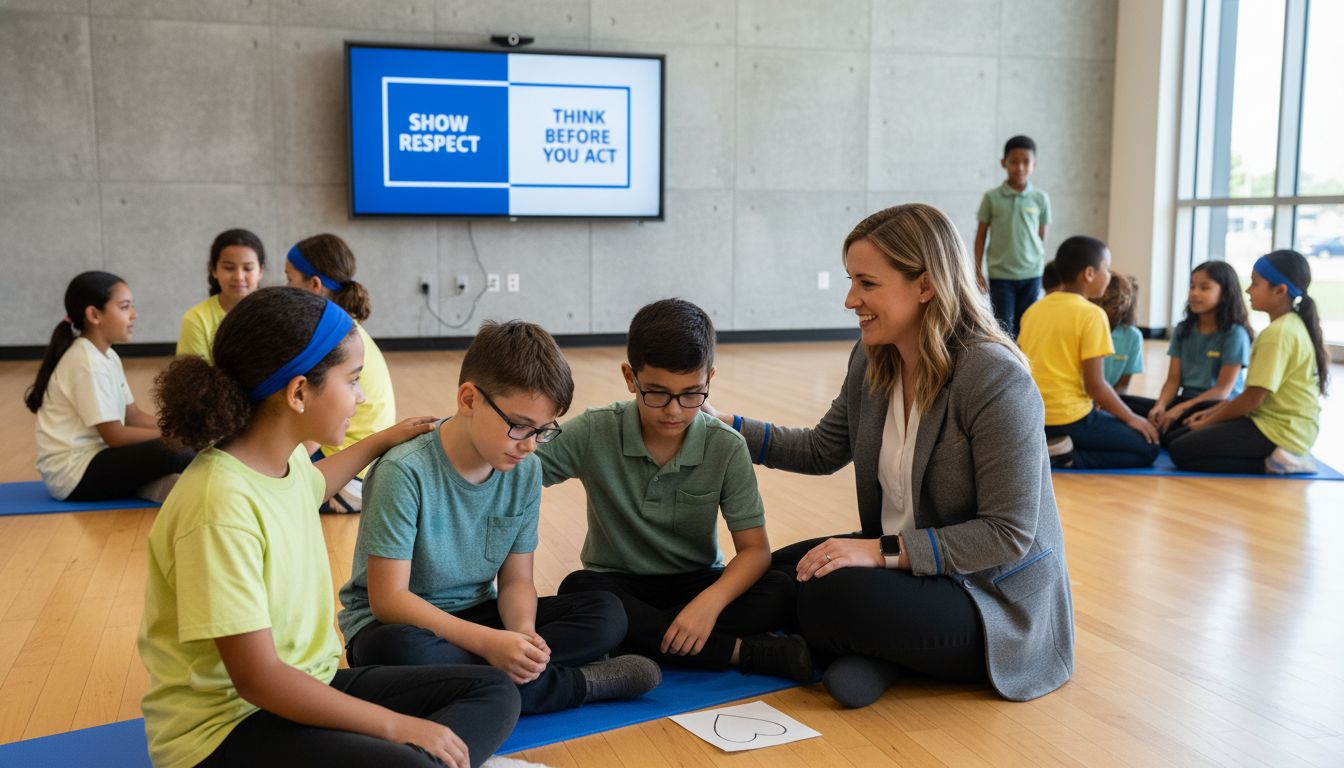
- Interactive storytelling
- Live performance demonstrations
- Role-playing scenarios
- Group discussion opportunities
- Visual presentations highlighting positive character traits
The Learning for Life educational framework underscores the importance of comprehensive character development programs that span pre-kindergarten through 12th grade. Character education assemblies represent a critical intervention strategy within this broader approach, providing engaging, memorable experiences that help students internalize important social-emotional skills.
By strategically designing assemblies that combine entertainment with meaningful educational content, schools can create transformative learning experiences that support students’ holistic development. Role of Assemblies for Teachers: Complete Guide provides additional insights into how educators can maximize these powerful educational opportunities.
Types of School Assemblies for Character Development
Character development assemblies encompass diverse formats designed to engage students and promote positive social-emotional learning. Schools can leverage multiple assembly styles to reinforce critical character education objectives and create meaningful learning experiences.
Three primary types of character development assemblies include:
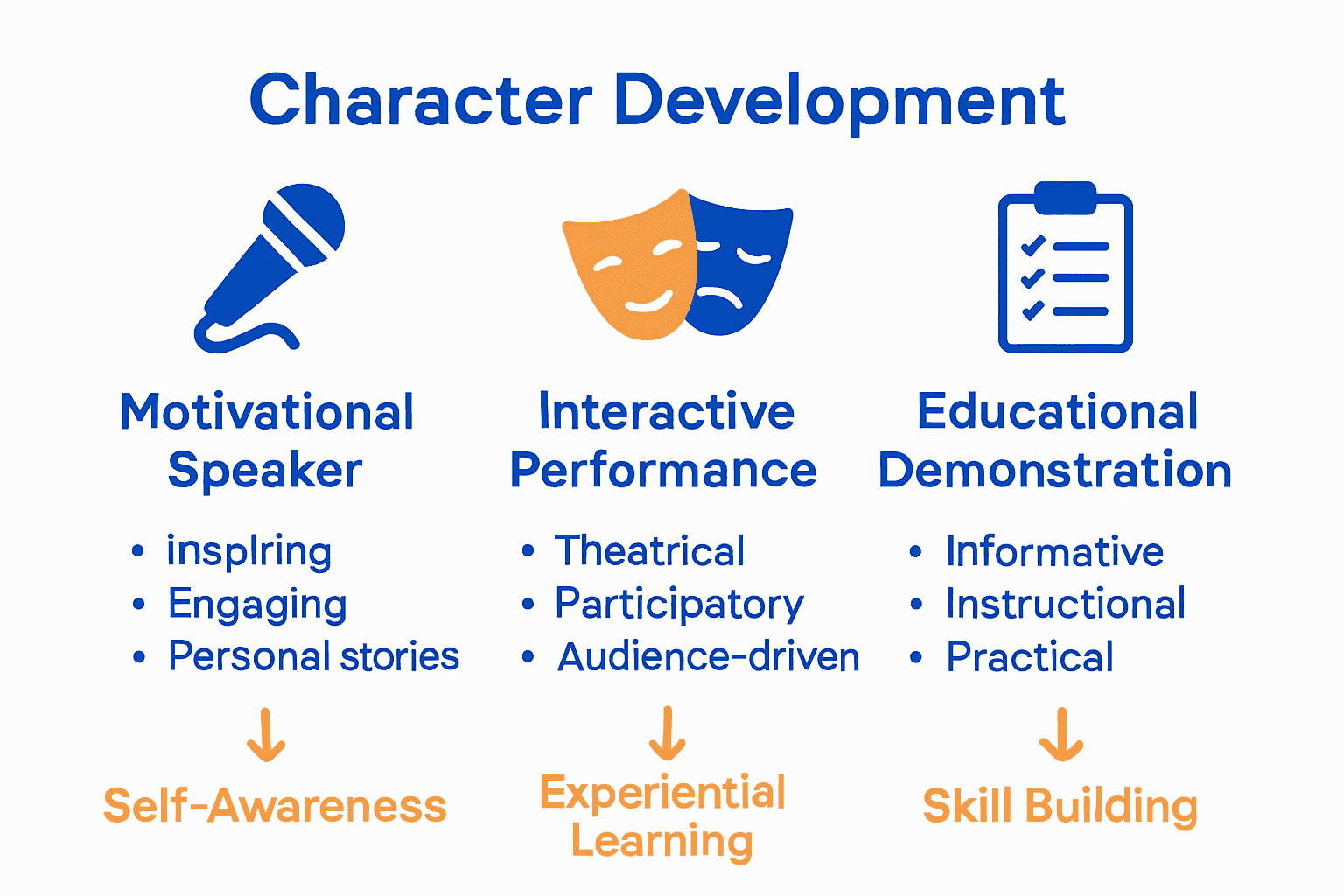
Here’s a comparison of the three main types of character development assemblies:
| Assembly Type | Key Features | Primary Benefits |
|---|---|---|
| Motivational Speaker | Inspiring stories Real-life examples Personal reflection | Encourages self-awareness Builds resilience |
| Interactive Performance | Theatrical drama Role-playing Audience engagement | Promotes experiential learning Makes concepts memorable |
| Educational Demonstration | Skill-building Trait-focused content Structured message | Reinforces specific skills Provides clear guidance |
- Motivational Speaker Assemblies: Featuring guest presenters who share personal stories of resilience, ethical decision-making, and personal growth
- Interactive Performance Assemblies: Live theatrical presentations that dramatize character lessons through storytelling and audience participation
- Educational Demonstration Assemblies: Structured presentations focusing on specific character traits like empathy, respect, and responsible citizenship
Performance-based assemblies prove particularly effective in capturing student attention.
 By transforming abstract character concepts into dynamic, engaging experiences, these programs help students internalize important social-emotional skills. 7 Character Education Program Ideas for Schools offers additional insights into creating compelling character development strategies.
Each assembly type serves unique educational purposes.
Motivational speakers can inspire personal reflection, interactive performances enable experiential learning, and educational demonstrations provide structured skill-building opportunities. The key is selecting assembly formats that resonate with specific grade levels and align with the school’s broader character education goals.
Successful character development assemblies share common characteristics: they are interactive, emotionally engaging, age-appropriate, and designed to spark meaningful dialogue among students. By thoughtfully integrating these assembly approaches, schools can create powerful platforms for nurturing students’ social-emotional growth and ethical understanding.
Benefits of Assemblies for School Community
School assemblies serve as powerful catalysts for building a cohesive, supportive educational environment that extends far beyond traditional classroom learning. WeAreTeachers highlights how these events create a profound sense of community by featuring students, teachers, and staff in shared presentations that celebrate collective experiences and school pride.
The benefits of school assemblies span multiple dimensions of educational and social development:
- Unified Community Building: Bringing entire school populations together
- Shared Learning Experiences: Creating collective moments of inspiration
- Emotional Connection: Fostering school spirit and collective identity
- Inclusive Communication: Ensuring all students receive consistent messages
- Social-Emotional Learning: Developing interpersonal skills through group interactions
These gatherings provide unique opportunities for schools to communicate core values, recognize student achievements, and create meaningful connections across different grade levels and social groups. Understanding Why Elementary Assemblies Matter for Schools offers deeper insights into the transformative potential of these collective experiences.
Moreover, assemblies function as critical platforms for addressing important community-wide topics such as bullying prevention, character development, and social responsibility. By creating shared understanding and promoting empathy, these events help cultivate a positive school culture where every student feels valued, heard, and connected to their broader educational community. The collaborative nature of assemblies transforms traditional educational approaches, turning passive learning into dynamic, interactive experiences that resonate with students long after the event concludes.
Best Practices for Effective Assembly Programs
Effective assembly programs require strategic planning and thoughtful execution to maximize educational impact and student engagement. Learning Mole emphasizes that subject-focused assemblies can transform curriculum topics into dynamic, school-wide experiences that connect classroom learning to real-world contexts.
Key best practices for developing successful assembly programs include:
- Clear Learning Objectives: Establish specific educational goals before designing the assembly
- Age-Appropriate Content: Tailor presentations to match students’ developmental stages
- Interactive Elements: Incorporate engaging participation opportunities
- Multimedia Integration: Use diverse presentation formats to maintain student interest
- Measurable Outcomes: Design follow-up activities to reinforce key messages
Professional presenters should focus on creating immersive, dynamic experiences that capture students’ imagination. 7 Essential Interactive Assembly Tips for Schools provides additional guidance on maintaining high student engagement throughout the presentation.
Successful assemblies also require careful preparation and collaboration between school administrators, teachers, and presenters. By prioritizing student experience, maintaining educational relevance, and creating memorable learning moments, schools can transform assemblies from routine gatherings into powerful educational opportunities that inspire, educate, and motivate students across multiple learning dimensions.
Common Challenges and How to Overcome Them
Character education assemblies often encounter significant obstacles that can diminish their educational effectiveness and student engagement. Schools must proactively identify and address these challenges to ensure meaningful learning experiences that truly resonate with students.
Common challenges in assembly implementation include:
- Attention Span Limitations: Maintaining student focus during extended presentations
- Diverse Learning Needs: Accommodating different learning styles and developmental stages
- Relevance Concerns: Connecting assembly content to students’ real-world experiences
- Logistical Complexity: Coordinating large-group gatherings with minimal classroom disruption
- Measurement Difficulties: Assessing the long-term impact of assembly programs
Effective Classroom Assembly Preparation: A Step-by-Step Guide offers strategic insights into mitigating these challenges through careful planning and innovative presentation techniques. Successful schools develop comprehensive strategies that transform potential obstacles into opportunities for meaningful engagement.
Overcoming these challenges requires a multilayered approach. Educators must collaborate closely with assembly presenters, design interactive and dynamic content, incorporate multimedia elements, and create structured follow-up activities that reinforce key messages. By treating assemblies as integral learning experiences rather than isolated events, schools can create transformative educational moments that inspire, educate, and motivate students across multiple developmental dimensions.
Elevate Character Education with Engaging Assemblies
Bringing character education principles into everyday school life can feel overwhelming especially when trying to maintain student attention and ensure meaningful social-emotional growth. This article highlights key challenges such as sustaining focus, making lessons relevant, and creating interactive, age-appropriate content. If you want to transform these challenges into opportunities for real impact assemblies provide the perfect solution. They offer a platform where values like empathy, respect, and responsibility come alive through dynamic performances and interactive programs.
Discover how Assemblies Archives – Scheer Genius Assembly Shows can help you achieve your school’s character education goals in unforgettable ways. Led by Doug Scheer, one of the nation’s top educational performers, our programs combine curriculum-aligned learning with high-energy engagement designed to captivate elementary and middle school students. Visit AssemblyShows.com today to explore 12 powerful programs available for live or virtual formats. Take action now to inspire your students, build a positive school culture, and make every assembly a meaningful step toward better social-emotional skills.
Frequently Asked Questions
What are character education assemblies?
Character education assemblies are structured educational experiences in schools aimed at promoting social and emotional learning, focusing on essential values, ethical behaviors, and interpersonal skills.
What types of assemblies are used for character development in schools?
Three main types include motivational speaker assemblies, interactive performance assemblies, and educational demonstration assemblies, each designed to engage students in unique ways and reinforce social-emotional skills.
What are the benefits of school assemblies for character education?
School assemblies foster a sense of community, provide shared learning experiences, encourage emotional connections, ensure consistent communication among students, and develop crucial social-emotional skills.
How can schools effectively implement character education assemblies?
Effective implementation requires clear learning objectives, age-appropriate content, interactive elements, multimedia integration, and measurable outcomes to enhance student engagement and educational impact.
Recommended
- What is a Character Education Assembly? Understanding Its Importance – Scheer Genius Assembly Shows
- 7 Essential Character Education Tips for Schools – Scheer Genius Assembly Shows
- 7 Ways Our Programs Align With School Curriculum and Character – Scheer Genius Assembly Shows
- 7 Character Education Programs List for Schools – Scheer Genius Assembly Shows