
Building strong character in students is at the heart of lasting education and school culture. Yet most programs stop at posters with buzzwords or the occasional assembly. The real impact shows up when character lessons are woven into every part of school life and backed by research—like how peer mentoring programs significantly improve social, emotional, and behavioral outcomes among students, according to recent studies. The surprising part is that the boldest leaps in student growth come from actions far beyond textbooks or traditional rules.
Table of Contents
- Define Key Character Traits For Your Program
- Implement A Service Learning Component
- Organize Monthly Character Education Themes
- Involve Parents In Character Development
- Use Literature To Teach Character Lessons
- Establish Peer Mentoring Programs
- Assess And Reflect On Character Growth
Quick Summary
| Takeaway | Explanation |
|---|---|
| Define core character traits clearly | Identify essential traits that students should develop, focusing on their specific community needs. |
| Integrate service learning into programs | Connect classroom activities with community service to enhance real-world character understanding and engagement. |
| Implement monthly character themes | Structure character education around specific themes each month for depth and continuity in student development. |
| Engage parents in the process | Involve families through communication and workshops, reinforcing school character education at home. |
| Utilize literature for character lessons | Use diverse reading materials to help students explore and understand character traits through engaging narratives. |
1: Define Key Character Traits for Your Program
Establishing a robust character education program begins with clearly defining the core character traits you want students to develop. Character traits are not abstract concepts but fundamental skills that shape how young people interact with the world around them.
According to the California Department of Education, successful character education focuses on developing essential traits like:
- Caring: Demonstrating empathy and compassion towards others
- Citizenship: Understanding community responsibilities
- Fairness: Treating people equally and justly
- Respect: Valuing diverse perspectives and individual dignity
- Responsibility: Being accountable for personal actions
- Trustworthiness: Maintaining integrity and honesty
Schools should approach character trait development strategically. This means moving beyond simple poster displays to creating comprehensive, integrated learning experiences that demonstrate and reinforce positive behaviors.
When selecting character traits, consider the specific needs of your school community. Not every trait needs equal emphasis every year. Some years might prioritize respect, while others focus more on responsibility. The key is creating a deliberate, thoughtful progression that builds upon students’ existing understanding.
Additionally, involve students, teachers, and parents in the trait selection process. This collaborative approach ensures buy-in and creates a shared language around character development. When everyone understands and agrees on the traits being cultivated, the educational impact becomes more powerful.
Remember that modeling matters most. Students learn character traits not just through direct instruction, but by observing how adults in their school environment actually behave. School leaders and teachers must consistently demonstrate the very traits they seek to develop in their students.
2: Implement a Service Learning Component
Service learning transforms character education from theoretical discussions to practical, real-world experiences that profoundly impact student development. By connecting classroom learning with meaningful community service, schools create powerful opportunities for students to practice empathy, citizenship, and social responsibility.
According to the What Works Clearinghouse, service learning programs can significantly enhance students’ character development and academic engagement. These experiences go beyond traditional volunteering by intentionally linking service activities with specific learning objectives.
Key components of an effective service learning approach include:
- Meaningful Community Connections: Select service projects that address genuine community needs
- Structured Reflection: Incorporate guided discussions and assignments that help students process their experiences
- Student-Led Planning: Empower students to identify, design, and implement service projects
- Academic Integration: Connect service activities to curriculum standards across multiple subjects
Successful service learning requires thoughtful planning. Schools should start with age-appropriate projects that match students’ developmental stages. Elementary students might collect food for local shelters, while high school students could develop more complex community improvement initiatives.
The most impactful service learning experiences create bidirectional benefits. Students learn valuable character traits while simultaneously providing meaningful support to their community. This approach helps young people understand their potential to create positive change.
Teachers play a crucial role in guiding students through service learning experiences. They must help students:
- Understand the broader context of community needs
- Develop critical thinking skills
- Reflect on their personal growth
- Recognize the connections between individual actions and community impact
By embedding service learning into character education programs, schools create transformative experiences that extend far beyond traditional classroom instruction. Students learn that character is not just about understanding values but actively living them through meaningful engagement with their community.
3: Organize Monthly Character Education Themes
Structuring character education around monthly themes provides a systematic approach to developing students’ social and emotional skills. This method allows schools to intentionally focus on specific character traits, creating depth and consistency in their character development curriculum.
A well-designed monthly theme program helps students understand that character is not a static concept, but a dynamic set of skills they can continuously improve. Each month offers an opportunity to explore different aspects of personal growth and social responsibility.
Potential monthly character themes could include:
- September: Respect and Diversity
- October: Courage and Integrity
- November: Gratitude and Compassion
- December: Kindness and Community
- January: Resilience and Perseverance
- February: Empathy and Understanding
- March: Leadership and Responsibility
To make these themes engaging, schools should incorporate multiple learning approaches. This might involve classroom discussions, interactive activities, storytelling, and fun elementary school assembly ideas that reinforce the monthly character trait.
Effective implementation requires collaboration across different school departments. Teachers, administrators, counselors, and support staff should align their efforts to create a cohesive narrative around each month’s character focus.
Consider creating visual displays, morning announcements, and special activities that highlight the monthly theme. Students can be encouraged to reflect on how they demonstrate these traits in their daily interactions. Some schools even develop recognition programs where students are acknowledged for embodying the month’s character trait.
Remember that consistency is key. A theme is most effective when it is not just a one-time discussion but a continuous conversation that permeates the school’s culture. By dedicating intentional time and resources to monthly character themes, schools can create a transformative environment that supports holistic student development.
4: Involve Parents in Character Development
Parents are critical partners in character education, serving as the primary moral educators in a child’s life. Schools cannot successfully develop character traits in isolation without actively engaging families in the process.
According to research from the National Institutes of Health, coordinated efforts between schools and families significantly enhance character development outcomes. This partnership creates a consistent and reinforcing environment for learning essential social and emotional skills.
Effective strategies for parent involvement include:
- Regular Communication: Send monthly newsletters about character themes
- Family Workshops: Host evening sessions about character development
- Home Activity Packets: Provide take-home materials that reinforce school lessons
- Parent-Student Character Challenges: Design joint activities that promote shared learning
Transparency is crucial in building trust with parents. Schools should clearly communicate their character education goals, methods, and expected outcomes. This helps parents understand they are not just observers but active participants in their children’s moral growth.
Digital platforms can enhance parent engagement. Create online portals where parents can track their child’s character development progress, access resources, and receive real-time updates about classroom activities and learning objectives.
Schools might also consider creating a parent advisory committee specifically focused on character education. This group can provide insights, help design programs, and serve as ambassadors for the school’s character development initiatives.
Remember that parent involvement looks different across diverse family structures. Develop flexible engagement strategies that accommodate various work schedules, cultural backgrounds, and family dynamics. The goal is creating an inclusive approach that makes every parent feel welcomed and valued in their child’s character education journey.
5: Use Literature to Teach Character Lessons
Literature provides a powerful, immersive pathway for teaching character development. Through stories, students can explore complex moral landscapes, understand different perspectives, and learn how character traits manifest in real-life situations.
Narrative experiences allow students to witness character traits in action, helping them understand abstract concepts through concrete, relatable examples. When characters face challenging decisions, students can emotionally engage with the underlying moral dilemmas.
Selecting appropriate literature requires careful consideration. Books should:
- Feature nuanced character development
- Present age-appropriate moral challenges
- Represent diverse perspectives and experiences
- Encourage critical thinking and empathy
- Demonstrate positive character resolution
Teachers can design interactive reading experiences that go beyond traditional comprehension questions. This might involve role-playing character scenarios, writing reflective journal entries, or conducting classroom discussions that explore the moral choices characters make.
Different literary genres offer unique opportunities for character education:
- Historical Fiction: Explores ethical choices during challenging times
- Multicultural Literature: Builds understanding and respect for diverse experiences
- Contemporary Realistic Fiction: Addresses modern social and emotional challenges
- Biographical Narratives: Showcases real-world examples of character strength
Encourage students to draw connections between literary characters’ experiences and their own lives. This reflective practice helps transform reading from a passive activity into an active learning experience about personal growth and ethical decision-making.
By strategically using literature, schools can create immersive character education environments that engage students intellectually and emotionally. Stories become more than entertainment they become powerful tools for understanding human complexity, empathy, and personal development.
6: Establish Peer Mentoring Programs
Peer mentoring represents a powerful strategy for character education that leverages students’ natural social connections to foster positive character development. Structured mentoring relationships create opportunities for younger students to learn directly from their more experienced peers.
According to research in the International Journal of Environmental Research and Public Health, peer mentoring programs significantly improve social, emotional, and behavioral outcomes among students. These programs help create a supportive school environment that encourages mutual learning and personal growth.
Effective peer mentoring programs require careful design and implementation:
- Clear Matching Criteria: Pair mentors and mentees based on shared interests and complementary strengths
- Structured Training: Provide comprehensive preparation for student mentors
- Regular Check-ins: Implement consistent supervision and support
- Defined Goals: Establish clear objectives for mentoring relationships
Mentor Selection is crucial to program success. Choose students who demonstrate:
- Strong leadership skills
- Emotional intelligence
- Consistent academic performance
- Positive behavior records
- Genuine interest in helping others
Program structures can vary depending on school resources and student needs. Some schools implement cross-age mentoring where older students support younger ones, while others create peer support groups within the same grade level.
Adult supervision remains critical. School counselors or designated teachers should provide ongoing guidance, monitor mentoring relationships, and offer support to both mentors and mentees. This ensures the program maintains its educational integrity and remains focused on character development.
Benefits extend beyond the mentees. Mentors also develop important leadership skills, empathy, and a deeper understanding of personal responsibility. By creating these reciprocal learning environments, schools transform character education from a theoretical concept into a lived, collaborative experience.
7: Assess and Reflect on Character Growth
Character development is not a destination but a continuous journey of self-improvement and personal reflection. Schools must create structured opportunities for students to evaluate their character growth, understanding that this process is as important as the growth itself.
According to the Association for Middle Level Education, implementing regular reflection sessions allows students to develop critical self-awareness skills that extend far beyond traditional academic learning.
Effective assessment strategies should focus on qualitative and quantitative measurements:
- Self-Assessment Journals: Students document personal character development
- 360-Degree Feedback: Collect insights from teachers, peers, and family
- Goal-Setting Workshops: Help students create personalized character development plans
- Narrative Portfolios: Compile evidence of character growth over time
Meaningful reflection requires creating a safe, non-judgmental environment where students feel comfortable exploring their personal growth. This means developing assessment tools that emphasize progress over perfection.
Key indicators of character growth might include:
- Increased empathy towards others
- Better conflict resolution skills
- More consistent demonstration of core values
- Improved ability to take responsibility
- Enhanced emotional intelligence
Technology can play a supportive role in character assessment. Digital platforms can help students track their progress, set goals, and reflect on their personal development journey. However, technology should complement, not replace, personal interaction and genuine reflection.
Schools should also recognize that character growth is non-linear. Students will experience setbacks and challenges, and these moments are equally important for learning. The goal is not to create perfect individuals but to support students in becoming more self-aware, compassionate, and principled human beings.
The table below provides a comprehensive summary of the article’s main strategies, benefits, and implementation highlights for character education programs in schools.
| Program Idea | Purpose & Key Steps | Benefits & Outcomes |
|---|---|---|
| Define Key Character Traits | Identify essential traits based on school needs; engage community in selection; model traits | Builds clarity and school-wide buy-in; aligns focus across stakeholders |
| Implement Service Learning | Connect classwork to community engagement; structure reflection; support student-led projects | Deepens empathy, responsibility, and connection to real-world issues |
| Organize Monthly Character Themes | Schedule monthly focus topics; coordinate schoolwide activities; recognize students | Promotes continuity; reinforces skills; unifies staff and student efforts |
| Involve Parents in Character Development | Share progress, offer workshops, provide home activities, create parent advisory committees | Strengthens school-home partnership; increases consistency in messaging |
| Use Literature to Teach Character Lessons | Select diverse, discussion-worthy books; use stories for critical thinking and empathy | Makes abstract values relatable; enhances social and emotional learning |
| Establish Peer Mentoring Programs | Train and match mentors/mentees; provide supervision; set clear objectives | Improves social skills and behavior; fosters leadership and inclusion |
| Assess and Reflect on Character Growth | Use journals, feedback, goal setting, portfolios; provide safe, ongoing reflection | Builds self-awareness; tracks progress; encourages personal growth |
Bring Character Education to Life With Unforgettable Assembly Shows
Building a successful character education program takes more than classroom lessons. If you want your students to truly absorb traits like respect, responsibility, and empathy, they need experiences that make these values feel real. Schools often struggle to spark genuine engagement with monthly themes or service-learning—students need interactive moments that stick with them long after the lesson ends. Our assemblies for schools are the missing piece for educators seeking to reinforce character traits through high-energy, curriculum-aligned fun.
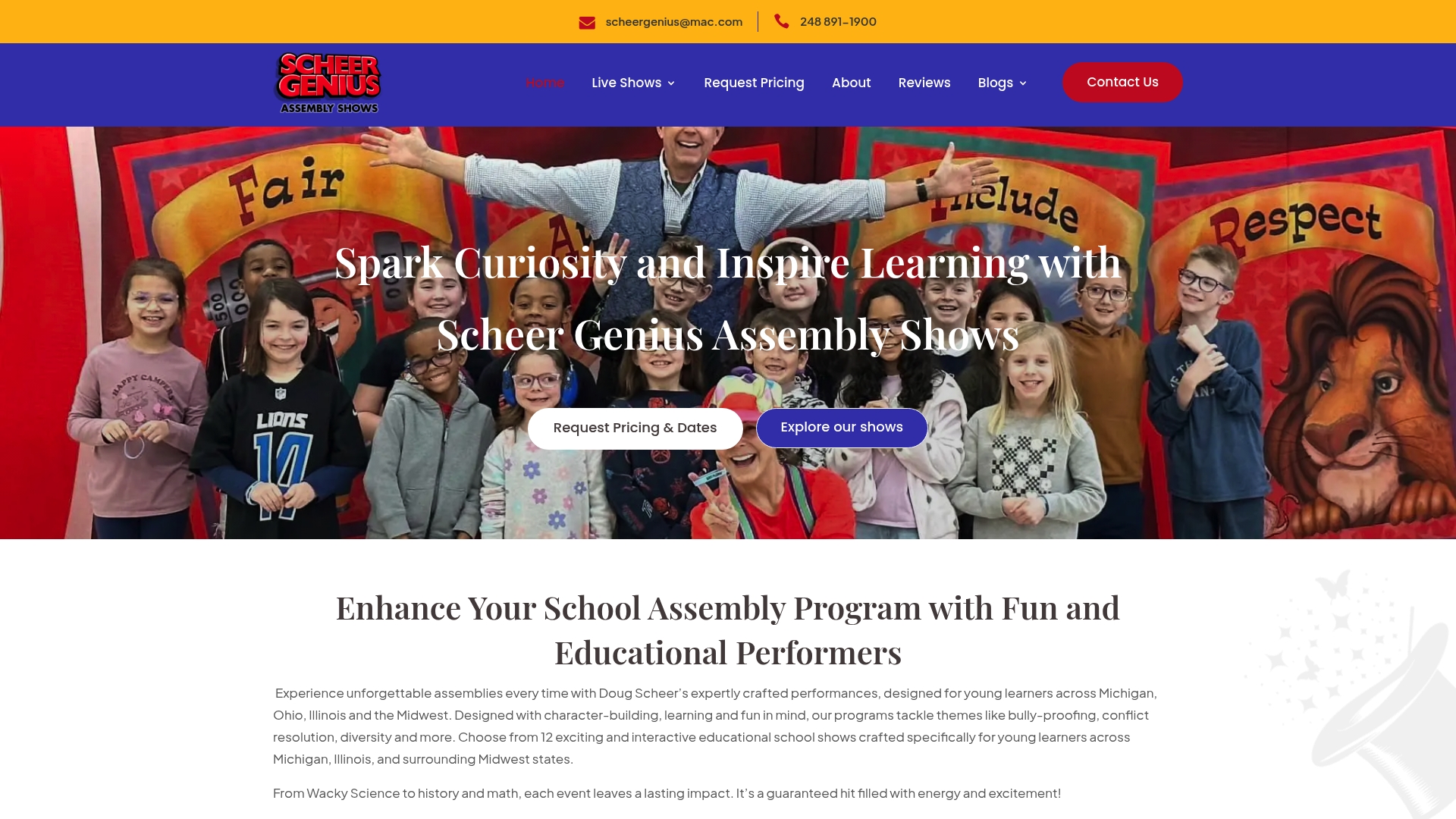
Ready for a powerful boost to your character program? Discover why schools across Michigan and the Midwest trust AssemblyShows.com and veteran performer Doug Scheer to deliver transformational learning. Bring your next monthly theme or character initiative to life by booking a live or virtual show. See what other educators say by visiting our reviews and make a positive impact your students will remember—contact us today for your best assembly experience yet.
Frequently Asked Questions
What are key character traits to focus on in a character education program?
Key character traits to focus on may include caring, citizenship, fairness, respect, responsibility, and trustworthiness. These traits help shape how students interact with their communities and peers.
How can service learning enhance character education in schools?
Service learning enhances character education by providing real-world experiences that allow students to practice empathy, citizenship, and social responsibility. This approach connects classroom learning with meaningful community service projects, helping students internalize these values.
Why should parents be involved in character education initiatives?
Parents play a crucial role in character education as they are primary moral educators. Involving them creates a consistent environment for learning social and emotional skills, which reinforces what students learn at school.
How can literature be used effectively in character education?
Literature can be used effectively in character education by featuring nuanced character development and moral dilemmas that engage students. Teachers can facilitate discussions and activities that connect the themes of the literature to students’ own lives, encouraging empathy and critical thinking.