
Schools everywhere want students to grow into caring, responsible people. Research shows that schools with strong character education programs see noticeably fewer disciplinary problems and higher academic results. Most people think you can just buy a program and call it a day. Turns out, the real impact happens when schools focus on collaboration, hands-on activities, and stories that spark real change.
Table of Contents
- Define Core Values For Character Education
- Implement A Character Education Curriculum
- Use Engaging Activities And Resources
- Foster A Positive School Environment
- Encourage Student-Led Initiatives
- Involve Parents And Community
- Train Staff On Character Education Practices
- Evaluate And Adjust Programs Regularly
- Share Success Stories And Best Practices
- Build Partnerships With Local Organizations
Quick Summary
| Takeaway | Explanation |
|---|---|
| Define actionable core values. | Core values must translate into measurable behavior, guiding students’ ethical decisions and growth. |
| Integrate character education into the curriculum. | Ensure character building is woven throughout all subjects and learning experiences, not just isolated lessons. |
| Encourage student-led initiatives. | Empower students to take charge of character programs, fostering creativity and commitment to core values. |
| Engage families and the community. | Collaborative involvement from parents and local organizations enhances consistent messaging and support for character development. |
| Regularly evaluate and adjust programs. | Ongoing assessment is crucial to adapt character education initiatives to students’ evolving needs and ensure effectiveness. |
1: Define Core Values for Character Education
Building a robust character education list starts with clearly defining core values that will serve as the foundational framework for your entire program. These values represent the ethical and moral principles that guide student behavior, decision making, and personal growth.
Character education is not about implementing a one size fits all approach, but rather creating a personalized strategy that resonates with your specific school community. The process requires careful consideration and strategic planning.
Key core values typically include:
Respect: Treating others with dignity and understanding
Integrity: Demonstrating honesty and strong moral principles
Responsibility: Being accountable for one’s actions and commitments
Compassion: Showing empathy and kindness towards others
Courage: Standing up for what is right, even when it is difficult
According to Character.org, successful character education programs consistently emphasize these fundamental values across all school interactions and curriculum areas. This means integrating core values not just in isolated lessons, but throughout the entire educational experience.
When developing your character education list, involve multiple stakeholders in the value selection process. This includes administrators, teachers, parents, and even students. Their diverse perspectives will help create a more comprehensive and meaningful set of guiding principles.
Remember that your core values should be actionable and measurable. They cannot remain abstract concepts but must translate into observable behaviors and tangible learning outcomes. Explore our guide on character education programs to understand how these values can be effectively implemented in school settings.
2: Implement a Character Education Curriculum
Developing a comprehensive character education curriculum requires strategic planning and intentional integration across multiple learning domains. This approach ensures character development becomes a seamless part of students’ educational experience rather than an isolated set of disconnected lessons.
A successful curriculum should focus on holistic skill development that goes beyond mere theoretical understanding. Students need opportunities to practice and internalize core values through real world applications and interactive learning experiences.
Key components of an effective character education curriculum include:
Interactive learning modules that engage students actively
Real world scenario discussions that challenge students to apply ethical reasoning
Reflection opportunities that encourage personal growth and self awareness
Peer collaboration activities that reinforce positive social interactions
According to Virginia Tech research, successful character education programs must incorporate structured opportunities for students to demonstrate and practice ethical behaviors across different contexts.
Assessment and measurement are critical in curriculum implementation. Schools need robust mechanisms to track character development progress, not just academic achievements. This means creating evaluation tools that can capture nuanced behavioral and attitudinal changes.
Teachers play a pivotal role in curriculum delivery. They must be trained and empowered to model desired character traits and create supportive learning environments. Professional development focused on character education strategies becomes essential.
Learn more about innovative character education program ideas to enhance your school’s approach to building strong, ethical students.
3: Use Engaging Activities and Resources
Character education transforms from theoretical concepts to meaningful learning experiences through thoughtfully designed interactive activities. The goal is to create opportunities that allow students to explore, practice, and internalize core values in dynamic and memorable ways.
Engaging resources should capture students’ imagination while providing substantive learning opportunities. This means moving beyond traditional lecture methods and embracing approaches that actively involve students in their own character development.
Highly effective character education activities include:
Role playing scenarios that challenge ethical decision making
Storytelling workshops exploring different perspectives
Community service projects demonstrating real world application of values
Reflective journaling encouraging personal growth and self awareness
According to research from the U.S. Department of Education, structured activities with clear narrative frameworks significantly enhance students’ understanding and retention of character education principles. The most successful programs integrate storytelling and active participation.
Multimedia resources can also play a crucial role. Video presentations, interactive digital platforms, and age appropriate documentaries can provide compelling narratives that illustrate complex moral concepts in accessible ways.
Teachers should aim to create inclusive and diverse activity sets that resonate with students from different backgrounds. This means developing resources that represent various cultural perspectives and provide multiple entry points for learning.
Explore our comprehensive guide on student engagement strategies to discover innovative approaches that make character education both educational and enjoyable.
4: Foster a Positive School Environment
Creating a supportive and nurturing school environment is fundamental to successful character education. This goes beyond physical safety and encompasses emotional well being, mutual respect, and a sense of belonging for every student and staff member.
A positive school climate directly influences student motivation, academic performance, and personal development. Leadership commitment plays a critical role in establishing and maintaining this environment.
Key elements of a positive school environment include:
Clear and consistent behavioral expectations
Respectful communication practices
Inclusive spaces that celebrate diversity
Transparent conflict resolution mechanisms
Building strong relationships between students, teachers, and administrators becomes the cornerstone of a healthy school culture. Intentional relationship building helps create a sense of community where everyone feels valued and supported.
According to research from the National School Climate Center, schools with positive environments demonstrate significantly higher student engagement, lower instances of disciplinary issues, and improved academic outcomes.
Practical strategies for fostering positivity involve regular check ins, peer support programs, and creating opportunities for collaborative problem solving. Recognition and celebration of positive behaviors become as important as addressing negative ones.
Administrators and teachers must model the character traits they wish to see in students. This means demonstrating empathy, active listening, and consistent ethical decision making in daily interactions.
Learn more about creating a kind and supportive learning environment to transform your school’s culture and support holistic student development.
5: Encourage Student-Led Initiatives
Student leadership is the heartbeat of authentic character education. When students take ownership of character development programs, they transform from passive recipients to active architects of their moral growth. This approach moves beyond traditional top down instruction, creating a more meaningful and sustainable approach to character building.
Encouraging student led initiatives requires creating structured opportunities for meaningful participation that allow young people to demonstrate leadership, creativity, and genuine commitment to core values.
Effective student led character education strategies include:
Peer mentorship programs
Character ambassador roles
Student designed community service projects
Conflict resolution teams
According to research from Florida Atlantic University, student led activities significantly enhance program engagement and create a more authentic learning environment. When students design and implement character education initiatives, they develop a deeper understanding of ethical principles.
Empowerment is key. Schools must provide frameworks that support student creativity while offering appropriate guidance. This means creating safe spaces where students can brainstorm, plan, and execute their character building ideas with adult mentorship.
Adult facilitators should focus on coaching rather than controlling. Their role shifts from direct instruction to supporting student vision, helping them refine ideas, and providing resources needed to bring their initiatives to life.
Discover innovative ways to boost student engagement and create meaningful leadership opportunities in your character education program.
6: Involve Parents and Community
Character education extends far beyond school walls, requiring a collaborative approach that integrates families, local organizations, and community stakeholders. When parents and community members become active participants, character development transforms from an academic concept into a shared social commitment.
Successful character education programs recognize that consistent messaging across different environments reinforces ethical learning. This means creating synchronized approaches that align school teachings with home and community experiences.
Strategic engagement strategies include:
Regular parent workshops explaining character education goals
Community service collaborations
Family value reflection activities
Open communication channels between schools and families
According to research from the National Education Association, school family community partnerships directly correlate with improved student achievement and more holistic character development.
Transparency becomes crucial in building trust. Schools should provide clear communication about character education objectives, sharing progress, challenges, and success stories. This helps parents understand the program’s depth and significance.
Community partnerships can provide rich, real world contexts for character learning. Local businesses, nonprofit organizations, and civic groups can offer mentorship, share professional experiences, and create meaningful opportunities for students to demonstrate character in action.
Learn more about creating impactful educational partnerships that extend learning beyond traditional classroom boundaries.
7: Train Staff on Character Education Practices
Effective character education depends critically on well prepared educators who understand not just the theoretical foundations, but practical implementation strategies. Staff training transforms character education from a conceptual framework into a living, breathing school culture.
Professional development must go beyond traditional workshops, creating immersive learning experiences that help educators internalize character building principles. Teachers are the primary conduits for character education, making their preparation paramount.
Key training focus areas include:
Recognizing and reinforcing positive character traits
Developing intervention strategies for behavioral challenges
Creating inclusive classroom environments
Integrating character lessons across curriculum
According to Alverno College’s Character Education Training Program, successful staff preparation involves comprehensive approaches that address both instructional techniques and personal understanding of character development principles.
Ongoing professional development becomes crucial. This means creating continuous learning opportunities through peer coaching, reflective practices, and regular skill updates. Schools should establish mentorship programs where experienced character education practitioners guide newer staff members.
Training should also address cultural competency and individual student differences. Educators need tools to understand and support diverse student backgrounds while maintaining consistent character education standards.
Explore our comprehensive guide on educational assemblies to discover innovative approaches for staff training and student engagement.
8: Evaluate and Adjust Programs Regularly
Character education is not a static process, but a dynamic journey requiring continuous assessment and refinement. Regular evaluation ensures that character development programs remain responsive to changing student needs, emerging educational research, and evolving school community dynamics.
Successful program evaluation goes beyond simple metrics, developing comprehensive assessment strategies that capture both quantitative and qualitative insights into character education effectiveness.
Key evaluation components include:
Behavioral observation tracking
Student and staff perception surveys
Academic performance correlation analysis
Long term character development indicators
According to research from the Institute of Education Sciences, systematic program evaluation requires multifaceted approaches that measure not just immediate outcomes, but sustained behavioral changes.
Data driven decision making becomes crucial in this process. Schools must create robust feedback mechanisms that allow for nimble program adjustments. This means establishing clear benchmarks, collecting consistent data, and maintaining flexibility to modify strategies based on empirical evidence.
Effective evaluation also involves gathering perspectives from multiple stakeholders. Students, teachers, parents, and administrators each offer unique insights that can reveal program strengths and potential improvement areas.
Learn more about creating impactful educational assessment strategies to enhance your character education approach.
9: Share Success Stories and Best Practices
Storytelling transforms character education from abstract concepts to inspiring real world examples. By highlighting authentic narratives of student growth, schools can motivate and demonstrate the tangible impact of character development programs.
Successful sharing strategies create powerful narratives that connect emotionally with students, parents, and educators. These stories serve as living testimonials of character education’s transformative potential, illustrating how ethical principles translate into meaningful personal growth.
Effective story sharing approaches include:
Student led storytelling platforms
Video documentaries of character journeys
School newsletters featuring student achievements
Public recognition ceremonies
When schools document and communicate character education successes, they create positive reinforcement cycles that motivate continued ethical development. These narratives demonstrate that character building is not just an academic exercise, but a pathway to personal and collective empowerment.
Sharing best practices involves more than simple storytelling. It requires creating systematic documentation processes that capture nuanced examples of student growth, teacher interventions, and community impact.
Communication channels should be diverse, reaching multiple audiences through school websites, local media, community meetings, and digital platforms. This broad approach ensures that character education stories reach beyond school walls, inspiring wider community engagement.
Explore our innovative approaches to educational storytelling to discover powerful ways of sharing character development experiences.
10: Build Partnerships with Local Organizations
Community partnerships transform character education from classroom theory into real world practice. By connecting schools with local organizations, students gain authentic opportunities to apply ethical principles, develop leadership skills, and understand their broader social responsibilities.
These collaborations create dynamic learning ecosystems that extend educational experiences beyond traditional academic boundaries. Local businesses, nonprofits, civic groups, and community centers become active participants in student character development.
Strategic partnership opportunities include:
Professional mentorship programs
Community service project collaborations
Guest speaker series featuring local leaders
Workplace learning experiences
According to research from the University of Missouri-St. Louis, successful partnerships require intentional relationship building and clear mutual goals. Organizations must see tangible value in supporting school character education initiatives.
Meaningful partnerships go beyond transactional interactions. They involve creating structured frameworks where community organizations can actively contribute to student learning while schools provide meaningful engagement opportunities.
Schools should develop comprehensive partnership frameworks that outline collaboration expectations, define shared objectives, and create mechanisms for ongoing communication and evaluation. This ensures that partnerships remain dynamic, purposeful, and aligned with educational goals.
Below is a comprehensive table summarizing the main steps, benefits, and strategies for building an effective character education program as described in the article.
| Step / Strategy | What It Involves | Key Benefits / Outcomes |
|---|---|---|
| Define Core Values | Identify clear, actionable, and measurable ethical principles with input from all stakeholders | Sets a strong foundation and guides behavior/growth |
| Implement Character Education Curriculum | Integrate core values into interdisciplinary, interactive lessons and real-world scenarios | Fosters holistic skill development and real-life application |
| Use Engaging Activities & Resources | Employ role-plays, storytelling, service projects, and multimedia for active student participation | Enhances engagement, understanding, and value retention |
| Foster a Positive School Environment | Build respectful, inclusive, and supportive climates with clear expectations and strong relationships | Increases motivation, well-being, and academic outcomes |
| Encourage Student-Led Initiatives | Empower students to design and lead character-building projects and peer programs | Boosts leadership, ownership, and authentic learning |
| Involve Parents & Community | Create partnerships and consistent messaging between schools, families, and community organizations | Reinforces learning and broadens support network |
| Train Staff on Character Practices | Provide ongoing professional development, mentorship, and cultural competency training | Ensures consistency and effective program delivery |
| Evaluate & Adjust Programs Regularly | Use data collection, feedback, and regular assessment to refine strategies | Maintains relevance and improves long-term effectiveness |
| Share Success Stories & Best Practices | Tell real student and school stories through various channels to inspire and reinforce values | Celebrates growth, builds morale, and extends program impact |
| Build Partnerships with Local Organizations | Collaborate with local businesses, nonprofits, and civic groups for mentoring and service learning | Expands opportunities and links character to real-world life |
Learn more about creating impactful educational partnerships to discover innovative approaches for community collaboration.
Transform Your Character Education With Unforgettable School Assemblies
Building a strong character education program can feel overwhelming. You are searching for ways to make core values like respect, integrity, and responsibility resonate with students beyond worksheets or lectures. If you want your curriculum to move from theory to real-world impact, interactive learning is key. That is where Assembly Shows steps in—our educational assemblies are designed to transform those essential character traits into memorable experiences your students will never forget.
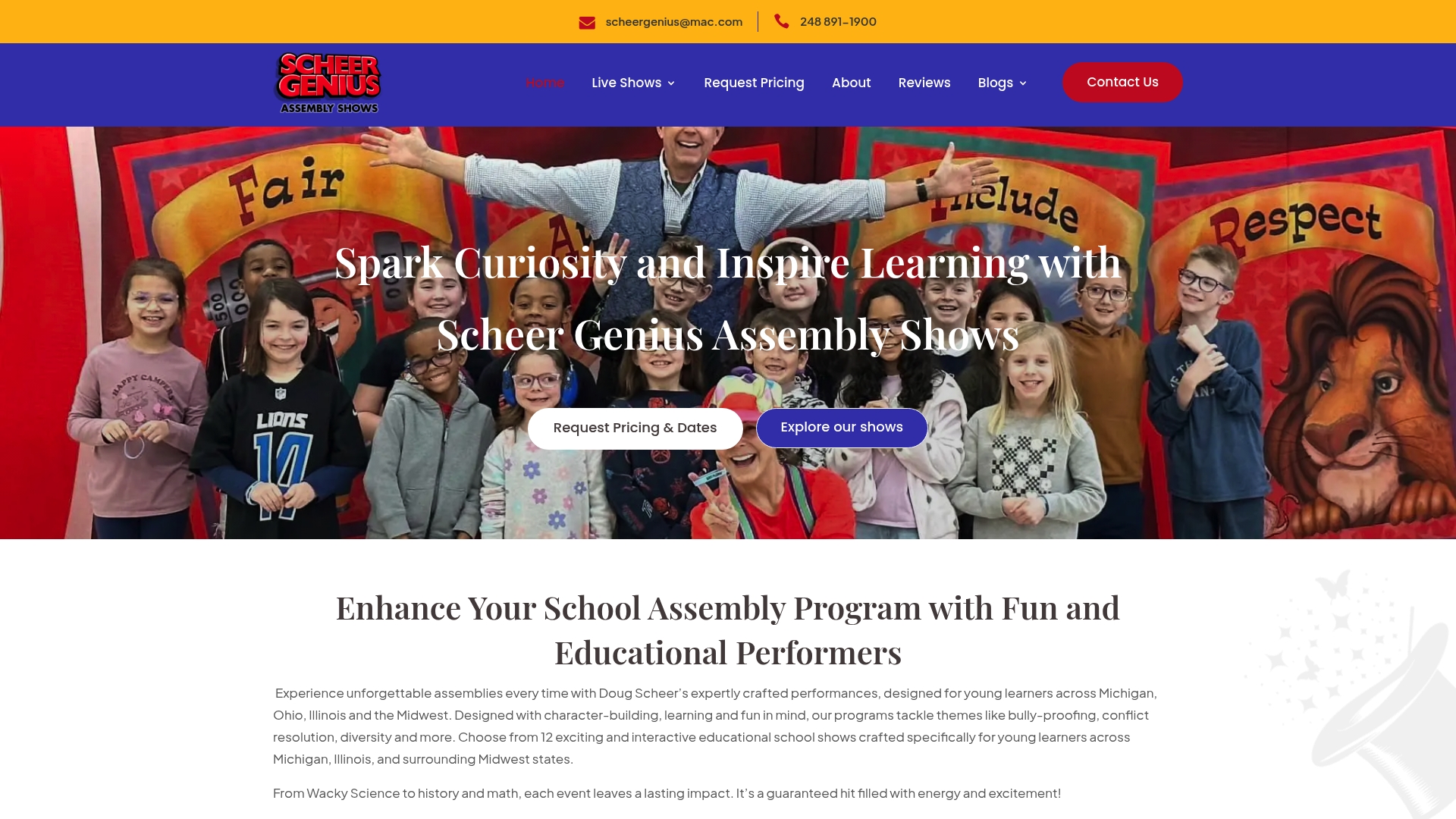
Why wait for change? Explore our Assemblies category to see how other schools are making a lasting impact through our proven programs. Each show, developed by Doug Scheer and recognized across the Midwest, reinforces the positive environment and student leadership your plan needs to succeed. Ready to capture student attention and inspire growth right now? Book your next assembly or learn more at AssemblyShows.com and give your character education list the boost it deserves.
Frequently Asked Questions
What are the core values of character education?
Core values of character education typically include respect, integrity, responsibility, compassion, and courage. These values guide student behavior and decision-making in both academic and personal growth contexts.
How can I implement a character education curriculum successfully?
To implement a successful character education curriculum, integrate ethical principles into interactive learning modules, real-world scenarios, and reflective opportunities. Focus on holistic skill development and ensure teachers are prepared to model these values in their instruction.
Why is involving parents and the community important for character education?
Involving parents and the community ensures consistent messaging about character development, reinforcing ethical learning across different environments. Collaborative initiatives strengthen the impact and relevance of character education for students.
How can I assess the effectiveness of my character education program?
Assess the effectiveness of a character education program using a combination of behavioral observations, student and staff surveys, and analysis of academic performance correlations. Regular evaluation helps identify strengths and areas for improvement in promoting ethical values.
Recommended
- Why Choose Character Education Programs for Schools – Scheer Genius Assembly Shows
- 7 Character Education Program Ideas for Schools – Scheer Genius Assembly Shows
- What is a Character Education Assembly? Understanding Its Importance – Scheer Genius Assembly Shows
- Best Character Shows for Elementary Schools | Scheer Genius
- Making Learning Fun: Engaging Activities for Your Kids – The Zoofamily