
Schools focus on test scores and academics, but character education assemblies are changing what matters most for students. Most people expect lectures to go in one ear and out the other, yet these assemblies have a much stronger effect. Research shows well-designed character education programs can spark a clear drop in behavioral incidents and even improve grades across subjects. That kind of impact gets everyone paying attention.
Table of Contents
- Defining Character Education Assemblies: What Are They?
- The Importance of Character Education in Schools
- How Character Education Assemblies Foster Positive Behaviors
- Key Concepts Behind Character Education Assemblies
- Real-World Impact of Character Education Initiatives
Quick Summary
| Takeaway | Explanation |
|---|---|
| Character education assemblies develop essential life skills. | These school-wide events teach students moral and ethical principles through engaging, interactive presentations. |
| Interactive learning fosters meaningful moral development. | Storytelling and audience involvement inspire genuine personal reflection and motivate ethical decision-making. |
| Character education is crucial for holistic student growth. | It enhances social emotional intelligence, empathy, and interpersonal skills, preparing students for future challenges. |
| Real-world benefits include reduced behavioral issues. | Schools implementing character education see improved student relationships, enhanced safety, and better engagement. |
| Long-term impact prepares students for responsible citizenship. | Character education equips students with skills for ethical behavior, fostering resilient individuals who positively contribute to society. |
Defining Character Education Assemblies: What Are They?
A character education assembly represents a purposeful school-wide event designed to teach students fundamental moral and ethical principles beyond traditional academic learning. These interactive gatherings aim to develop students’ social emotional skills, positive character traits, and understanding of critical behavioral values that contribute to personal growth and community well-being.
The Core Purpose of Character Education Assemblies
Character education assemblies serve as powerful platforms for introducing and reinforcing essential life skills. Our character education programs are strategically crafted to help students understand and internalize core values through engaging, memorable experiences. According to California Department of Education, effective character development involves a systematic approach that includes:
- Direct instruction about ethical behaviors
- Adult role modeling
- Creating positive school environments
- Developing interpersonal communication skills
How Character Education Assemblies Work
These specialized assemblies typically involve interactive presentations that blend entertainment with meaningful life lessons. Skilled presenters use storytelling, dramatic demonstrations, and audience participation to communicate complex moral concepts in age-appropriate, compelling ways. Students learn about crucial character traits like respect, empathy, responsibility, and integrity through dynamic, engaging performances that capture their attention and imagination.
The goal is not just to lecture students but to inspire genuine reflection and personal development.
By making character education enjoyable and participatory, schools can create lasting impressions that encourage students to make thoughtful, ethical choices in their daily lives.
The Importance of Character Education in Schools
Character education represents a critical component of holistic student development, extending far beyond traditional academic learning. By intentionally teaching and reinforcing essential moral and social skills, schools play a transformative role in preparing students to become responsible, empathetic, and ethical citizens.
Why Character Education Matters
In an increasingly complex social landscape, schools must provide more than academic knowledge. Our character shows for elementary schools demonstrate how moral education can be engaging and impactful. According to Character.org, comprehensive character development helps students build critical life skills that contribute to personal success and community well-being.
Key benefits of character education include:
- Enhanced social and emotional intelligence
- Improved interpersonal communication skills
- Reduced instances of bullying and negative behavioral patterns
- Increased student empathy and understanding
- Development of ethical decision making capabilities
Long-Term Impact on Student Development
Character education is not about temporary behavioral modification but sustainable personal growth. By consistently reinforcing positive values, schools help students develop intrinsic motivation to make ethical choices. This approach nurtures resilient individuals who understand the importance of integrity, respect, and personal responsibility.
Moreover, character education prepares students for future professional and personal challenges by teaching fundamental principles of collaboration, empathy, and principled behavior. These skills are increasingly valued in modern workplaces and social environments, making character education an essential investment in students’ future success.
How Character Education Assemblies Foster Positive Behaviors
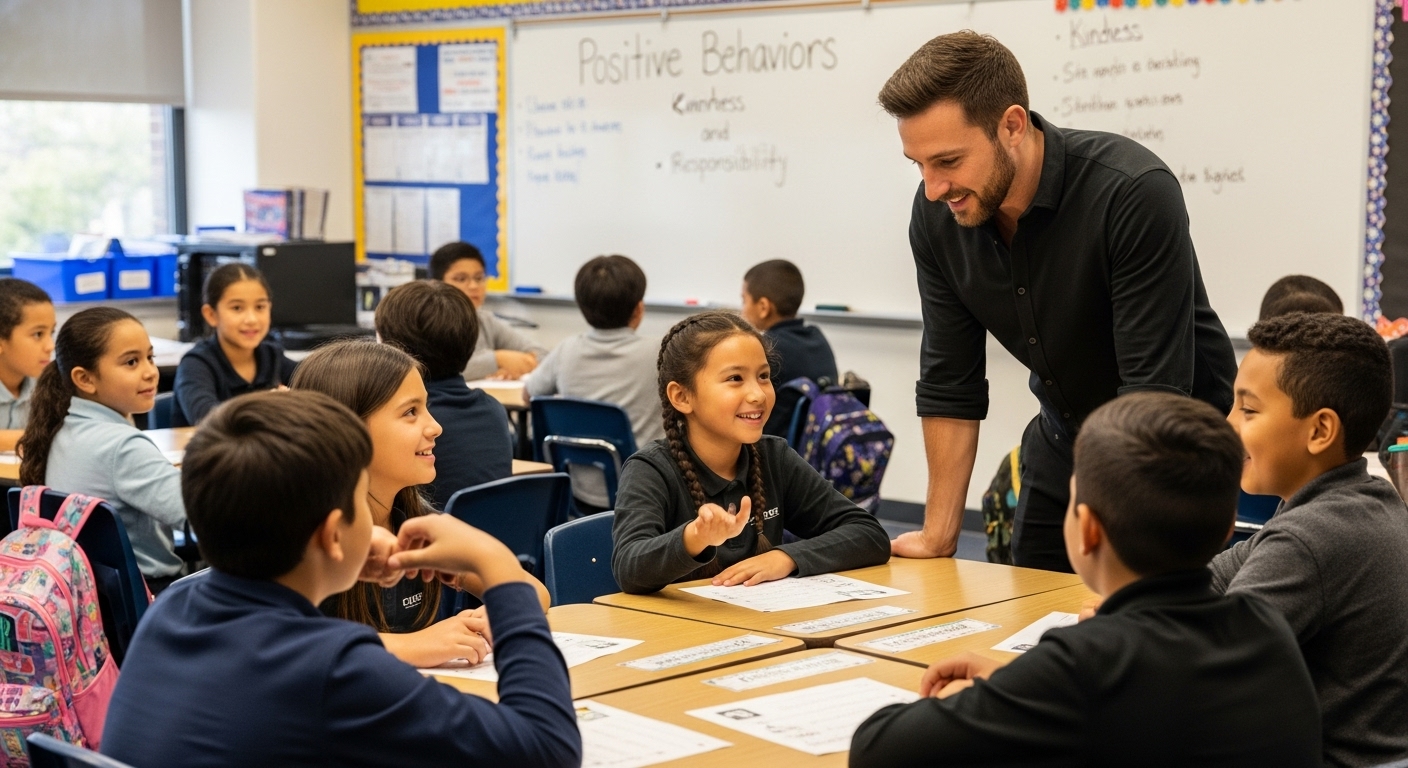
Character education assemblies are strategic interventions designed to proactively shape student behavior through engaging, interactive experiences that go beyond traditional classroom instruction. These specialized gatherings create powerful opportunities for students to internalize positive behavioral patterns and develop critical social emotional skills.
Transforming Student Behavior Through Interactive Learning
Our character education program ideas demonstrate how targeted assemblies can effectively influence student conduct. According to the Texas Education Agency, integrating character-building experiences helps students develop essential traits like courage, integrity, and personal responsibility.
Key behavioral transformation mechanisms include:
- Creating emotional connections to positive behavioral concepts
- Providing real-world context for ethical decision making
- Demonstrating practical applications of character strengths
- Offering memorable, engaging learning experiences
- Encouraging student self-reflection and personal growth
Psychological Mechanisms of Behavioral Change
Character education assemblies leverage powerful psychological principles to encourage positive behavior. By presenting moral lessons through storytelling, dramatic demonstrations, and interactive scenarios, these programs help students understand the direct consequences of their choices. The immersive nature of these assemblies allows students to emotionally connect with ethical principles, making the learning experience more impactful than traditional lecturing.
These assemblies do not simply tell students how to behave but inspire them to want to make better choices. By creating engaging, thought-provoking experiences, schools can help students develop internal motivation for positive behavior, leading to more sustainable personal development and community engagement.
Key Concepts Behind Character Education Assemblies
Character education assemblies are built upon sophisticated psychological and educational frameworks designed to transform student understanding of ethical behavior. These strategic interventions combine pedagogical theory with engaging performance techniques to create meaningful learning experiences that extend far beyond traditional classroom instruction.
The table below compares the foundational ethical principles and their core meanings as emphasized in character education assemblies.
| Ethical Principle | Core Meaning |
|---|---|
| Deliberate Effort | Change requires ongoing personal commitment |
| Consistent Practice | Courage is built by repeated positive actions |
| Genuine Empathy | Kindness is rooted in true understanding of others |
| Proactive Responsibility | Responsibility means making thoughtful decisions |
| Ethical Integrity | Integrity comes from always choosing what is right |
Foundational Ethical Principles
Our educational assembly program ideas demonstrate the complex methodologies underlying character development. According to Santa Clara University’s Markkula Center for Applied Ethics, character education revolves around several fundamental themes that guide student growth:
- Change requires deliberate personal effort
- Courage demands consistent practice
- Kindness necessitates genuine empathy
- Responsibility involves proactive decision making
- Integrity emerges through consistent ethical choices
Psychological Learning Mechanisms
Character education assemblies leverage multiple psychological learning mechanisms to create lasting behavioral impact. These approaches recognize that moral development is not simply about memorizing rules but understanding deeper ethical principles through experiential learning. By creating immersive, emotionally engaging scenarios, these assemblies help students internalize complex social and emotional concepts.
The most effective character education programs understand that behavioral transformation occurs through personal reflection and meaningful engagement. Rather than lecturing students, these assemblies create interactive experiences that allow young learners to explore ethical dilemmas, understand different perspectives, and develop intrinsic motivation for positive personal growth.
Real-World Impact of Character Education Initiatives
Character education initiatives represent more than theoretical concepts they are powerful tools for transforming school environments and student outcomes. By systematically implementing targeted programs, schools can create meaningful cultural shifts that extend far beyond traditional academic measurements.
Measurable School and Student Improvements
Our character education program ideas demonstrate the tangible benefits of comprehensive character development strategies. According to a comprehensive study published in the National Institutes of Health, well-designed character education programs can significantly enhance multiple dimensions of school performance and student well-being.
Key real-world impacts include:
The following table summarizes measurable improvements in schools and students commonly observed when character education programs are implemented effectively.
| Area of Impact | Observable Improvement |
|---|---|
| Behavioral Incidents | Substantial reduction |
| Interpersonal Relationships | Improved student interactions |
| School Safety Perception | Enhanced feelings of safety among students |
| Student Engagement | Increased participation and motivation |
| Academic Performance | Better grades across multiple subjects |
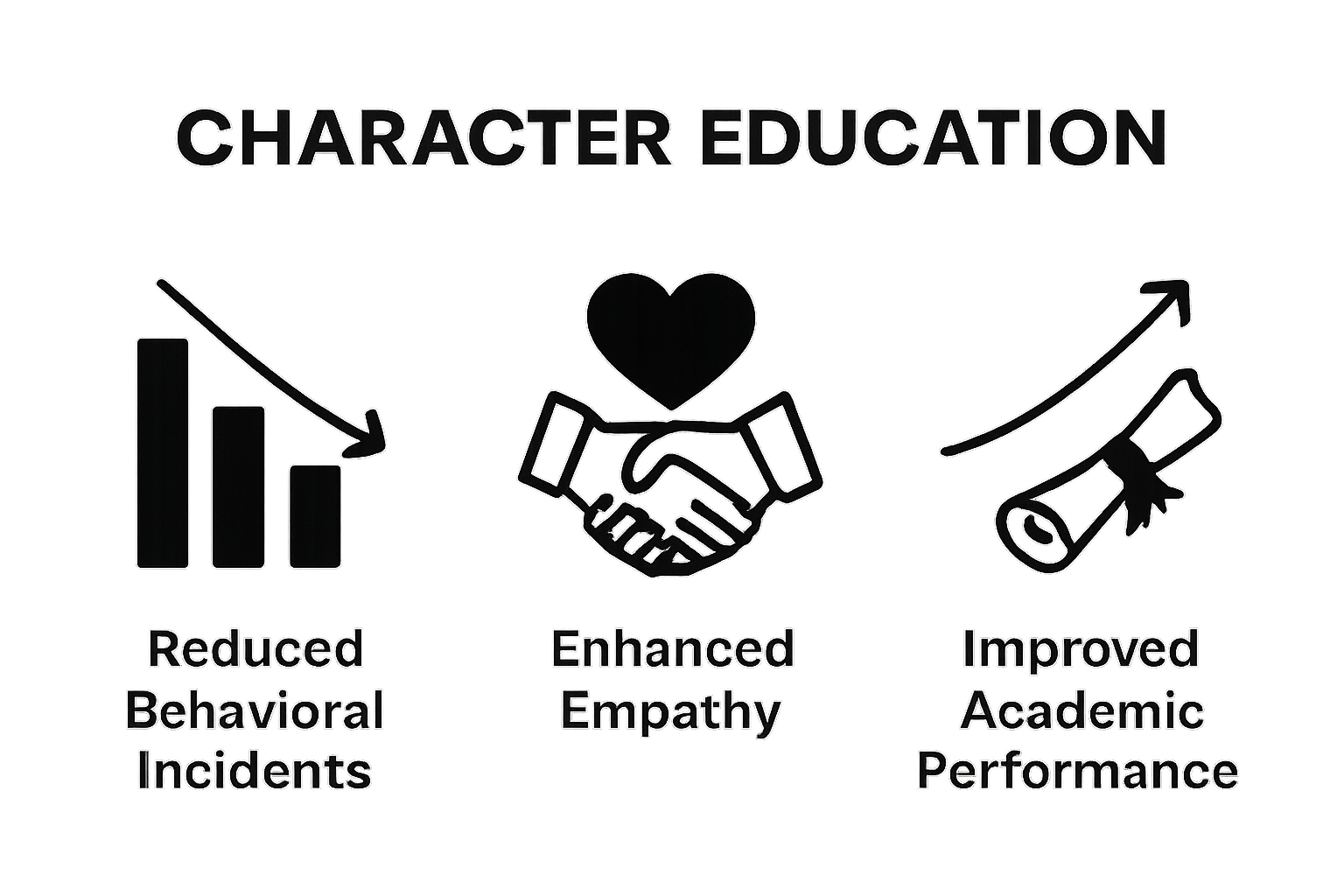
- Substantial reduction in behavioral incidents
- Improved student interpersonal relationships
- Enhanced school safety perceptions
- Increased student engagement and motivation
- Better academic performance across multiple subjects
Long-Term Societal Benefits
Character education initiatives produce ripple effects that extend well beyond immediate school environments. By nurturing students’ social emotional skills, these programs help develop future citizens who are more empathetic, resilient, and socially responsible. Students learn to navigate complex social situations, make ethical decisions, and contribute positively to their communities.
These initiatives essentially serve as preventative interventions, equipping young people with critical life skills that reduce the likelihood of negative social behaviors. By teaching students how to understand and manage their emotions, resolve conflicts constructively, and make principled choices, character education becomes a powerful mechanism for long-term social transformation.
Inspire Character and Growth in Your School Community
As highlighted in this article, guiding students beyond academics to build strong character traits can feel challenging. Schools often struggle to make abstract values like empathy, integrity, and respect come alive for students. The need for engaging and lasting character education is more urgent than ever. If you want to implement impactful assemblies that truly shape behavior and foster a safer, more positive school environment, our assemblies collection offers real solutions.
Experience the difference that a proven, interactive program can make. Doug Scheer and the talented team at Assembly Shows deliver curriculum-aligned assemblies that captivate and motivate students in Michigan, Ohio, Illinois, and the Midwest. See how educators like you have transformed student engagement by reading our program reviews. Now is the perfect time to bring these unforgettable character education experiences to your school. Contact us today to secure your preferred date and make positive change a reality.
Frequently Asked Questions
What is a character education assembly?
A character education assembly is a school-wide event designed to teach students important moral and ethical principles through interactive presentations, aiming to enhance their social emotional skills and character traits.
Why is character education important in schools?
Character education is vital as it prepares students to become responsible and empathetic citizens by teaching essential moral and social skills, contributing to their personal growth and community well-being.
How do character education assemblies influence student behavior?
These assemblies foster positive behavior by creating emotional connections to ethical concepts, encouraging self-reflection, and making moral lessons engaging and memorable, which motivates students to make thoughtful choices.
What are the long-term benefits of character education assemblies?
Long-term benefits include improved interpersonal relationships, reduced behavioral incidents, enhanced academic performance, and the development of resilient individuals equipped to navigate future social and professional challenges.